

• McCarthy Hyundai of Lawrence

Blog / Lawrence Hyundai Dealer

First-Time Car Buyer's Guide: Everything You Need to Know Before You Buy

First-time car buyer getting keys at McCarthy Hyundai of Lawrence KS

Summary: Buying your first car is one of the most significant financial decisions most people make before buying a home. The stakes are real: the average new car payment hit a record $767 per month in the fourth quarter of 2025, and the average new car price now sits near $50,000. Even used cars average over $25,000. Navigating this market confidently requires more preparation than most first-timers realize. At McCarthy Hyundai of Lawrence, this guide walks through every step of the process with accurate 2026 numbers and honest, practical advice for Lawrence and northeast Kansas buyers.

Step 1: Calculate What You Can Actually Afford

This is the step most first-time buyers rush past in their excitement to start looking at cars, and it is the one that causes the most financial stress later. The monthly payment you agree to on signing day follows you for 48 to 72 months. Getting it right matters more than any specific feature or trim level.

The Real Numbers in 2026

Here is the current market reality as of early 2026, based on data from LendingTree and Kelley Blue Book:

  • Average new car price: approximately $48,000 to $50,000
  • Average used car price: approximately $25,000
  • Average new car loan APR: approximately 6.8%
  • Average new car monthly payment: $767
  • Average used car monthly payment: $537
  • Average new car loan term: 69 months

These numbers help you calibrate your expectations before you fall in love with a specific vehicle. A Hyundai Tucson starting around $31,000 with 10% down at current rates on a 60-month term produces a monthly payment in the $480 to $520 range for well-qualified buyers. A Palisade or Santa Fe Hybrid at a higher price point produces a meaningfully higher payment. Use our free online payment calculator to run specific scenarios before you visit.

Budgeting Beyond the Monthly Payment

NerdWallet recommends keeping your monthly car payment under 10 percent of your take-home pay, and keeping total vehicle expenses including insurance, fuel, and maintenance under 15 to 20 percent. AAA's 2025 Your Driving Costs study estimates a typical new car owner with a five-year loan spends approximately $11,577 per year when you add up depreciation, interest, fuel, insurance, maintenance, and registration fees. That is roughly $965 per month in total vehicle cost, not just the loan payment.

For a first-time buyer in Lawrence, additional costs to factor in include Kansas vehicle registration fees, state and local sales tax (Lawrence combined rate is currently 9.05%), insurance, parking if applicable, and a realistic maintenance budget. All of these belong in your budget calculation before you decide what vehicle price range makes sense.

A useful tool before you start shopping: use the buying power estimator at McCarthy Hyundai of Lawrence to understand what you realistically qualify to finance based on your income and credit situation.

Step 2: Figure Out What You Actually Need

Once you have a realistic budget, the next step is defining what the vehicle needs to do for your life. This sounds obvious, but it is the step that prevents you from buying more car than you need or the wrong type of vehicle for your actual driving patterns.

For Lawrence-area first-time buyers, some practical questions to answer:

  • What is your primary use? A daily commute within Lawrence or to Kansas City is very different from hauling camping gear to the Flint Hills or ferrying a family across the state for holidays.
  • How many miles do you drive annually? If you put on high mileage, a Hyundai hybrid's fuel economy savings are meaningful every month. If you drive infrequently, the efficiency difference matters less.
  • Do you need all-weather capability? Kansas winters and the region's unpredictable weather make HTRAC AWD worth considering, particularly if you will be driving rural roads or dealing with ice and snow regularly.
  • Do you have current or near-future needs for cargo space or passenger capacity? A growing family's needs in two years are worth factoring into the vehicle choice today.
  • Is home charging available for an EV or PHEV? If you own your home or have garage access, a plug-in hybrid Tucson or Santa Fe can dramatically reduce your monthly fuel costs.

Keeping your honest answers to these questions at the center of your search helps prevent the very common pattern of a first-time buyer being talked into a vehicle that looks great in the showroom but does not actually fit their life.

Step 3: New, Certified Pre-Owned, or Used?

This is one of the most consequential decisions you will make, and the right answer depends entirely on your budget and priorities.

New Hyundai: The Full Package With the Full Warranty

A new Hyundai comes with the full factory warranty: 5 years/60,000 miles bumper-to-bumper and 10 years/100,000 miles on the powertrain. You get the latest safety technology, current fuel economy ratings, and the confidence of knowing the full vehicle history because you are the first owner. The downside is the higher price and the reality that new vehicles depreciate approximately 15 to 20 percent in their first year.

Browse our current new Hyundai inventory and check our current new vehicle specials and Hyundai manufacturer incentives before deciding. Available promotional APR rates and cash incentives can significantly change the total cost picture for new vehicles.

Hyundai Certified Pre-Owned: The Smart Middle Ground

A Hyundai Certified Pre-Owned vehicle must be no more than six model years old with fewer than 80,000 miles and a clean title. Every CPO Hyundai passes a 173-point inspection and comes with a reinstated 10-year/100,000-mile powertrain warranty from the original in-service date, 10-year unlimited mileage roadside assistance, rental reimbursement, and travel interruption coverage.

The CPO program bridges the gap between new and standard used: you get meaningful warranty protection and a certified vehicle history at a significantly lower price than new. For first-time buyers who want peace of mind but cannot justify a new car price, a CPO Hyundai is genuinely compelling. Browse our certified pre-owned inventory to see current availability.

Standard Used: Maximum Value, Maximum Due Diligence Required

A three-year-old used Hyundai can represent exceptional value: the most aggressive depreciation has already occurred, the vehicle still has many reliable miles ahead of it, and the price point is significantly lower than new. The trade-off is that you inherit whatever service history the vehicle had under its previous owner.

For a first-time buyer, a used vehicle from an authorized Hyundai dealer like McCarthy is meaningfully lower risk than buying from a private seller. Our pre-owned vehicles go through inspection and reconditioning, and our team provides vehicle history reports on every unit. Browse our pre-owned inventory to see what is currently available.

Step 4: Research Financing Before You Shop

One of the most expensive mistakes a first-time buyer can make is showing up at a dealership without having looked at financing options in advance. Your financing arrangement determines the total cost of the vehicle more than the sticker price does, because the interest rate you accept multiplied across 60 or 72 monthly payments adds up to thousands of dollars either saved or wasted.

Get Pre-Approved Before You Visit

McCarthy Hyundai of Lawrence's online finance application lets you get pre-qualified before you visit. This tells you what interest rate you actually qualify for, which is the real number to use in your payment calculations rather than an optimistic guess. It also strengthens your position at the dealership because you walk in knowing your financing situation rather than negotiating from uncertainty.

McCarthy works with multiple lending partners including Hyundai Motor Finance, which regularly offers promotional APR rates, sometimes as low as 0% on select new models for well-qualified buyers. A pre-approval from our finance team gives you access to these competitive options alongside bank and credit union offers.

Understanding Loan Terms

The average new car loan term has stretched to 69 months, and some buyers take 72 or 84-month loans to reduce monthly payments. The monthly savings are real, but the total interest cost is significant. On a $30,000 loan at 6.8% APR, the difference between a 48-month and a 72-month term is approximately $200 per month in payment, but over $2,000 more in total interest paid. Use our payment calculator to see these trade-offs with your specific numbers.

Step 5: Build Your Shopping List

With a clear budget and your financing picture in hand, you can build a focused list of vehicles worth considering rather than browsing everything in your approximate price range. For Lawrence-area buyers, the Hyundai lineup covers a wide range of practical needs at strong value-for-money ratios across multiple price points:

Your PriorityRecommended ModelStarting MSRP
Most affordable new Hyundai with modern techElantra or VenueFrom ~$21,000
Best fuel economy for a daily commuterElantra HybridFrom ~$26,000
Versatile compact crossoverTucson FWDFrom ~$31,000
Compact crossover with AWD and hybrid efficiencyTucson HybridFrom ~$35,000
Mid-size family SUVSanta FeFrom ~$35,000
Three-row family SUVPalisadeFrom ~$38,000

For first-time buyers, certified pre-owned models in the Elantra, Tucson, and Sonata lineup often represent the best combination of modern features, reliability, warranty coverage, and accessible price points. Check our CPO inventory for currently available options.

Step 6: Get Insurance Quotes Before You Fall in Love With a Car

Insurance costs vary significantly by vehicle, and a first-time buyer can save meaningful money by factoring insurance into the decision before committing to a specific model. A vehicle with a higher insurance rate can easily cost more in total annual expense than a slightly more expensive vehicle with a lower rate.

Contact two or three insurance providers with the specific year, make, model, and trim you are considering and get quotes before you go any further. Hyundai vehicles generally earn strong safety ratings and reasonable insurance costs, but differences between models exist and are worth knowing in advance.

Step 7: Review the Vehicle History Report for Used Vehicles

For any used vehicle you seriously consider, a vehicle history report is not optional. It reveals accident history, flood damage, odometer discrepancies, the number of previous owners, and maintenance records. At McCarthy Hyundai of Lawrence, we provide vehicle history reports on our pre-owned inventory as part of our standard sales process. For CPO vehicles, the history report is a required step in the certification process.

First-time buyers should pay particular attention to vehicles with accident history, especially if the repair documentation is incomplete, or any indication of flood damage, which can cause electrical problems that emerge gradually and are difficult to trace.

Step 8: The Test Drive Done Right

A test drive is not just a formality. It is your opportunity to evaluate whether this specific vehicle feels right for your daily life, and to catch any issues before you commit. Here is how to get the most out of it:

  • Turn off the radio and drive in silence for at least part of the drive. Unusual noises, rattles, vibrations, and road noise are much easier to detect without music covering them up.
  • Test every feature you plan to use: Bluetooth, Apple CarPlay, climate control, backup camera, adaptive cruise control if equipped. Discovering a feature does not work after purchase is frustrating and avoidable.
  • Drive it on the highway at speeds you will actually use on Kansas interstates. Some issues only appear at speed.
  • Test the brakes: Braking should feel firm and linear with no pulling to one side, no pulsation through the pedal, and no unusual sounds.
  • Check sight lines: Try parking and backing out to assess visibility for your driving comfort level.
  • Sit in the back seat if you will regularly carry adult passengers or child seats. What feels spacious in the driver's seat can feel very different in row two.
  • Take your time. Do not let anyone rush the test drive. This is a 48 to 72-month financial commitment.

At McCarthy Hyundai of Lawrence, you can schedule a test drive online for the specific vehicle you want to evaluate at a time that works for your schedule.

Step 9: Get a Pre-Purchase Inspection on Used Vehicles

For any used vehicle not covered by a certified pre-owned program, a pre-purchase inspection by an independent mechanic is money well spent. Expect to pay approximately $100 to $150 for a thorough inspection. The mechanic can identify issues that are not visible during a test drive: worn suspension components, deferred maintenance items, oil seepage, brake condition, and so on. If a seller is not willing to allow a pre-purchase inspection, treat that as a significant warning sign.

For CPO Hyundais at McCarthy, the 173-point certification inspection serves this purpose and is performed by factory-trained technicians using Hyundai's standards. An additional independent inspection is optional but not required given the depth of the certification process.

Step 10: Understand What You Are Signing

Signing day can feel overwhelming, particularly for a first-time buyer. The finance and insurance office involves a significant amount of paperwork and several product presentations. Here is what to know going in:

  • Read what you sign. You are legally bound by the documents you sign. If something is unclear, ask for an explanation before you sign it.
  • The payment you agreed to should match the contract. Verify the interest rate, loan term, total financed amount, and monthly payment match what you discussed before signing.
  • Extended warranties and protection products will be offered. Evaluate them based on your own needs and budget rather than pressure. A Hyundai's factory warranty is already one of the strongest in the industry; understand what the factory warranty covers before adding extended coverage you may not need.
  • Gap insurance covers the difference between your loan balance and the vehicle's market value if the car is totaled before the loan is paid off. It can be valuable, particularly on longer loan terms where the loan balance stays close to vehicle value for longer. Compare the dealer's gap insurance price with what your auto insurer offers, as insurer-provided gap coverage is often less expensive.
  • You will need: your driver's license, proof of insurance (required before driving off the lot), your financing information if pre-arranged, and your trade-in title if applicable.

Special Programs for First-Time Buyers at McCarthy Hyundai of Lawrence

Two programs are worth knowing about before you visit:

  • College Grad Program: Hyundai offers the College Graduate Purchase Program, which provides additional incentives for recent college graduates purchasing or leasing a new Hyundai. If you graduated within the past two years or will graduate in the next six months, you may qualify for meaningful additional savings.
  • First Responders Program: Eligible first responders including law enforcement, firefighters, and EMTs may qualify for exclusive discounts on new Hyundai models.

Key Takeaways: First-Time Car Buying in 2026

  • ✅ Average new car prices are near $50,000 and average used cars are over $25,000 in 2026. Know your realistic budget before you start shopping.
  • ✅ Keep your monthly car payment under 10% of take-home pay and total vehicle expenses under 15 to 20% per NerdWallet's recommendation.
  • ✅ Get pre-approved for financing before visiting the dealership using McCarthy's online finance application.
  • ✅ A Hyundai CPO vehicle gives you a reinstated 10-year warranty, a 173-point inspection, and 10-year roadside assistance at a significantly lower price than new.
  • ✅ Use McCarthy's payment calculator and trade-in tool before you visit to walk in with real numbers.
  • ✅ Get insurance quotes for specific vehicles before committing. Insurance costs vary significantly by model.
  • ✅ Do not rush the test drive or the signing process. You are making a 48 to 72-month financial commitment.
  • ✅ Check for the College Grad and First Responder programs if they apply to your situation.

Why Buy Your First Car at McCarthy Hyundai of Lawrence?

For a first-time buyer, the dealership experience matters as much as the vehicle selection. You deserve honest, patient guidance rather than pressure tactics. Here is what you get at McCarthy Hyundai of Lawrence:

  • 4.5-Star Google Rating with Nearly 1,500 Reviews: Our reputation for no-pressure, transparent service is backed by thousands of real customer experiences from Lawrence and the surrounding region.
  • Every Type of Hyundai in Stock: New, certified pre-owned, and standard used across all price points, so you can compare options side by side and find what genuinely fits your budget and needs. Browse new, CPO, and used inventory online before you visit.
  • Transparent Finance Team: Multiple lending partners, real numbers explained clearly, and access to Hyundai's promotional financing programs. Start your application online before you visit.
  • No Rush, No Pressure: Take the time you need. A good buying decision is better for everyone than a rushed one.
  • Certified Service After the Sale: Our factory-trained service team is here for your Hyundai's entire ownership life. Schedule service online anytime.
  • Right Here in Lawrence: Located at 2829 Iowa St, Lawrence, KS 66047, convenient for KU students, Lawrence residents, and drivers from across northeast Kansas. Call us at (785) 838-2327.

Conclusion: Preparation Is Your Best Advantage

The first-time buyers who have the best experience and make the best decisions are the ones who did the homework before they visited a dealership. They knew their budget. They understood their financing options. They had a vehicle shortlist based on real needs rather than impulse. They were not surprised by the total cost of ownership.

Every tool you need to prepare that way is available right now at McCarthy Hyundai of Lawrence, free and online. Run your payment scenarios, value your trade-in, get pre-approved, and browse inventory from your couch. Then come see us and let our team help you find the right first Hyundai for your Kansas life.

💰 Calculate your payment | Get pre-approved | Value your trade-in
📍 Visit us: 2829 Iowa St, Lawrence, KS 66047
📞 Call us: (785) 838-2327

Frequently Asked Questions: First-Time Car Buyers in Lawrence, KS

How much should I spend on my first car?

NerdWallet recommends keeping your monthly car payment under 10% of your take-home pay and total vehicle expenses including insurance, fuel, and maintenance under 15 to 20% of take-home pay. With new cars averaging nearly $50,000 and used cars averaging over $25,000 in 2026, a realistic budget assessment before you start shopping helps prevent payment shock later. Use McCarthy's payment calculator and buying power estimator to establish your realistic range.

Should a first-time buyer get a new or used car?

Either can be the right choice depending on budget, needs, and credit profile. A new Hyundai offers the full factory warranty and the latest technology. A certified pre-owned Hyundai offers a reinstated 10-year powertrain warranty and 173-point inspection at a meaningfully lower price. A standard used Hyundai offers the greatest value if the vehicle history checks out and it passes inspection. Our team at McCarthy can walk you through all three options based on your specific situation.

How much should I put down on my first car?

The standard guideline is 20% down for a new vehicle and 10% for a used vehicle. These thresholds help protect against negative equity during the period when the vehicle's value is declining fastest. Your trade-in's value can count toward the down payment. Use our free trade-in tool to estimate your current vehicle's contribution before finalizing your down payment plan.

What is a Hyundai Certified Pre-Owned vehicle?

A Hyundai CPO vehicle is a used Hyundai no more than six model years old with fewer than 80,000 miles and a clean title that has passed a 173-point factory inspection. It comes with a reinstated 10-year/100,000-mile powertrain warranty from the original in-service date, 10-year unlimited mileage roadside assistance, rental reimbursement, travel interruption coverage, and a CARFAX vehicle history report. Browse our current CPO inventory to see available models.

Does McCarthy Hyundai of Lawrence offer programs for first-time buyers?

Yes. The Hyundai College Graduate Program provides additional incentives for recent graduates purchasing or leasing a new Hyundai. A First Responders program is available for eligible first responders. Our finance team works with multiple lenders and can often find solutions for buyers at various credit levels including first-time buyers with limited credit history.

How do I get started at McCarthy Hyundai of Lawrence?

Start online: use our payment calculator, value your trade-in, apply for pre-approval, and browse inventory. Then visit us at 2829 Iowa St, Lawrence, KS 66047 or call (785) 838-2327 to schedule a test drive.
Posted in:

Related Posts

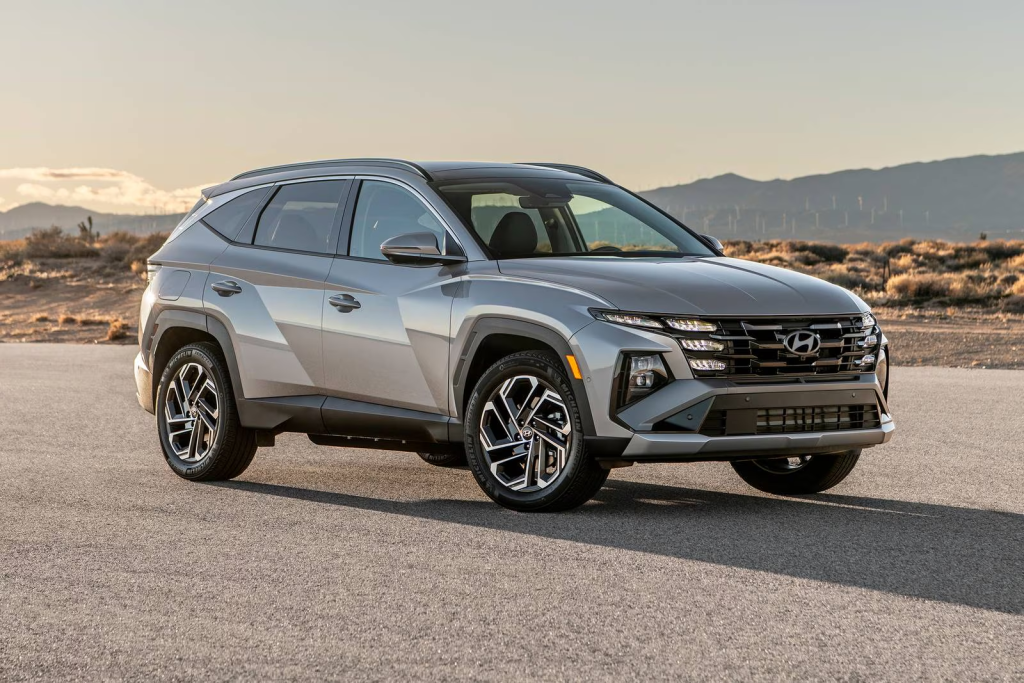
2025 Hyundai Tucson Plug-in Hybrid driving near Topeka KS with fuel-saving PHEV technology

How Much Fuel Can You Save With a 2025 Hyundai Tucson Plug-in Hybrid?

Brief Summary: The 2025 Hyundai Tucson Plug-in Hybrid can help Topeka drivers cut fuel use by combining an EPA-estimated 32 miles of all-electric range with hybrid efficiency for longer trips. Compared with a gas-only Tucson AWD, the Tucson PHEV can save hundreds of dollars per year depending on how often you charge, how far you drive, and local fuel and electricity prices. Introduction Fuel prices are one of those everyday expenses that never seem to stay predictable for long. One month they feel manageable, and the next month your commute, school drop-offs, errands, and weekend drives across Kansas start costing noticeably more. That is why more SUV shoppers are taking a serious look at plug-in hybrids like the 2025 Hyundai Tucson Plug-in Hybrid. The Tucson PHEV is designed for drivers who want the flexibility of gasoline power but also want to complete many daily drives using electricity alone. According to Hyundai, the 2025 Tucson Plug-in Hybrid offers an EPA-estimated 32 miles of all-electric range and 77 combined MPGe when operating with electric power. Once the battery’s usable electric range is depleted, it continues operating like a traditional hybrid SUV. For many Topeka drivers, that combination makes a lot of sense. If your daily commute is under 32 miles, or if most of your driving is local, you may be able to use little to no gasoline during the week. For longer drives to Kansas City, Manhattan, Lawrence, or Wichita, the gas engine is there when you need it. If you are shopping for an efficient Hyundai SUV, you can browse current new Hyundai inventory, review available new vehicle specials, or schedule a test drive with McCarthy Hyundai of Topeka. 2025 Hyundai Tucson PHEV Fuel Savings at a Glance The exact amount you can save depends on your driving habits. A plug-in hybrid rewards drivers who charge regularly. If you plug in at home and use electric range for short trips, your fuel use can drop dramatically. If you rarely charge, the Tucson PHEV still functions as a hybrid, but you will not see the same savings. Model EPA Efficiency Estimate Best Use Case Fuel-Saving Advantage 2025 Hyundai Tucson Plug-in Hybrid 32-mile electric range, 77 combined MPGe, 35 MPG gas-only hybrid operation Drivers who can charge regularly and make frequent local trips Highest potential fuel savings 2025 Hyundai Tucson Hybrid Up to 38 MPG combined on select trims; other trims around 35 MPG combined Drivers who want efficiency without plugging in Strong fuel savings versus gas-only SUV 2025 Hyundai Tucson Gas AWD 24 city / 30 highway / 26 combined MPG Drivers who want lower upfront complexity and traditional fueling Simple ownership, but higher fuel use Hyundai lists the 2025 Tucson gas AWD at an EPA-estimated 24 city, 30 highway, and 26 combined MPG. Hyundai also lists the 2025 Tucson Plug-in Hybrid with 32 miles of all-electric range and 77 combined MPGe. You can compare official efficiency details through Hyundai USA and the federal FuelEconomy.gov database. What Is a Plug-in Hybrid SUV? A plug-in hybrid electric vehicle, often called a PHEV, sits between a traditional hybrid and a fully electric vehicle. It has a gasoline engine, an electric motor, and a larger battery than a conventional hybrid. That battery can be charged from an outside power source, such as a home Level 2 charger or compatible public charger. In normal driving, the Tucson PHEV can operate in electric mode for short trips. Once the battery’s electric range is used, the vehicle continues as a hybrid, blending gas and electric power to improve efficiency. This gives drivers two major advantages: electric driving for daily local use and gasoline flexibility for longer trips. Why That Matters in Topeka Topeka is the kind of place where a PHEV can be especially practical. Many daily routes are well within the Tucson PHEV’s electric range. A commute from residential areas into central Topeka, a grocery run, a school pickup, or a quick drive to restaurants and shopping may use little or no gas if the battery is charged. At the same time, Kansas drivers often need flexibility. Weekend plans can mean highway miles, rural roads, lake trips, college visits, family travel, or longer drives across the state. With the Tucson PHEV, you do not have to rely only on charging infrastructure. You can plug in when it is convenient and use gasoline when the trip calls for it. How Much Fuel Can You Actually Save? Let’s use a simple example based on 15,000 miles of annual driving, which is a common benchmark used for fuel-cost comparisons. These are not guaranteed savings, but they show how the Tucson PHEV can reduce fuel use when charged regularly. Scenario 1: You Rarely Charge the Tucson PHEV If you rarely plug in, the Tucson PHEV operates mostly like a hybrid. In that case, its advantage over the gas-only Tucson still exists, but it is smaller than it could be. Gas-only Tucson AWD at 26 MPG: about 577 gallons per 15,000 miles Tucson PHEV operating mostly in hybrid mode at about 35 MPG: about 429 gallons per 15,000 miles Estimated fuel saved: about 148 gallons per year If regular gas averages $3.24 per gallon, that is roughly $480 in annual fuel savings compared with a gas-only Tucson AWD. Again, actual pricing changes by station, season, and market. Scenario 2: You Charge Regularly and Drive 60% Electric This is where the Tucson PHEV starts to show its real value. If 60% of your annual miles are completed in electric mode and the remaining 40% use hybrid gasoline operation, you could reduce gasoline use significantly. Annual miles: 15,000 Electric miles: 9,000 Gas/hybrid miles: 6,000 Gas used at 35 MPG for hybrid miles: about 171 gallons Fuel saved versus gas-only Tucson AWD: about 406 gallons per year At $3.24 per gallon, saving about 406 gallons equals roughly $1,315 in avoided gasoline purchases before accounting for electricity cost. After adding home charging costs, many drivers could still save several hundred dollars per year compared with a gas-only compact SUV. Scenario 3: Most Daily Driving Fits Within the Electric Range If your regular driving is mostly local and you charge consistently, you may complete a large share of your annual miles on electricity. For example, if 12,000 of your 15,000 annual miles are electric and only 3,000 miles use gasoline, the Tucson PHEV may use only about 86 gallons of gas per year for the gasoline portion. Compared with the gas-only Tucson AWD’s estimated 577 gallons per year, that is a difference of roughly 491 gallons. At $3.24 per gallon, that is nearly $1,590 in avoided gasoline before electricity costs. Electricity is not free, of course, but home charging can still be much less expensive per mile than gasoline in many situations. Why Electric Range Changes Everything The Tucson PHEV’s 32-mile electric range may not sound huge at first, especially compared with a fully electric vehicle. But for daily driving, 32 miles can cover a lot. According to the U.S. Department of Transportation’s National Household Travel Survey, many daily vehicle trips in the U.S. are relatively short. That is exactly where a plug-in hybrid can shine. Think about your own driving patterns. How many of your daily drives are under 10 miles? How many are under 20? If you can charge at home overnight, you may start many mornings with a full electric range and use the gas engine only when your day runs longer than usual. Charging the 2025 Tucson Plug-in Hybrid The Tucson PHEV is most convenient when you can charge at home. A Level 2 home charging setup can refill the battery much faster than a standard household outlet, making overnight charging simple. For many owners, plugging in becomes as routine as charging a phone. Home Charging Benefits You can start many mornings with a full electric range You reduce trips to the gas station You may be able to charge during lower-cost electricity periods depending on your utility plan You get the best fuel-saving benefit from the PHEV system If you are considering a PHEV, it is worth reviewing your parking situation. A garage, driveway, or dedicated parking spot with charging access makes ownership much easier. Apartment and condo drivers may still make a PHEV work, but they should check local charging availability first. Performance: Efficient Does Not Mean Slow The 2025 Hyundai Tucson Plug-in Hybrid is not just about saving fuel. It is also one of the more powerful Tucson configurations. The turbocharged hybrid powertrain provides confident acceleration, and standard HTRAC all-wheel drive gives the SUV added traction in changing weather. That matters for Kansas drivers. Rain, winter slush, gravel roads, and windy highway conditions can all make stability and traction feel more important. The Tucson PHEV gives you efficiency without stripping away the utility people expect from an SUV. PHEV vs. Hybrid vs. Gas Tucson: Which One Fits You? Choose the Tucson Plug-in Hybrid If: You can charge at home or work Your daily driving is often under 32 miles You want to reduce gasoline use as much as possible You like the idea of electric driving without full EV range anxiety You want standard AWD and strong hybrid performance Choose the Tucson Hybrid If: You want better MPG but do not want to plug in You park somewhere charging is not convenient You want a simpler transition from a gas SUV You drive a mix of city and highway miles Choose the Gas Tucson If: You want a lower starting price You prefer traditional fueling You do not drive enough miles to justify a hybrid or PHEV upgrade You want a straightforward compact SUV with strong everyday practicality Other Ways the Tucson PHEV Can Save Money Fuel savings are the headline benefit, but they are not the only factor. A plug-in hybrid may also reduce engine wear during electric-only driving, because the gas engine is not running for every mile. Regenerative braking can help reduce some brake wear as well, though brake inspections remain important. Depending on current federal rules, local incentives, and your tax situation, some electrified vehicles may qualify for incentives or credits. These rules change often, so shoppers should review current information through the IRS Clean Vehicle Tax Credits page and speak with a qualified tax professional before making assumptions. If you want help comparing monthly payment options, trade-in value, and long-term cost, the team at our Hyundai finance center can walk you through available choices. Keeping Your Tucson PHEV Efficient To get the most from a plug-in hybrid, your habits matter. The Tucson PHEV rewards consistent charging and smooth driving. A few simple routines can help maximize savings: Charge overnight whenever possible Use preconditioning while plugged in to reduce battery drain before driving Keep tires properly inflated Stay current on scheduled maintenance Drive smoothly and avoid unnecessary hard acceleration Use regenerative braking effectively when conditions allow Routine maintenance still matters on a PHEV. Oil changes, tire rotations, brake inspections, coolant checks, and software-related inspections help keep the SUV performing properly. You can schedule Hyundai service through our service center and check current service and parts specials before your visit. Key Takeaways The 2025 Hyundai Tucson Plug-in Hybrid offers an EPA-estimated 32 miles of all-electric range. It is rated at 77 combined MPGe when using electric power. When operating without electric charge, the Tucson PHEV functions like a hybrid SUV. Drivers who charge regularly can save the most fuel. Compared with a gas-only Tucson AWD, annual gasoline savings could range from modest to substantial depending on how many miles are driven electrically. The Tucson Hybrid may be better for drivers who cannot plug in regularly. The gas Tucson may suit shoppers who prioritize a lower starting price and traditional fueling. Why Choose McCarthy Hyundai of Topeka? Choosing between a gas, hybrid, and plug-in hybrid SUV is easier when you have a team that can explain the differences clearly. At McCarthy Hyundai of Topeka, we help Kansas drivers compare real-world ownership costs, available inventory, financing options, and day-to-day practicality. Our dealership serves drivers throughout Topeka and the surrounding area with new Hyundai models, used vehicles, financing support, and factory-trained Hyundai service. Whether you are interested in the Tucson PHEV, Tucson Hybrid, gas-powered Tucson, or another Hyundai SUV, our team can help you find the right fit without making the process feel complicated. Visit McCarthy Hyundai of Topeka at 2920 S Kansas Ave, Topeka, KS 66611, call (785) 267-2800, or learn more about our dealership on our About Us page. Conclusion The 2025 Hyundai Tucson Plug-in Hybrid can save a meaningful amount of fuel, especially for Topeka drivers who charge regularly and complete many daily trips within the SUV’s 32-mile electric range. If you plug in consistently, the Tucson PHEV can dramatically reduce gasoline use while still giving you the confidence of a gas engine for longer drives. That said, the best Tucson for you depends on your lifestyle. The Tucson PHEV offers the highest fuel-saving potential. The Tucson Hybrid provides excellent efficiency without charging. The gas Tucson remains a practical choice for drivers who want a traditional compact SUV with a lower barrier to entry. Ready to compare your options? Browse our new Hyundai inventory, view new vehicle specials, or schedule a test drive at McCarthy Hyundai of Topeka. FAQs How far can the 2025 Hyundai Tucson Plug-in Hybrid drive on electricity? The 2025 Hyundai Tucson Plug-in Hybrid has an EPA-estimated 32 miles of all-electric range when the battery is fully charged. What is the 2025 Tucson PHEV MPGe rating? The 2025 Hyundai Tucson Plug-in Hybrid is rated at 77 combined MPGe when using electric power. MPGe is the EPA’s gasoline-equivalent efficiency measurement for electrified vehicles. Does the Tucson PHEV save money if I do not charge it? It can still operate like a hybrid, but you will miss the biggest fuel-saving benefit. The Tucson PHEV saves the most money when you charge regularly and use electric range for daily driving. Is the Tucson PHEV better than the Tucson Hybrid? The Tucson PHEV is better for drivers who can charge often and want electric-only driving for short trips. The Tucson Hybrid may be better for drivers who want strong MPG without plugging in. Does the 2025 Hyundai Tucson Plug-in Hybrid have AWD? Yes. The 2025 Hyundai Tucson Plug-in Hybrid comes with HTRAC all-wheel drive, giving drivers added traction and confidence in changing road conditions. How much gas can I save with the Tucson PHEV? Gas savings depend on how often you charge and how far you drive. Drivers who complete most daily trips on electricity can save hundreds of gallons of gasoline over several years compared with a gas-only Tucson AWD. Where can I test drive a Hyundai Tucson in Topeka? You can schedule a Hyundai Tucson test drive at McCarthy Hyundai of Topeka, located at 2920 S Kansas Ave, Topeka, KS 66611.

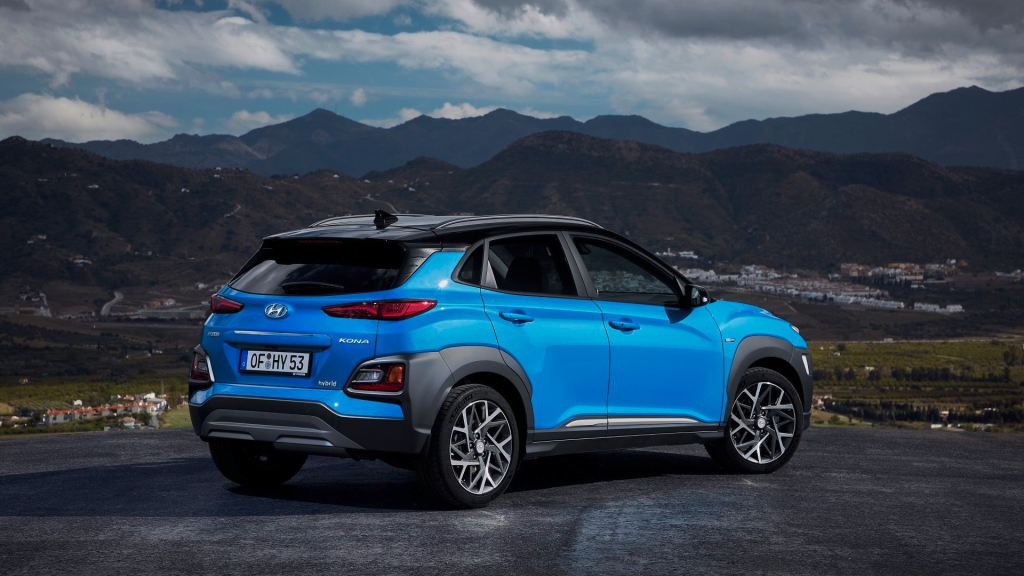
2022 Hyundai Kona Electric and gas Kona comparison for Topeka drivers

2022 Hyundai Kona: Should You Buy the EV or Gas Model in Topeka?

Brief Summary: Shopping for a used 2022 Hyundai Kona near Topeka? The Kona Electric delivers impressive efficiency, instant torque, and an EPA-estimated 258-mile range, while the gas-powered Kona offers lower upfront pricing, faster refueling, available all-wheel drive, and easier long-distance flexibility. Here is how to decide which version fits your driving habits, budget, and lifestyle. Introduction The 2022 Hyundai Kona remains one of the more appealing small SUVs on the used market because it gives shoppers two very different ways to drive. You can choose the familiar gas-powered Kona, which offers practical fuel economy, available all-wheel drive, and simple road-trip convenience. Or you can look for the 2022 Hyundai Kona Electric, an all-electric SUV with strong acceleration, low day-to-day energy costs, and zero tailpipe emissions. For drivers in Topeka, Lawrence, Manhattan, Emporia, and the surrounding Kansas communities, the right choice depends on how you use your vehicle. Do you mostly commute around town and have access to home charging? The Kona Electric could be a smart long-term choice. Do you regularly drive longer distances, park outside, or want available AWD for winter roads? The gas Kona may be the easier fit. If you are comparing options now, you can browse current used Hyundai inventory, check Hyundai Certified Pre-Owned options, or schedule time behind the wheel through our online test drive form. 2022 Hyundai Kona EV vs. Gas: Quick Comparison Category 2022 Hyundai Kona Electric 2022 Hyundai Kona Gas Powertrain Electric motor with 64-kWh battery 2.0L 4-cylinder or available 1.6L turbo Horsepower 201 hp 147 hp or 195 hp with turbo Torque 291 lb-ft 132 lb-ft or 195 lb-ft with turbo EPA Range / MPG 258 miles of electric range Up to about 30 MPG combined, depending on trim and drivetrain Drivetrain Front-wheel drive Front-wheel drive or available all-wheel drive Best For Commuters, home chargers, low operating costs Road trips, AWD shoppers, lower upfront cost According to Hyundai’s official 2022 Kona release, the Kona Electric uses a 150-kW electric motor rated at 201 horsepower and 291 lb-ft of torque, while the gas Kona offered a 147-horsepower 2.0-liter engine and an available 195-horsepower turbocharged 1.6-liter engine. Hyundai also listed the Kona Electric with an estimated 258-mile driving range. You can review Hyundai’s original model details on the Hyundai Newsroom. Why the 2022 Hyundai Kona Electric Makes Sense Lower Daily Driving Costs The biggest reason shoppers consider the 2022 Hyundai Kona Electric is simple: it can cost much less to drive day to day than a gas vehicle. Electricity pricing varies by utility, time of use, and charging location, but home charging is often significantly less expensive than paying for gasoline. If your daily routine includes commuting to work, school drop-offs, errands, and local appointments, the Kona Electric can turn those miles into meaningful savings over time. The EPA’s FuelEconomy.gov tool is a helpful resource for comparing estimated annual fuel costs between gas and electric vehicles based on your local energy prices and driving habits. Strong Acceleration and Instant Torque One of the most enjoyable things about the Kona Electric is how quick it feels in normal driving. EVs deliver torque instantly, so the Kona Electric responds quickly when you pull away from a stoplight, merge onto I-70, or pass slower traffic. With 291 lb-ft of torque, it feels stronger than its compact size suggests. That makes the Kona Electric especially appealing for drivers who want efficiency without giving up personality. It is quiet, smooth, and surprisingly energetic around town. No Oil Changes Electric vehicles still need maintenance, but they do not require engine oil changes, spark plugs, fuel filters, or many of the routine services associated with internal-combustion engines. You will still need tire rotations, brake inspections, cabin air filters, wiper blades, coolant checks, and general inspections, but EV maintenance can be simpler in several key areas. Because EVs use regenerative braking, brake wear may also be reduced for many drivers, though brake service is still important. If you already own a Hyundai EV or are considering one, our Hyundai service center in Topeka can help with maintenance questions. 258 Miles of EPA-Estimated Range The 2022 Kona Electric’s EPA-estimated 258-mile range is still competitive for a used EV. For many Topeka drivers, that is more than enough for several days of commuting before plugging in again. It can also handle many regional drives, though longer trips require more planning around charging stops. Cold weather, highway speeds, heavy HVAC use, tire condition, and driving style can affect EV range, so it is best to think of 258 miles as an official estimate rather than a guarantee. Kansas winters and high-speed highway driving may reduce real-world range. Why the 2022 Hyundai Kona Gas Model May Be the Better Fit Lower Upfront Price Used EVs can be excellent values, but the gas-powered Kona may still be easier to find at a lower purchase price, depending on mileage, trim, condition, and local availability. If your main goal is affordable transportation with SUV flexibility, a gas Kona deserves a close look. To compare what is currently available, check our used vehicle inventory or ask our team about budget-friendly Hyundai options. Available All-Wheel Drive This is one of the most important differences: the 2022 Kona Electric was front-wheel drive, while the gas-powered Kona offered available all-wheel drive. For drivers who want extra traction during rain, snow, ice, gravel roads, or winter commutes around Topeka, available AWD can be a major deciding factor. AWD does not replace good tires or careful driving, but it can improve confidence when road conditions change quickly. Faster Refueling on Road Trips If you often drive across Kansas, visit family out of state, or take spontaneous weekend trips, the gas Kona is more convenient. Refueling takes only a few minutes, and gas stations are easy to find almost anywhere. The Kona Electric can road-trip, but it requires more planning. You will need to consider charger locations, charging speed, weather, and whether a charging station is available when you arrive. For some drivers, that is no problem. For others, the gas Kona’s simplicity is worth it. Two Gas Engine Choices The standard 2.0-liter gas engine is a practical choice for daily driving, offering solid efficiency and predictable performance. The available 1.6-liter turbocharged engine brings more power, making the Kona feel more responsive and enjoyable. If you like the Kona’s size but want a livelier drive, the turbo gas model is worth considering. Cost of Ownership: EV vs. Gas Kona When comparing the 2022 Kona Electric and gas Kona, do not focus only on purchase price. Think about total cost of ownership, including fuel or electricity, maintenance, insurance, tires, financing, and resale value. Potential EV Savings Lower energy cost per mile when charging at home No gasoline purchases No engine oil changes Fewer traditional engine-related maintenance items Quiet, smooth daily driving Potential Gas Kona Advantages Often lower upfront purchase price Available all-wheel drive Faster refueling No need for home charging access More familiar ownership experience Financing can also influence the decision. If you are comparing payments on a used Kona Electric, gas Kona, or another Hyundai SUV, our Hyundai finance center can help you explore options. What About EV Tax Credits? EV incentives have changed significantly since the 2022 Kona was new. Some older articles mention federal or provincial incentives that may no longer apply, especially because many earlier posts were written for Canadian shoppers. For U.S. buyers in 2026, eligibility can depend on the vehicle, purchase date, dealer reporting, buyer income, sale price, and current federal rules. Before assuming a used EV qualifies for any credit, check the latest guidance from the IRS Clean Vehicle Tax Credits page and confirm details with a tax professional. Incentive rules change, and your personal tax situation matters. Charging a 2022 Hyundai Kona Electric at Home Home charging is where the Kona Electric becomes most convenient. Most EV owners prefer Level 2 charging, which uses a 240-volt setup and can recharge the Kona Electric overnight. Hyundai originally estimated Level 2 charging from 10% to 100% at around nine hours and 15 minutes. If you only drive 30 to 50 miles per day, you may not need to charge from empty very often. Many EV owners simply plug in a few nights a week and start each morning with plenty of range. Public Charging Considerations The Kona Electric also supports DC fast charging. Hyundai noted that the 2022 Kona Electric could charge from 10% to 80% in approximately 47 minutes under suitable Level 3 fast-charging conditions. Actual charging speed depends on charger output, battery temperature, state of charge, and weather. Before buying a used EV, it is smart to check charging availability near your home, workplace, and regular travel routes. If you do not have reliable home charging, the gas Kona may be a better fit. Which 2022 Hyundai Kona Is Best for Topeka Drivers? Choose the 2022 Kona Electric If: You can charge at home or have reliable charging access Your driving is mostly local or regional You want lower day-to-day energy costs You prefer quiet acceleration and instant torque You do not need all-wheel drive You want to reduce gasoline use and tailpipe emissions Choose the 2022 Kona Gas If: You want available all-wheel drive You frequently take long road trips You do not have easy access to charging You want a potentially lower upfront price You prefer quick refueling You want a familiar maintenance and ownership routine Key Takeaways The 2022 Hyundai Kona Electric offers an EPA-estimated 258-mile range and strong 201-horsepower performance. The gas-powered 2022 Kona offers available AWD, quick refueling, and two engine options. The Kona Electric is ideal for commuters with home charging access. The gas Kona is better for drivers who road-trip often or want extra traction in winter. Used EV incentive rules have changed, so always verify current eligibility before buying. The best choice depends on your driving habits, budget, charging access, and comfort with EV ownership. Why Choose McCarthy Hyundai of Topeka? Choosing between a used Hyundai Kona Electric and a gas-powered Kona is easier when you have a knowledgeable local team helping you compare real vehicles, real prices, and real ownership needs. At McCarthy Hyundai of Topeka, we work with drivers across Topeka and Northeast Kansas to find Hyundai models that fit their lifestyle, budget, and long-term goals. Our team can help you compare used Kona availability, explain EV charging considerations, review gas and electric ownership costs, and walk you through financing options. We also offer a professional Hyundai service department for ongoing maintenance, from tire rotations and brake inspections to EV-related service questions. Visit us at 2920 S Kansas Ave, Topeka, KS 66611, call (785) 267-2800, or learn more about our dealership on our About Us page. You can also explore new Hyundai inventory, browse used vehicles, or view current new vehicle specials. Conclusion So, should you buy the 2022 Hyundai Kona Electric or the gas model? If you want lower daily operating costs, smooth acceleration, and have dependable charging access, the Kona Electric is a compelling used SUV. Its 258-mile EPA-estimated range, strong torque, and reduced routine maintenance needs make it a smart choice for many commuters. If you want available all-wheel drive, quick refueling, lower upfront cost, and easier long-distance travel, the gas-powered Kona may be the better match. It still delivers the compact size, useful hatchback cargo area, and modern Hyundai features that make the Kona so popular. The best next step is to compare actual vehicles side by side. Browse our used Hyundai inventory or schedule a test drive with McCarthy Hyundai of Topeka today. FAQs How far can a 2022 Hyundai Kona Electric drive on a full charge? The 2022 Hyundai Kona Electric has an EPA-estimated driving range of 258 miles. Real-world range can vary based on temperature, speed, terrain, battery condition, and driving habits. Does the 2022 Hyundai Kona Electric have all-wheel drive? No. The 2022 Hyundai Kona Electric is front-wheel drive. If you want available all-wheel drive, consider a gas-powered 2022 Hyundai Kona. Is the 2022 Hyundai Kona Electric cheaper to maintain than the gas model? It can be. The Kona Electric does not need oil changes and has fewer traditional engine components. However, it still needs tires, brakes, filters, coolant checks, inspections, and other routine maintenance. How long does it take to charge a 2022 Hyundai Kona Electric? Hyundai estimated that Level 2 charging from 10% to 100% takes about nine hours and 15 minutes. DC fast charging from 10% to 80% can take about 47 minutes under suitable conditions. Is the gas-powered 2022 Hyundai Kona good on fuel? Yes. The 2022 Hyundai Kona gas model offers strong fuel economy for a small SUV, with EPA estimates varying by engine, trim, and drivetrain. Some configurations reach about 30 MPG combined. Which 2022 Hyundai Kona is better for road trips? The gas-powered Kona is generally easier for road trips because refueling is faster and gas stations are widely available. The Kona Electric can road-trip too, but it requires more charging planning. Can I buy a used Hyundai Kona at McCarthy Hyundai of Topeka? Inventory changes often, but McCarthy Hyundai of Topeka carries a rotating selection of used Hyundai models. Browse the used inventory online or contact the dealership for current Kona availability.

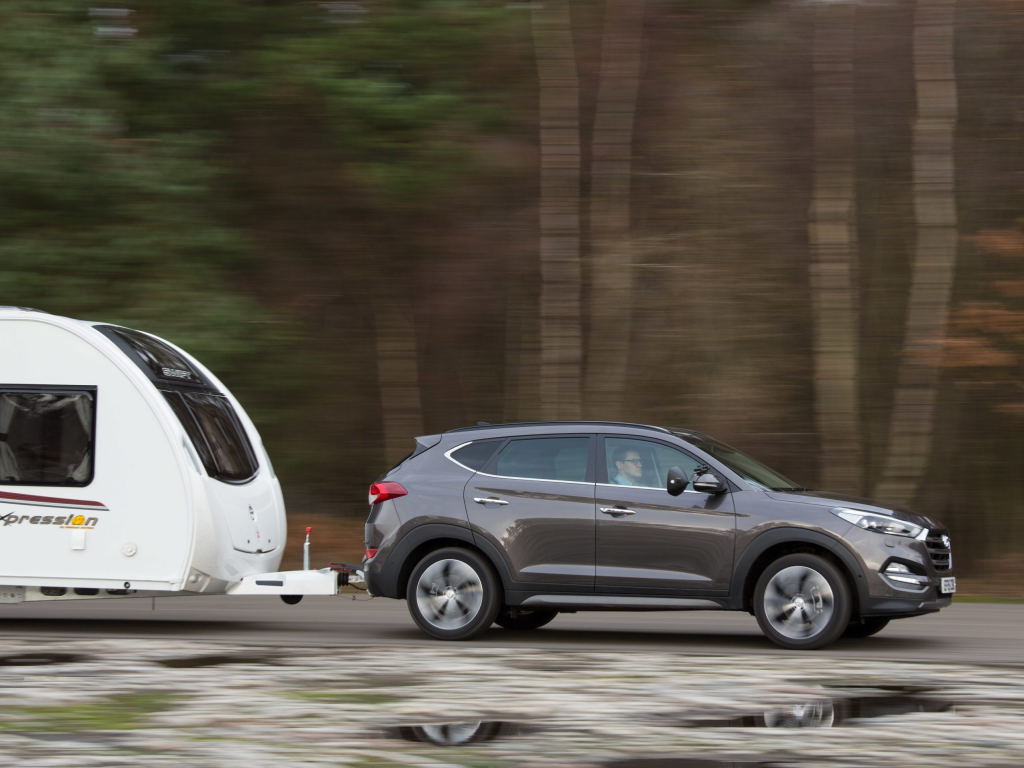
2026 Hyundai Tucson towing a small utility trailer near Topeka KS

2026 Hyundai Tucson Towing Guide: What Topeka Drivers Can Tow

Brief Summary / Excerpt: The 2026 Hyundai Tucson offers improved light-duty towing capability for gas models, plus efficient hybrid and plug-in hybrid options for drivers who want SUV versatility. According to Hyundai USA, gas-powered 2026 Tucson models can tow up to 2,750 pounds with trailer brakes, while Tucson Hybrid and Plug-in Hybrid models can tow up to 2,000 pounds with trailer brakes. Introduction The 2026 Hyundai Tucson is one of the most versatile compact SUVs in the Hyundai lineup. It is comfortable enough for daily commuting, spacious enough for family errands, efficient enough for regular driving around Topeka, and capable enough for light towing when properly equipped. If you are planning to tow a small utility trailer, cargo trailer, kayak trailer, compact camping trailer, or weekend gear, it is important to understand what the Tucson can safely handle. Towing capacity depends on the powertrain, drivetrain, trailer brakes, hitch equipment, passenger load, cargo weight, and how the trailer is loaded. For 2026, Hyundai USA lists the gas-powered Tucson with a higher braked towing rating than the 2025 model. According to Hyundai’s official 2026 Tucson specifications, gas models can tow up to 2,750 pounds with trailer brakes and up to 1,650 pounds without trailer brakes. Hyundai’s official hybrid and plug-in hybrid specifications list those models at up to 2,000 pounds with trailer brakes and up to 1,650 pounds without trailer brakes. If you are comparing Tucson trims or want help choosing the right Hyundai SUV for your towing needs, browse new Hyundai vehicles in Topeka or schedule a Hyundai test drive at McCarthy Hyundai of Topeka. How Much Can the 2026 Hyundai Tucson Tow? The 2026 Tucson towing rating depends on which powertrain you choose. Gas-powered models offer the highest towing capacity, while hybrid and plug-in hybrid models trade some towing capacity for stronger fuel efficiency and standard electrified performance. 2026 Hyundai Tucson Powertrain Drivetrain Availability Towing With Trailer Brakes Towing Without Trailer Brakes 2.5L Gasoline FWD or available HTRAC AWD Up to 2,750 lbs Up to 1,650 lbs 1.6L Turbo Hybrid Standard HTRAC AWD Up to 2,000 lbs Up to 1,650 lbs 1.6L Turbo Plug-in Hybrid Standard HTRAC AWD Up to 2,000 lbs Up to 1,650 lbs These ratings apply when the vehicle is properly equipped. Always confirm the towing rating for the exact Tucson trim, hitch, trailer, and equipment you plan to use before towing. What Changed for the 2026 Tucson? The biggest towing-related update for 2026 is that gas-powered Tucson models now offer a higher towing rating than the previous U.S.-market 2025 Tucson. The 2025 U.S. Tucson was listed at up to 2,000 pounds with trailer brakes, while Hyundai USA now lists the 2026 gas Tucson at up to 2,750 pounds with trailer brakes. Hybrid and plug-in hybrid models remain rated at up to 2,000 pounds with trailer brakes. That means the gas-powered Tucson is the better choice if maximum towing is your top priority, while the Tucson Hybrid and Plug-in Hybrid are better choices if you want standard HTRAC all-wheel drive, strong fuel economy, and light towing capability. What Can a 2026 Hyundai Tucson Tow? A 2,750-pound braked towing rating on gas Tucson models gives drivers more flexibility for light-duty towing. It is still not a replacement for a midsize or full-size truck, but it can handle many small trailers when properly equipped. Possible Towing Uses for the Gas Tucson Small utility trailer Light cargo trailer Small landscaping trailer Kayak or canoe trailer Small motorcycle trailer Light camping trailer within weight limits Small moving trailer, carefully loaded Possible Towing Uses for Tucson Hybrid and Plug-in Hybrid Small utility trailer Light cargo trailer Small watercraft trailer Bike or outdoor gear trailer Light-duty weekend hauling Remember that trailer weight means the loaded trailer weight, not just the empty trailer weight. Cargo, water, fuel, tools, coolers, camping supplies, and accessories all count. Braked vs. Unbraked Towing The difference between braked and unbraked towing is important. A braked trailer has its own braking system that helps slow the trailer. An unbraked trailer depends on the vehicle’s brakes alone. For the 2026 Tucson, the higher towing ratings require trailer brakes. Without trailer brakes, Hyundai USA lists the towing limit at 1,650 pounds. This matters because towing is not just about pulling weight. It is also about stopping, turning, stability, and control. Which 2026 Tucson Is Best for Towing? Choose the Gas Tucson If You Want Maximum Towing If towing capacity is your main priority, the gas-powered 2026 Tucson is the strongest option in the lineup. Its 2.5L 4-cylinder engine produces 187 horsepower and 178 lb-ft of torque, and Hyundai lists gas models at up to 2,750 pounds with trailer brakes. Choose the Tucson Hybrid If You Want Efficiency and Light Towing The Tucson Hybrid is a great fit for drivers who want better fuel efficiency, standard HTRAC all-wheel drive, and enough towing capacity for lighter trailers. Hyundai lists the 2026 Tucson Hybrid at up to 2,000 pounds with trailer brakes. Choose the Tucson Plug-in Hybrid If You Want Electric Driving Flexibility The Tucson Plug-in Hybrid offers the ability to drive short distances on electric power when charged, while still keeping gas-engine flexibility for longer trips. Hyundai lists the 2026 Tucson Plug-in Hybrid at up to 2,000 pounds with trailer brakes. Safe Towing Tips for Tucson Drivers Even light towing requires preparation. Before towing with your Tucson, confirm that your vehicle, hitch, wiring, trailer brakes, tires, and load are ready. Use towing equipment rated for your trailer weight. Confirm trailer brakes are working if towing above the unbraked limit. Check vehicle and trailer tire pressure before departure. Keep heavier cargo low and centered over the trailer axle. Secure all cargo so it cannot shift. Leave extra following distance. Brake earlier and accelerate gradually. Use extra caution in wind, rain, snow, or heavy traffic. The National Highway Traffic Safety Administration offers helpful general towing guidance through its trailer safety resources. Pre-Towing Checklist Check What to Confirm Why It Matters Loaded Trailer Weight Trailer and cargo stay within Tucson limits Prevents overloading Trailer Brakes Required for higher towing rating Improves stopping control Hitch Rating Hitch matches vehicle and trailer needs Protects the connection point Wiring Brake lights and turn signals work Improves visibility to other drivers Tire Pressure Vehicle and trailer tires are properly inflated Supports handling and tire safety Load Balance Cargo is centered and secured Helps reduce sway Schedule Tucson Service or Shop Hyundai SUVs in Topeka If you already own a Tucson and plan to tow, a pre-trip inspection can help confirm your tires, brakes, fluids, lights, and towing equipment are ready. If you are shopping for a Tucson, McCarthy Hyundai of Topeka can help you compare gas, hybrid, and plug-in hybrid models. Schedule service through the McCarthy Hyundai of Topeka service center Review current Hyundai service and parts specials Browse new Hyundai vehicles in Topeka Explore used cars for sale in Topeka Shop certified pre-owned Hyundai vehicles Learn about Hyundai financing options Schedule a Hyundai test drive in Topeka Key Takeaways The 2026 Hyundai Tucson gas model can tow up to 2,750 pounds with trailer brakes. The 2026 Tucson Hybrid and Plug-in Hybrid can tow up to 2,000 pounds with trailer brakes. Without trailer brakes, Hyundai USA lists Tucson towing capacity at up to 1,650 pounds. The gas Tucson is the best choice if maximum towing is your top priority. The Tucson Hybrid and Plug-in Hybrid are better choices for efficiency plus light towing. Always confirm loaded trailer weight, hitch rating, wiring, trailer brakes, tongue weight, and vehicle payload before towing. Why Choose McCarthy Hyundai of Topeka? When towing capability matters, accurate information matters too. McCarthy Hyundai of Topeka helps local drivers compare Hyundai SUVs, understand trim differences, review towing-related equipment, and choose the right vehicle for daily driving, family use, and weekend plans. Located at 2920 S Kansas Ave, Topeka, KS 66611, McCarthy Hyundai of Topeka serves drivers throughout Topeka and northeast Kansas with new Hyundai vehicles, used vehicles, certified pre-owned options, financing resources, and service after the sale. Drivers choose McCarthy Hyundai of Topeka for: Helpful Hyundai product knowledge New, used, and certified pre-owned Hyundai options Convenient test-drive scheduling Service support for towing preparation and maintenance Financing resources for different budgets A local team focused on customer care Learn more about McCarthy Hyundai of Topeka, browse new Hyundai inventory, or schedule a Hyundai test drive. Conclusion The 2026 Hyundai Tucson is a practical compact SUV for drivers who want everyday comfort and useful light-duty towing capability. Gas-powered Tucson models offer the strongest towing rating in the lineup at up to 2,750 pounds with trailer brakes, while Tucson Hybrid and Plug-in Hybrid models provide up to 2,000 pounds with trailer brakes plus added efficiency benefits. For small trailers, weekend gear, light utility hauling, and carefully matched recreational loads, the Tucson can be a smart choice. If you need to tow heavier trailers, a larger Hyundai SUV or a more towing-focused vehicle may be a better fit. To compare 2026 Tucson models or prepare your Hyundai for towing, contact McCarthy Hyundai of Topeka at (785) 267-2800, browse current new Hyundai vehicles in Topeka, or schedule service through the McCarthy Hyundai of Topeka service center. Frequently Asked Questions How much can the 2026 Hyundai Tucson tow? The 2026 Hyundai Tucson gas model can tow up to 2,750 pounds with trailer brakes. Tucson Hybrid and Plug-in Hybrid models can tow up to 2,000 pounds with trailer brakes. How much can the 2026 Hyundai Tucson tow without trailer brakes? Hyundai USA lists the 2026 Tucson towing capacity without trailer brakes at up to 1,650 pounds. Which 2026 Tucson is best for towing? The gas-powered 2026 Tucson is best for maximum towing because it is rated up to 2,750 pounds with trailer brakes. Can the 2026 Tucson Hybrid tow? Yes. Hyundai USA lists the 2026 Tucson Hybrid at up to 2,000 pounds with trailer brakes and up to 1,650 pounds without trailer brakes. Can the 2026 Tucson Plug-in Hybrid tow? Yes. Hyundai USA lists the 2026 Tucson Plug-in Hybrid at up to 2,000 pounds with trailer brakes and up to 1,650 pounds without trailer brakes. Where can I test drive a 2026 Hyundai Tucson in Topeka? You can schedule a 2026 Hyundai Tucson test drive through McCarthy Hyundai of Topeka.