
• McCarthy Hyundai of Lawrence

Blog / Lawrence Hyundai Dealer

How to Check Your Hyundai Brake Pads: A Practical Step-by-Step Guide in Lawrence, KS

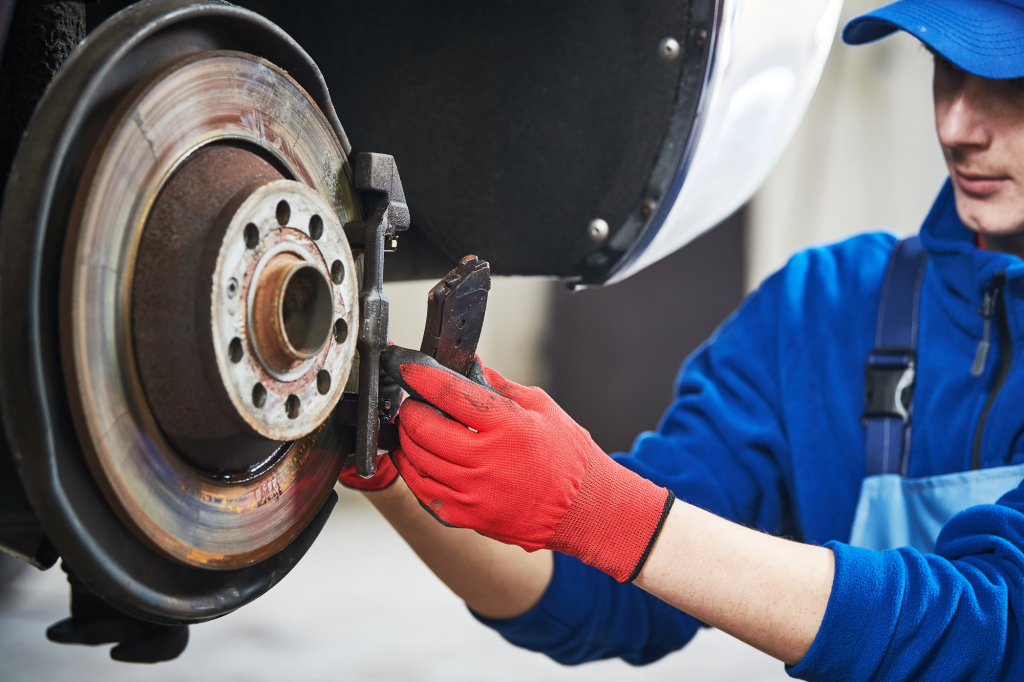
 Hyundai brake pad being visually inspected through wheel spoke at McCarthy Hyundai of Lawrence KS

Summary: Checking your brake pads does not require a lift, special tools, or a mechanical background. With a flashlight and about five minutes, you can assess your Hyundai's brake pad condition and know whether you are well inside the safe zone, approaching the replacement threshold, or past it. At McCarthy Hyundai of Lawrence, this is the practical guide every Hyundai driver in Lawrence and northeast Kansas should know.

Why Checking Your Brakes Yourself Actually Matters

Most drivers wait for a noise before thinking about their brakes. That approach works, eventually, but it means you are relying on a warning system designed to alert you when pads are already near the end of their life. A quick visual check every few months catches wear earlier, lets you plan service on your schedule rather than reactively, and confirms what your service technician tells you at your next visit.

It also gives you a reference point. A driver who has seen their own brake pads at 8mm, then again at 5mm, then again at 3mm, has a much better sense of how fast their pads are wearing and when service is actually needed. That knowledge is worth having.

According to Hyundai USA, the recommended frequency for brake inspection is every 7,500 miles or with every tire rotation, roughly every six months. Between professional inspections, a monthly visual check through the wheel spokes takes less time than checking your tire pressure and gives you valuable information about one of your vehicle's most critical safety systems.

Understanding What You Are Looking At

Before you get down next to the wheel, it helps to understand the basic anatomy of what you will see so you know what each component is and what healthy versus worn looks like.

Behind your Hyundai's wheel, you will see a large metal disc: that is the brake rotor. Clamped around the rotor is the brake caliper, a metal housing that contains the brake pads on both sides of the rotor. When you press the brake pedal, hydraulic pressure pushes the pads inward to clamp the rotor and create friction.

The brake pad itself consists of two parts: the friction material, which is the dark, textured surface that contacts the rotor, and the steel backing plate behind it, which is the structural base. The friction material is what wears down with every brake application. When it wears through to the backing plate, metal contacts metal, the rotor is damaged immediately, and braking performance drops sharply.

A new Hyundai brake pad starts with approximately 12mm of friction material. The replacement threshold specified by Hyundai USA is 3mm. Everything between 12mm and 3mm is the usable service life of the pad. Your job during a visual inspection is to estimate where in that range your pads currently sit.

Method 1: Checking Brake Pads Through the Wheel Spokes

This is the fastest method and requires no tools beyond a flashlight. It works on most Hyundai models with alloy wheels that have open spoke designs, which covers the majority of current Tucson, Santa Fe, Elantra, Palisade, Sonata, and IONIQ models.

Step 1: Park Safely and Prepare

Park your Hyundai on a flat, level surface and engage the parking brake. Turn the engine off. If the vehicle has been recently driven, the rotors will be warm: this is fine for a visual inspection since you are not touching anything, but be aware that metal components get hot during braking.

Step 2: Turn the Steering Wheel for Better Visibility

On the front wheels, turning the steering wheel fully to one side before you step out dramatically improves visibility of the brake components behind that wheel. Turn the wheel fully to the right to get the best view of the driver's side front brake, then left for the passenger side front brake. Rear brakes are visible without this step.

Step 3: Crouch Down and Look Through the Spokes

Position yourself at wheel height and look through the wheel spokes toward the caliper assembly. Use your flashlight to illuminate the area, particularly if you are in a garage or low-light environment. You are looking for the brake pad pressed against the face of the rotor.

Step 4: Assess the Friction Material Thickness

What you are looking for is the amount of dark friction material visible between the rotor surface and the steel backing plate. Here is what each observation means in practice:

  • Thick, uniform dark material (looks like more than half an inch): You are well within the safe zone. Pads are likely 7mm or more. No action needed.
  • Moderate friction material (looks like roughly a quarter inch): Pads are in the 4 to 6mm range. Approaching the replacement window but not urgent. Plan service within a few months and mention it at your next oil change.
  • Thin material (looks like 3mm or less, approaching the backing plate): You are at or near the Hyundai replacement threshold. Schedule service promptly.
  • No visible friction material, backing plate appears to contact the rotor: This is the metal-on-metal stage. Do not delay. Service is needed immediately.

Step 5: Check the Wear Indicator Slot

Many Hyundai brake pads have a center slot or groove machined into the friction material that serves as a visual wear indicator. When new, this slot is clearly visible as a channel running across the pad face. As the pad wears toward its replacement threshold, the slot becomes shallower and eventually disappears. If you can see the slot clearly, you have remaining pad life. If the slot is difficult to see or gone entirely, you are approaching the replacement threshold.

Step 6: Repeat for All Four Wheels

Front and rear brake pads wear at significantly different rates. Front brakes perform approximately 70 percent of the total stopping work because forward momentum transfers weight to the front during braking, increasing the load on the front pads. This means front pads typically wear two to three times faster than rear pads on the same vehicle. Always check all four corners rather than assuming the rears are fine because the fronts look good.

Method 2: Checking Brake Pads With the Wheel Removed

If your Hyundai has wheels that do not allow a clear view through the spokes, or if you want a fully unobstructed inspection with precise measurement capability, removing the wheel gives you complete access to the entire brake assembly.

What You Will Need

  • A floor jack and jack stands
  • Lug wrench or breaker bar with the correct socket for your Hyundai's lug nuts
  • Flashlight
  • Wheel chocks for the opposite axle
  • Optionally, a digital caliper for precise measurement

The Process

Place wheel chocks behind the rear wheels if working on the front, or in front of the front wheels if working on the rear. Loosen the lug nuts slightly while the wheel is still on the ground to prevent it from spinning. Position the floor jack under the vehicle frame at the designated jacking point for your model (refer to your owner's manual for the correct location) and raise the vehicle. Support it on jack stands before removing the wheel. Never work under a vehicle supported only by a floor jack.

Remove the lug nuts and wheel. With the wheel off, you have a clear, unobstructed view of the entire brake assembly including both the outer and inner brake pads, the full rotor surface, the caliper, and the brake lines. The outer pad is the one you could partially see through the spokes. The inner pad faces the wheel hub and is only visible with the wheel removed.

The inner pad is important to check because calipers occasionally develop a sticking piston that causes the inner pad to wear significantly faster than the outer pad. If you only ever check the outer pad, a prematurely worn inner pad can go undetected until serious rotor damage occurs.

Use your flashlight to assess friction material thickness on both pads. If you have a digital caliper, you can measure the exposed pad thickness directly. Anything below 3mm friction material thickness is at or past Hyundai's replacement specification. Anything in the 3 to 4mm range is the replacement window. Anything above 6mm is still in the comfortable service life range.

While the wheel is off, also look at the rotor surface. A healthy rotor has a smooth, lightly shiny appearance. Visible grooves or scoring in the rotor face, a raised rust ridge at the outer edge of the rotor where no pad contact occurs, or deep rust pitting indicates the rotor's condition needs professional evaluation at your next service visit.

Warning Signs to Listen and Feel for Between Visual Checks

Visual inspection gives you the clearest picture of pad condition, but your Hyundai also communicates brake wear through sound and feel. Understanding the progression of these signals helps you respond at the right time:

Squealing When Braking

This is the designed early warning system. A small metal wear indicator tab is built into Hyundai brake pads and begins contacting the rotor surface when pads approach the 3mm threshold. The resulting high-pitched squeal is intentional: it is the brake system telling you service is due. You can still drive to a service appointment, but do not ignore it or delay. The sound is telling you something specific and accurate.

Note that new brake pads occasionally squeal briefly during the first few hundred miles of use, and pads can also squeal temporarily after sitting overnight in damp conditions. The wear indicator squeal is persistent, occurs every time you brake, and does not go away after a few minutes of driving.

Grinding Metal-on-Metal Sound

If the squealing stage was ignored, the next sound is grinding. This means the friction material is gone and the steel backing plate is contacting the rotor directly with every brake application. Rotor damage is active and immediate. Do not continue driving normally. Drive carefully directly to service or arrange towing.

Pulsation or Vibration Through the Brake Pedal

A pedal that pulsates or vibrates during braking indicates an uneven rotor surface rather than a tire balance issue. This can result from heat-warped rotors or from uneven pad material transfer onto the rotor face from delayed pad replacement. Either way it is a brake system issue that needs professional diagnosis and should not be confused with steering wheel shimmy from wheel balance problems, which is felt at speed without braking.

Vehicle Pulling to One Side While Braking

If your Hyundai pulls left or right under braking, one brake is applying more force than the other. This usually means uneven pad wear, a sticking caliper piston on one side, or a brake fluid flow restriction. It is a safety issue that needs diagnosis rather than simply replacing pads on both sides without finding the root cause.

Brake Warning Light

Hyundai models equipped with electronic brake pad wear sensors will illuminate a dashboard warning light when pads reach minimum thickness. Not all trim levels include this sensor, and it is a last-resort alert rather than an early warning system. If the light comes on, service is overdue rather than approaching. Some Hyundai models use the same warning light for both pad wear and low brake fluid level, which is why any brake warning light illumination warrants prompt inspection rather than simply checking pad thickness.

The Brake Pad Wear Progression: A Quick Reference

Pad ThicknessConditionAction
10 to 12mmNew or nearly newNo action needed. Check again at next rotation.
6 to 9mmNormal service wearNo action needed. Monitor at each inspection.
4 to 5mmApproaching replacement windowPlan service within 1 to 2 months. Mention at next oil change.
3 to 4mmReplacement threshold per Hyundai USASchedule service promptly. Squealing likely starting soon.
Below 3mmPast replacement specificationService needed immediately. Rotor damage risk is high.
Backing plate visibleMetal-on-metal contactDo not delay. Drive carefully to service center or tow.

What Happens at a Professional Brake Inspection at McCarthy Hyundai of Lawrence

A DIY visual check gives you a useful general picture, but it has limitations. You can estimate thickness and spot obvious wear, but you cannot precisely measure both inner and outer pad thickness simultaneously, assess rotor surface finish and minimum thickness, evaluate caliper piston movement and seal condition, test brake fluid moisture content, or check brake line integrity. A professional inspection covers all of these.

At McCarthy Hyundai of Lawrence, our certified technicians measure pad thickness with precision tools on all four corners, compare rotor thickness to the manufacturer's minimum specification for your specific Hyundai model, assess caliper function, check brake fluid condition and moisture content, and inspect brake lines for any signs of corrosion or wear. You get a complete picture rather than a partial one, and every measurement is documented in your service record.

Hyundai recommends this comprehensive inspection every 7,500 miles or with every tire rotation. We include it automatically at every oil change service, which means if you are staying on schedule with oil changes at McCarthy, your brakes are being professionally assessed approximately every six months without any additional appointment needed.

Key Takeaways: Checking Your Hyundai Brake Pads

  • ✅ New Hyundai brake pads start at approximately 12mm. Hyundai USA specifies replacement before pads wear below 3mm.
  • ✅ Visual inspection through the wheel spokes takes about five minutes and requires only a flashlight.
  • ✅ Check all four wheels, not just the front, since inner pads and rear pads can wear differently than outer and front pads.
  • ✅ Squealing during braking is the designed wear indicator alert and signals pads are near the 3mm threshold. Grinding means the friction material is gone.
  • ✅ Pedal pulsation is a rotor issue, not a pad wear symptom alone, and needs professional diagnosis.
  • ✅ Hyundai recommends professional brake inspection every 7,500 miles, which our team performs automatically at every oil change.

Why Choose McCarthy Hyundai of Lawrence for Brake Service?

When your visual inspection reveals pads approaching the replacement threshold, or when you hear or feel any of the warning signs described above, the next step is a professional inspection and service at McCarthy Hyundai of Lawrence:

  • Factory-Certified Hyundai Technicians: Our team knows the exact pad and rotor specifications for every Hyundai model and measures precisely rather than estimating visually.
  • Brake Inspection at Every Oil Change: Included automatically. You never need a separate appointment to know where your brakes stand.
  • Genuine OEM Brake Pads and Rotors: Every replacement uses Hyundai-approved components that match your vehicle's original friction specifications and protect your warranty.
  • Honest, Documented Recommendations: We give you the actual measurements and let you decide. No pressure, no exaggeration.
  • 4.5-Star Google Rating with Nearly 1,500 Reviews: Our service reputation reflects years of straightforward, accurate work for the Lawrence community.
  • Easy Online Scheduling: Book your service appointment online any time, 24 hours a day.
  • Convenient Lawrence Location: Find us at 2829 Iowa St, Lawrence, KS 66047. Call us at (785) 838-2327 with any questions.

Conclusion: Five Minutes That Can Save Your Rotors and Your Safety

Brake pad inspection is one of the simplest, most accessible maintenance habits a driver can develop. You do not need a lift or a shop. You need a flashlight, a few minutes, and the knowledge of what you are looking for. The habit of checking your Hyundai's pads every couple of months, combined with professional inspection at every oil change, gives you complete visibility on one of the most safety-critical systems in your vehicle.

When it is time for service, our certified team at McCarthy Hyundai of Lawrence is here with the expertise, the right parts, and the honest approach that keeps your Hyundai's brakes exactly where they need to be.

📍 Visit us: 2829 Iowa St, Lawrence, KS 66047
📞 Call us: (785) 838-2327
🔧 Schedule a brake inspection online | Explore our service center

Frequently Asked Questions: Checking Hyundai Brake Pads

How do I check my Hyundai brake pads without removing the wheels?

Look through the wheel spokes toward the brake caliper assembly using a flashlight. You should be able to see the brake pad pressed against the rotor face. Assess the thickness of the dark friction material visible between the rotor and the steel backing plate. On the front wheels, turning the steering wheel fully to one side before stepping out improves visibility significantly. If the friction material looks very thin or you cannot see it clearly, remove the wheel for a closer inspection.

What thickness means my Hyundai brake pads need replacing?

Hyundai USA specifies replacing brake pads before they wear below 3mm of friction material. New pads start at approximately 12mm. At 3 to 4mm, symptoms like squealing from the wear indicator typically begin. Below 3mm, you are past the replacement specification and risk damaging the rotors. Above 6mm, you are in the comfortable portion of the service life range.

What does brake pad squealing mean on my Hyundai?

Squealing during braking is usually the wear indicator tab, a small metal component built into the brake pad, making contact with the rotor. This is an intentional warning that friction material is approaching the 3mm replacement threshold. You can drive to a scheduled service appointment, but do not delay. A grinding sound indicates the friction material is gone entirely and the steel backing plate is contacting the rotor, which requires immediate service.

Why do I need to check all four wheels?

Front and rear brakes wear at significantly different rates since the front brakes perform approximately 70 percent of the total stopping work. Front pads typically wear two to three times faster than rear pads. Additionally, inner and outer pads on the same axle can wear at different rates if a caliper piston is sticking. Checking all four corners gives you the complete picture that a single quick glance at one wheel cannot provide.

How often does Hyundai recommend brake inspection?

Hyundai recommends brake inspection every 7,500 miles or with every tire rotation, approximately every six months under normal driving conditions. McCarthy Hyundai of Lawrence includes brake inspection automatically at every oil change service, meaning drivers on our standard maintenance schedule have their brakes professionally assessed approximately twice a year without any additional scheduling required.

How do I schedule a brake inspection at McCarthy Hyundai of Lawrence?

Use our online service scheduler available 24 hours a day, call us at (785) 838-2327, or visit us at 2829 Iowa St, Lawrence, KS 66047. A comprehensive brake inspection is included with every oil change appointment automatically.
Posted in:

Related Posts

2025 Hyundai Tucson Plug-in Hybrid driving near Topeka KS with fuel-saving PHEV technology

How Much Fuel Can You Save With a 2025 Hyundai Tucson Plug-in Hybrid?

Brief Summary: The 2025 Hyundai Tucson Plug-in Hybrid can help Topeka drivers cut fuel use by combining an EPA-estimated 32 miles of all-electric range with hybrid efficiency for longer trips. Compared with a gas-only Tucson AWD, the Tucson PHEV can save hundreds of dollars per year depending on how often you charge, how far you drive, and local fuel and electricity prices. Introduction Fuel prices are one of those everyday expenses that never seem to stay predictable for long. One month they feel manageable, and the next month your commute, school drop-offs, errands, and weekend drives across Kansas start costing noticeably more. That is why more SUV shoppers are taking a serious look at plug-in hybrids like the 2025 Hyundai Tucson Plug-in Hybrid. The Tucson PHEV is designed for drivers who want the flexibility of gasoline power but also want to complete many daily drives using electricity alone. According to Hyundai, the 2025 Tucson Plug-in Hybrid offers an EPA-estimated 32 miles of all-electric range and 77 combined MPGe when operating with electric power. Once the battery’s usable electric range is depleted, it continues operating like a traditional hybrid SUV. For many Topeka drivers, that combination makes a lot of sense. If your daily commute is under 32 miles, or if most of your driving is local, you may be able to use little to no gasoline during the week. For longer drives to Kansas City, Manhattan, Lawrence, or Wichita, the gas engine is there when you need it. If you are shopping for an efficient Hyundai SUV, you can browse current new Hyundai inventory, review available new vehicle specials, or schedule a test drive with McCarthy Hyundai of Topeka. 2025 Hyundai Tucson PHEV Fuel Savings at a Glance The exact amount you can save depends on your driving habits. A plug-in hybrid rewards drivers who charge regularly. If you plug in at home and use electric range for short trips, your fuel use can drop dramatically. If you rarely charge, the Tucson PHEV still functions as a hybrid, but you will not see the same savings. Model EPA Efficiency Estimate Best Use Case Fuel-Saving Advantage 2025 Hyundai Tucson Plug-in Hybrid 32-mile electric range, 77 combined MPGe, 35 MPG gas-only hybrid operation Drivers who can charge regularly and make frequent local trips Highest potential fuel savings 2025 Hyundai Tucson Hybrid Up to 38 MPG combined on select trims; other trims around 35 MPG combined Drivers who want efficiency without plugging in Strong fuel savings versus gas-only SUV 2025 Hyundai Tucson Gas AWD 24 city / 30 highway / 26 combined MPG Drivers who want lower upfront complexity and traditional fueling Simple ownership, but higher fuel use Hyundai lists the 2025 Tucson gas AWD at an EPA-estimated 24 city, 30 highway, and 26 combined MPG. Hyundai also lists the 2025 Tucson Plug-in Hybrid with 32 miles of all-electric range and 77 combined MPGe. You can compare official efficiency details through Hyundai USA and the federal FuelEconomy.gov database. What Is a Plug-in Hybrid SUV? A plug-in hybrid electric vehicle, often called a PHEV, sits between a traditional hybrid and a fully electric vehicle. It has a gasoline engine, an electric motor, and a larger battery than a conventional hybrid. That battery can be charged from an outside power source, such as a home Level 2 charger or compatible public charger. In normal driving, the Tucson PHEV can operate in electric mode for short trips. Once the battery’s electric range is used, the vehicle continues as a hybrid, blending gas and electric power to improve efficiency. This gives drivers two major advantages: electric driving for daily local use and gasoline flexibility for longer trips. Why That Matters in Topeka Topeka is the kind of place where a PHEV can be especially practical. Many daily routes are well within the Tucson PHEV’s electric range. A commute from residential areas into central Topeka, a grocery run, a school pickup, or a quick drive to restaurants and shopping may use little or no gas if the battery is charged. At the same time, Kansas drivers often need flexibility. Weekend plans can mean highway miles, rural roads, lake trips, college visits, family travel, or longer drives across the state. With the Tucson PHEV, you do not have to rely only on charging infrastructure. You can plug in when it is convenient and use gasoline when the trip calls for it. How Much Fuel Can You Actually Save? Let’s use a simple example based on 15,000 miles of annual driving, which is a common benchmark used for fuel-cost comparisons. These are not guaranteed savings, but they show how the Tucson PHEV can reduce fuel use when charged regularly. Scenario 1: You Rarely Charge the Tucson PHEV If you rarely plug in, the Tucson PHEV operates mostly like a hybrid. In that case, its advantage over the gas-only Tucson still exists, but it is smaller than it could be. Gas-only Tucson AWD at 26 MPG: about 577 gallons per 15,000 miles Tucson PHEV operating mostly in hybrid mode at about 35 MPG: about 429 gallons per 15,000 miles Estimated fuel saved: about 148 gallons per year If regular gas averages $3.24 per gallon, that is roughly $480 in annual fuel savings compared with a gas-only Tucson AWD. Again, actual pricing changes by station, season, and market. Scenario 2: You Charge Regularly and Drive 60% Electric This is where the Tucson PHEV starts to show its real value. If 60% of your annual miles are completed in electric mode and the remaining 40% use hybrid gasoline operation, you could reduce gasoline use significantly. Annual miles: 15,000 Electric miles: 9,000 Gas/hybrid miles: 6,000 Gas used at 35 MPG for hybrid miles: about 171 gallons Fuel saved versus gas-only Tucson AWD: about 406 gallons per year At $3.24 per gallon, saving about 406 gallons equals roughly $1,315 in avoided gasoline purchases before accounting for electricity cost. After adding home charging costs, many drivers could still save several hundred dollars per year compared with a gas-only compact SUV. Scenario 3: Most Daily Driving Fits Within the Electric Range If your regular driving is mostly local and you charge consistently, you may complete a large share of your annual miles on electricity. For example, if 12,000 of your 15,000 annual miles are electric and only 3,000 miles use gasoline, the Tucson PHEV may use only about 86 gallons of gas per year for the gasoline portion. Compared with the gas-only Tucson AWD’s estimated 577 gallons per year, that is a difference of roughly 491 gallons. At $3.24 per gallon, that is nearly $1,590 in avoided gasoline before electricity costs. Electricity is not free, of course, but home charging can still be much less expensive per mile than gasoline in many situations. Why Electric Range Changes Everything The Tucson PHEV’s 32-mile electric range may not sound huge at first, especially compared with a fully electric vehicle. But for daily driving, 32 miles can cover a lot. According to the U.S. Department of Transportation’s National Household Travel Survey, many daily vehicle trips in the U.S. are relatively short. That is exactly where a plug-in hybrid can shine. Think about your own driving patterns. How many of your daily drives are under 10 miles? How many are under 20? If you can charge at home overnight, you may start many mornings with a full electric range and use the gas engine only when your day runs longer than usual. Charging the 2025 Tucson Plug-in Hybrid The Tucson PHEV is most convenient when you can charge at home. A Level 2 home charging setup can refill the battery much faster than a standard household outlet, making overnight charging simple. For many owners, plugging in becomes as routine as charging a phone. Home Charging Benefits You can start many mornings with a full electric range You reduce trips to the gas station You may be able to charge during lower-cost electricity periods depending on your utility plan You get the best fuel-saving benefit from the PHEV system If you are considering a PHEV, it is worth reviewing your parking situation. A garage, driveway, or dedicated parking spot with charging access makes ownership much easier. Apartment and condo drivers may still make a PHEV work, but they should check local charging availability first. Performance: Efficient Does Not Mean Slow The 2025 Hyundai Tucson Plug-in Hybrid is not just about saving fuel. It is also one of the more powerful Tucson configurations. The turbocharged hybrid powertrain provides confident acceleration, and standard HTRAC all-wheel drive gives the SUV added traction in changing weather. That matters for Kansas drivers. Rain, winter slush, gravel roads, and windy highway conditions can all make stability and traction feel more important. The Tucson PHEV gives you efficiency without stripping away the utility people expect from an SUV. PHEV vs. Hybrid vs. Gas Tucson: Which One Fits You? Choose the Tucson Plug-in Hybrid If: You can charge at home or work Your daily driving is often under 32 miles You want to reduce gasoline use as much as possible You like the idea of electric driving without full EV range anxiety You want standard AWD and strong hybrid performance Choose the Tucson Hybrid If: You want better MPG but do not want to plug in You park somewhere charging is not convenient You want a simpler transition from a gas SUV You drive a mix of city and highway miles Choose the Gas Tucson If: You want a lower starting price You prefer traditional fueling You do not drive enough miles to justify a hybrid or PHEV upgrade You want a straightforward compact SUV with strong everyday practicality Other Ways the Tucson PHEV Can Save Money Fuel savings are the headline benefit, but they are not the only factor. A plug-in hybrid may also reduce engine wear during electric-only driving, because the gas engine is not running for every mile. Regenerative braking can help reduce some brake wear as well, though brake inspections remain important. Depending on current federal rules, local incentives, and your tax situation, some electrified vehicles may qualify for incentives or credits. These rules change often, so shoppers should review current information through the IRS Clean Vehicle Tax Credits page and speak with a qualified tax professional before making assumptions. If you want help comparing monthly payment options, trade-in value, and long-term cost, the team at our Hyundai finance center can walk you through available choices. Keeping Your Tucson PHEV Efficient To get the most from a plug-in hybrid, your habits matter. The Tucson PHEV rewards consistent charging and smooth driving. A few simple routines can help maximize savings: Charge overnight whenever possible Use preconditioning while plugged in to reduce battery drain before driving Keep tires properly inflated Stay current on scheduled maintenance Drive smoothly and avoid unnecessary hard acceleration Use regenerative braking effectively when conditions allow Routine maintenance still matters on a PHEV. Oil changes, tire rotations, brake inspections, coolant checks, and software-related inspections help keep the SUV performing properly. You can schedule Hyundai service through our service center and check current service and parts specials before your visit. Key Takeaways The 2025 Hyundai Tucson Plug-in Hybrid offers an EPA-estimated 32 miles of all-electric range. It is rated at 77 combined MPGe when using electric power. When operating without electric charge, the Tucson PHEV functions like a hybrid SUV. Drivers who charge regularly can save the most fuel. Compared with a gas-only Tucson AWD, annual gasoline savings could range from modest to substantial depending on how many miles are driven electrically. The Tucson Hybrid may be better for drivers who cannot plug in regularly. The gas Tucson may suit shoppers who prioritize a lower starting price and traditional fueling. Why Choose McCarthy Hyundai of Topeka? Choosing between a gas, hybrid, and plug-in hybrid SUV is easier when you have a team that can explain the differences clearly. At McCarthy Hyundai of Topeka, we help Kansas drivers compare real-world ownership costs, available inventory, financing options, and day-to-day practicality. Our dealership serves drivers throughout Topeka and the surrounding area with new Hyundai models, used vehicles, financing support, and factory-trained Hyundai service. Whether you are interested in the Tucson PHEV, Tucson Hybrid, gas-powered Tucson, or another Hyundai SUV, our team can help you find the right fit without making the process feel complicated. Visit McCarthy Hyundai of Topeka at 2920 S Kansas Ave, Topeka, KS 66611, call (785) 267-2800, or learn more about our dealership on our About Us page. Conclusion The 2025 Hyundai Tucson Plug-in Hybrid can save a meaningful amount of fuel, especially for Topeka drivers who charge regularly and complete many daily trips within the SUV’s 32-mile electric range. If you plug in consistently, the Tucson PHEV can dramatically reduce gasoline use while still giving you the confidence of a gas engine for longer drives. That said, the best Tucson for you depends on your lifestyle. The Tucson PHEV offers the highest fuel-saving potential. The Tucson Hybrid provides excellent efficiency without charging. The gas Tucson remains a practical choice for drivers who want a traditional compact SUV with a lower barrier to entry. Ready to compare your options? Browse our new Hyundai inventory, view new vehicle specials, or schedule a test drive at McCarthy Hyundai of Topeka. FAQs How far can the 2025 Hyundai Tucson Plug-in Hybrid drive on electricity? The 2025 Hyundai Tucson Plug-in Hybrid has an EPA-estimated 32 miles of all-electric range when the battery is fully charged. What is the 2025 Tucson PHEV MPGe rating? The 2025 Hyundai Tucson Plug-in Hybrid is rated at 77 combined MPGe when using electric power. MPGe is the EPA’s gasoline-equivalent efficiency measurement for electrified vehicles. Does the Tucson PHEV save money if I do not charge it? It can still operate like a hybrid, but you will miss the biggest fuel-saving benefit. The Tucson PHEV saves the most money when you charge regularly and use electric range for daily driving. Is the Tucson PHEV better than the Tucson Hybrid? The Tucson PHEV is better for drivers who can charge often and want electric-only driving for short trips. The Tucson Hybrid may be better for drivers who want strong MPG without plugging in. Does the 2025 Hyundai Tucson Plug-in Hybrid have AWD? Yes. The 2025 Hyundai Tucson Plug-in Hybrid comes with HTRAC all-wheel drive, giving drivers added traction and confidence in changing road conditions. How much gas can I save with the Tucson PHEV? Gas savings depend on how often you charge and how far you drive. Drivers who complete most daily trips on electricity can save hundreds of gallons of gasoline over several years compared with a gas-only Tucson AWD. Where can I test drive a Hyundai Tucson in Topeka? You can schedule a Hyundai Tucson test drive at McCarthy Hyundai of Topeka, located at 2920 S Kansas Ave, Topeka, KS 66611.

2022 Hyundai Kona Electric and gas Kona comparison for Topeka drivers

2022 Hyundai Kona: Should You Buy the EV or Gas Model in Topeka?

Brief Summary: Shopping for a used 2022 Hyundai Kona near Topeka? The Kona Electric delivers impressive efficiency, instant torque, and an EPA-estimated 258-mile range, while the gas-powered Kona offers lower upfront pricing, faster refueling, available all-wheel drive, and easier long-distance flexibility. Here is how to decide which version fits your driving habits, budget, and lifestyle. Introduction The 2022 Hyundai Kona remains one of the more appealing small SUVs on the used market because it gives shoppers two very different ways to drive. You can choose the familiar gas-powered Kona, which offers practical fuel economy, available all-wheel drive, and simple road-trip convenience. Or you can look for the 2022 Hyundai Kona Electric, an all-electric SUV with strong acceleration, low day-to-day energy costs, and zero tailpipe emissions. For drivers in Topeka, Lawrence, Manhattan, Emporia, and the surrounding Kansas communities, the right choice depends on how you use your vehicle. Do you mostly commute around town and have access to home charging? The Kona Electric could be a smart long-term choice. Do you regularly drive longer distances, park outside, or want available AWD for winter roads? The gas Kona may be the easier fit. If you are comparing options now, you can browse current used Hyundai inventory, check Hyundai Certified Pre-Owned options, or schedule time behind the wheel through our online test drive form. 2022 Hyundai Kona EV vs. Gas: Quick Comparison Category 2022 Hyundai Kona Electric 2022 Hyundai Kona Gas Powertrain Electric motor with 64-kWh battery 2.0L 4-cylinder or available 1.6L turbo Horsepower 201 hp 147 hp or 195 hp with turbo Torque 291 lb-ft 132 lb-ft or 195 lb-ft with turbo EPA Range / MPG 258 miles of electric range Up to about 30 MPG combined, depending on trim and drivetrain Drivetrain Front-wheel drive Front-wheel drive or available all-wheel drive Best For Commuters, home chargers, low operating costs Road trips, AWD shoppers, lower upfront cost According to Hyundai’s official 2022 Kona release, the Kona Electric uses a 150-kW electric motor rated at 201 horsepower and 291 lb-ft of torque, while the gas Kona offered a 147-horsepower 2.0-liter engine and an available 195-horsepower turbocharged 1.6-liter engine. Hyundai also listed the Kona Electric with an estimated 258-mile driving range. You can review Hyundai’s original model details on the Hyundai Newsroom. Why the 2022 Hyundai Kona Electric Makes Sense Lower Daily Driving Costs The biggest reason shoppers consider the 2022 Hyundai Kona Electric is simple: it can cost much less to drive day to day than a gas vehicle. Electricity pricing varies by utility, time of use, and charging location, but home charging is often significantly less expensive than paying for gasoline. If your daily routine includes commuting to work, school drop-offs, errands, and local appointments, the Kona Electric can turn those miles into meaningful savings over time. The EPA’s FuelEconomy.gov tool is a helpful resource for comparing estimated annual fuel costs between gas and electric vehicles based on your local energy prices and driving habits. Strong Acceleration and Instant Torque One of the most enjoyable things about the Kona Electric is how quick it feels in normal driving. EVs deliver torque instantly, so the Kona Electric responds quickly when you pull away from a stoplight, merge onto I-70, or pass slower traffic. With 291 lb-ft of torque, it feels stronger than its compact size suggests. That makes the Kona Electric especially appealing for drivers who want efficiency without giving up personality. It is quiet, smooth, and surprisingly energetic around town. No Oil Changes Electric vehicles still need maintenance, but they do not require engine oil changes, spark plugs, fuel filters, or many of the routine services associated with internal-combustion engines. You will still need tire rotations, brake inspections, cabin air filters, wiper blades, coolant checks, and general inspections, but EV maintenance can be simpler in several key areas. Because EVs use regenerative braking, brake wear may also be reduced for many drivers, though brake service is still important. If you already own a Hyundai EV or are considering one, our Hyundai service center in Topeka can help with maintenance questions. 258 Miles of EPA-Estimated Range The 2022 Kona Electric’s EPA-estimated 258-mile range is still competitive for a used EV. For many Topeka drivers, that is more than enough for several days of commuting before plugging in again. It can also handle many regional drives, though longer trips require more planning around charging stops. Cold weather, highway speeds, heavy HVAC use, tire condition, and driving style can affect EV range, so it is best to think of 258 miles as an official estimate rather than a guarantee. Kansas winters and high-speed highway driving may reduce real-world range. Why the 2022 Hyundai Kona Gas Model May Be the Better Fit Lower Upfront Price Used EVs can be excellent values, but the gas-powered Kona may still be easier to find at a lower purchase price, depending on mileage, trim, condition, and local availability. If your main goal is affordable transportation with SUV flexibility, a gas Kona deserves a close look. To compare what is currently available, check our used vehicle inventory or ask our team about budget-friendly Hyundai options. Available All-Wheel Drive This is one of the most important differences: the 2022 Kona Electric was front-wheel drive, while the gas-powered Kona offered available all-wheel drive. For drivers who want extra traction during rain, snow, ice, gravel roads, or winter commutes around Topeka, available AWD can be a major deciding factor. AWD does not replace good tires or careful driving, but it can improve confidence when road conditions change quickly. Faster Refueling on Road Trips If you often drive across Kansas, visit family out of state, or take spontaneous weekend trips, the gas Kona is more convenient. Refueling takes only a few minutes, and gas stations are easy to find almost anywhere. The Kona Electric can road-trip, but it requires more planning. You will need to consider charger locations, charging speed, weather, and whether a charging station is available when you arrive. For some drivers, that is no problem. For others, the gas Kona’s simplicity is worth it. Two Gas Engine Choices The standard 2.0-liter gas engine is a practical choice for daily driving, offering solid efficiency and predictable performance. The available 1.6-liter turbocharged engine brings more power, making the Kona feel more responsive and enjoyable. If you like the Kona’s size but want a livelier drive, the turbo gas model is worth considering. Cost of Ownership: EV vs. Gas Kona When comparing the 2022 Kona Electric and gas Kona, do not focus only on purchase price. Think about total cost of ownership, including fuel or electricity, maintenance, insurance, tires, financing, and resale value. Potential EV Savings Lower energy cost per mile when charging at home No gasoline purchases No engine oil changes Fewer traditional engine-related maintenance items Quiet, smooth daily driving Potential Gas Kona Advantages Often lower upfront purchase price Available all-wheel drive Faster refueling No need for home charging access More familiar ownership experience Financing can also influence the decision. If you are comparing payments on a used Kona Electric, gas Kona, or another Hyundai SUV, our Hyundai finance center can help you explore options. What About EV Tax Credits? EV incentives have changed significantly since the 2022 Kona was new. Some older articles mention federal or provincial incentives that may no longer apply, especially because many earlier posts were written for Canadian shoppers. For U.S. buyers in 2026, eligibility can depend on the vehicle, purchase date, dealer reporting, buyer income, sale price, and current federal rules. Before assuming a used EV qualifies for any credit, check the latest guidance from the IRS Clean Vehicle Tax Credits page and confirm details with a tax professional. Incentive rules change, and your personal tax situation matters. Charging a 2022 Hyundai Kona Electric at Home Home charging is where the Kona Electric becomes most convenient. Most EV owners prefer Level 2 charging, which uses a 240-volt setup and can recharge the Kona Electric overnight. Hyundai originally estimated Level 2 charging from 10% to 100% at around nine hours and 15 minutes. If you only drive 30 to 50 miles per day, you may not need to charge from empty very often. Many EV owners simply plug in a few nights a week and start each morning with plenty of range. Public Charging Considerations The Kona Electric also supports DC fast charging. Hyundai noted that the 2022 Kona Electric could charge from 10% to 80% in approximately 47 minutes under suitable Level 3 fast-charging conditions. Actual charging speed depends on charger output, battery temperature, state of charge, and weather. Before buying a used EV, it is smart to check charging availability near your home, workplace, and regular travel routes. If you do not have reliable home charging, the gas Kona may be a better fit. Which 2022 Hyundai Kona Is Best for Topeka Drivers? Choose the 2022 Kona Electric If: You can charge at home or have reliable charging access Your driving is mostly local or regional You want lower day-to-day energy costs You prefer quiet acceleration and instant torque You do not need all-wheel drive You want to reduce gasoline use and tailpipe emissions Choose the 2022 Kona Gas If: You want available all-wheel drive You frequently take long road trips You do not have easy access to charging You want a potentially lower upfront price You prefer quick refueling You want a familiar maintenance and ownership routine Key Takeaways The 2022 Hyundai Kona Electric offers an EPA-estimated 258-mile range and strong 201-horsepower performance. The gas-powered 2022 Kona offers available AWD, quick refueling, and two engine options. The Kona Electric is ideal for commuters with home charging access. The gas Kona is better for drivers who road-trip often or want extra traction in winter. Used EV incentive rules have changed, so always verify current eligibility before buying. The best choice depends on your driving habits, budget, charging access, and comfort with EV ownership. Why Choose McCarthy Hyundai of Topeka? Choosing between a used Hyundai Kona Electric and a gas-powered Kona is easier when you have a knowledgeable local team helping you compare real vehicles, real prices, and real ownership needs. At McCarthy Hyundai of Topeka, we work with drivers across Topeka and Northeast Kansas to find Hyundai models that fit their lifestyle, budget, and long-term goals. Our team can help you compare used Kona availability, explain EV charging considerations, review gas and electric ownership costs, and walk you through financing options. We also offer a professional Hyundai service department for ongoing maintenance, from tire rotations and brake inspections to EV-related service questions. Visit us at 2920 S Kansas Ave, Topeka, KS 66611, call (785) 267-2800, or learn more about our dealership on our About Us page. You can also explore new Hyundai inventory, browse used vehicles, or view current new vehicle specials. Conclusion So, should you buy the 2022 Hyundai Kona Electric or the gas model? If you want lower daily operating costs, smooth acceleration, and have dependable charging access, the Kona Electric is a compelling used SUV. Its 258-mile EPA-estimated range, strong torque, and reduced routine maintenance needs make it a smart choice for many commuters. If you want available all-wheel drive, quick refueling, lower upfront cost, and easier long-distance travel, the gas-powered Kona may be the better match. It still delivers the compact size, useful hatchback cargo area, and modern Hyundai features that make the Kona so popular. The best next step is to compare actual vehicles side by side. Browse our used Hyundai inventory or schedule a test drive with McCarthy Hyundai of Topeka today. FAQs How far can a 2022 Hyundai Kona Electric drive on a full charge? The 2022 Hyundai Kona Electric has an EPA-estimated driving range of 258 miles. Real-world range can vary based on temperature, speed, terrain, battery condition, and driving habits. Does the 2022 Hyundai Kona Electric have all-wheel drive? No. The 2022 Hyundai Kona Electric is front-wheel drive. If you want available all-wheel drive, consider a gas-powered 2022 Hyundai Kona. Is the 2022 Hyundai Kona Electric cheaper to maintain than the gas model? It can be. The Kona Electric does not need oil changes and has fewer traditional engine components. However, it still needs tires, brakes, filters, coolant checks, inspections, and other routine maintenance. How long does it take to charge a 2022 Hyundai Kona Electric? Hyundai estimated that Level 2 charging from 10% to 100% takes about nine hours and 15 minutes. DC fast charging from 10% to 80% can take about 47 minutes under suitable conditions. Is the gas-powered 2022 Hyundai Kona good on fuel? Yes. The 2022 Hyundai Kona gas model offers strong fuel economy for a small SUV, with EPA estimates varying by engine, trim, and drivetrain. Some configurations reach about 30 MPG combined. Which 2022 Hyundai Kona is better for road trips? The gas-powered Kona is generally easier for road trips because refueling is faster and gas stations are widely available. The Kona Electric can road-trip too, but it requires more charging planning. Can I buy a used Hyundai Kona at McCarthy Hyundai of Topeka? Inventory changes often, but McCarthy Hyundai of Topeka carries a rotating selection of used Hyundai models. Browse the used inventory online or contact the dealership for current Kona availability.

2026 Hyundai Tucson towing a small utility trailer near Topeka KS

2026 Hyundai Tucson Towing Guide: What Topeka Drivers Can Tow

Brief Summary / Excerpt: The 2026 Hyundai Tucson offers improved light-duty towing capability for gas models, plus efficient hybrid and plug-in hybrid options for drivers who want SUV versatility. According to Hyundai USA, gas-powered 2026 Tucson models can tow up to 2,750 pounds with trailer brakes, while Tucson Hybrid and Plug-in Hybrid models can tow up to 2,000 pounds with trailer brakes. Introduction The 2026 Hyundai Tucson is one of the most versatile compact SUVs in the Hyundai lineup. It is comfortable enough for daily commuting, spacious enough for family errands, efficient enough for regular driving around Topeka, and capable enough for light towing when properly equipped. If you are planning to tow a small utility trailer, cargo trailer, kayak trailer, compact camping trailer, or weekend gear, it is important to understand what the Tucson can safely handle. Towing capacity depends on the powertrain, drivetrain, trailer brakes, hitch equipment, passenger load, cargo weight, and how the trailer is loaded. For 2026, Hyundai USA lists the gas-powered Tucson with a higher braked towing rating than the 2025 model. According to Hyundai’s official 2026 Tucson specifications, gas models can tow up to 2,750 pounds with trailer brakes and up to 1,650 pounds without trailer brakes. Hyundai’s official hybrid and plug-in hybrid specifications list those models at up to 2,000 pounds with trailer brakes and up to 1,650 pounds without trailer brakes. If you are comparing Tucson trims or want help choosing the right Hyundai SUV for your towing needs, browse new Hyundai vehicles in Topeka or schedule a Hyundai test drive at McCarthy Hyundai of Topeka. How Much Can the 2026 Hyundai Tucson Tow? The 2026 Tucson towing rating depends on which powertrain you choose. Gas-powered models offer the highest towing capacity, while hybrid and plug-in hybrid models trade some towing capacity for stronger fuel efficiency and standard electrified performance. 2026 Hyundai Tucson Powertrain Drivetrain Availability Towing With Trailer Brakes Towing Without Trailer Brakes 2.5L Gasoline FWD or available HTRAC AWD Up to 2,750 lbs Up to 1,650 lbs 1.6L Turbo Hybrid Standard HTRAC AWD Up to 2,000 lbs Up to 1,650 lbs 1.6L Turbo Plug-in Hybrid Standard HTRAC AWD Up to 2,000 lbs Up to 1,650 lbs These ratings apply when the vehicle is properly equipped. Always confirm the towing rating for the exact Tucson trim, hitch, trailer, and equipment you plan to use before towing. What Changed for the 2026 Tucson? The biggest towing-related update for 2026 is that gas-powered Tucson models now offer a higher towing rating than the previous U.S.-market 2025 Tucson. The 2025 U.S. Tucson was listed at up to 2,000 pounds with trailer brakes, while Hyundai USA now lists the 2026 gas Tucson at up to 2,750 pounds with trailer brakes. Hybrid and plug-in hybrid models remain rated at up to 2,000 pounds with trailer brakes. That means the gas-powered Tucson is the better choice if maximum towing is your top priority, while the Tucson Hybrid and Plug-in Hybrid are better choices if you want standard HTRAC all-wheel drive, strong fuel economy, and light towing capability. What Can a 2026 Hyundai Tucson Tow? A 2,750-pound braked towing rating on gas Tucson models gives drivers more flexibility for light-duty towing. It is still not a replacement for a midsize or full-size truck, but it can handle many small trailers when properly equipped. Possible Towing Uses for the Gas Tucson Small utility trailer Light cargo trailer Small landscaping trailer Kayak or canoe trailer Small motorcycle trailer Light camping trailer within weight limits Small moving trailer, carefully loaded Possible Towing Uses for Tucson Hybrid and Plug-in Hybrid Small utility trailer Light cargo trailer Small watercraft trailer Bike or outdoor gear trailer Light-duty weekend hauling Remember that trailer weight means the loaded trailer weight, not just the empty trailer weight. Cargo, water, fuel, tools, coolers, camping supplies, and accessories all count. Braked vs. Unbraked Towing The difference between braked and unbraked towing is important. A braked trailer has its own braking system that helps slow the trailer. An unbraked trailer depends on the vehicle’s brakes alone. For the 2026 Tucson, the higher towing ratings require trailer brakes. Without trailer brakes, Hyundai USA lists the towing limit at 1,650 pounds. This matters because towing is not just about pulling weight. It is also about stopping, turning, stability, and control. Which 2026 Tucson Is Best for Towing? Choose the Gas Tucson If You Want Maximum Towing If towing capacity is your main priority, the gas-powered 2026 Tucson is the strongest option in the lineup. Its 2.5L 4-cylinder engine produces 187 horsepower and 178 lb-ft of torque, and Hyundai lists gas models at up to 2,750 pounds with trailer brakes. Choose the Tucson Hybrid If You Want Efficiency and Light Towing The Tucson Hybrid is a great fit for drivers who want better fuel efficiency, standard HTRAC all-wheel drive, and enough towing capacity for lighter trailers. Hyundai lists the 2026 Tucson Hybrid at up to 2,000 pounds with trailer brakes. Choose the Tucson Plug-in Hybrid If You Want Electric Driving Flexibility The Tucson Plug-in Hybrid offers the ability to drive short distances on electric power when charged, while still keeping gas-engine flexibility for longer trips. Hyundai lists the 2026 Tucson Plug-in Hybrid at up to 2,000 pounds with trailer brakes. Safe Towing Tips for Tucson Drivers Even light towing requires preparation. Before towing with your Tucson, confirm that your vehicle, hitch, wiring, trailer brakes, tires, and load are ready. Use towing equipment rated for your trailer weight. Confirm trailer brakes are working if towing above the unbraked limit. Check vehicle and trailer tire pressure before departure. Keep heavier cargo low and centered over the trailer axle. Secure all cargo so it cannot shift. Leave extra following distance. Brake earlier and accelerate gradually. Use extra caution in wind, rain, snow, or heavy traffic. The National Highway Traffic Safety Administration offers helpful general towing guidance through its trailer safety resources. Pre-Towing Checklist Check What to Confirm Why It Matters Loaded Trailer Weight Trailer and cargo stay within Tucson limits Prevents overloading Trailer Brakes Required for higher towing rating Improves stopping control Hitch Rating Hitch matches vehicle and trailer needs Protects the connection point Wiring Brake lights and turn signals work Improves visibility to other drivers Tire Pressure Vehicle and trailer tires are properly inflated Supports handling and tire safety Load Balance Cargo is centered and secured Helps reduce sway Schedule Tucson Service or Shop Hyundai SUVs in Topeka If you already own a Tucson and plan to tow, a pre-trip inspection can help confirm your tires, brakes, fluids, lights, and towing equipment are ready. If you are shopping for a Tucson, McCarthy Hyundai of Topeka can help you compare gas, hybrid, and plug-in hybrid models. Schedule service through the McCarthy Hyundai of Topeka service center Review current Hyundai service and parts specials Browse new Hyundai vehicles in Topeka Explore used cars for sale in Topeka Shop certified pre-owned Hyundai vehicles Learn about Hyundai financing options Schedule a Hyundai test drive in Topeka Key Takeaways The 2026 Hyundai Tucson gas model can tow up to 2,750 pounds with trailer brakes. The 2026 Tucson Hybrid and Plug-in Hybrid can tow up to 2,000 pounds with trailer brakes. Without trailer brakes, Hyundai USA lists Tucson towing capacity at up to 1,650 pounds. The gas Tucson is the best choice if maximum towing is your top priority. The Tucson Hybrid and Plug-in Hybrid are better choices for efficiency plus light towing. Always confirm loaded trailer weight, hitch rating, wiring, trailer brakes, tongue weight, and vehicle payload before towing. Why Choose McCarthy Hyundai of Topeka? When towing capability matters, accurate information matters too. McCarthy Hyundai of Topeka helps local drivers compare Hyundai SUVs, understand trim differences, review towing-related equipment, and choose the right vehicle for daily driving, family use, and weekend plans. Located at 2920 S Kansas Ave, Topeka, KS 66611, McCarthy Hyundai of Topeka serves drivers throughout Topeka and northeast Kansas with new Hyundai vehicles, used vehicles, certified pre-owned options, financing resources, and service after the sale. Drivers choose McCarthy Hyundai of Topeka for: Helpful Hyundai product knowledge New, used, and certified pre-owned Hyundai options Convenient test-drive scheduling Service support for towing preparation and maintenance Financing resources for different budgets A local team focused on customer care Learn more about McCarthy Hyundai of Topeka, browse new Hyundai inventory, or schedule a Hyundai test drive. Conclusion The 2026 Hyundai Tucson is a practical compact SUV for drivers who want everyday comfort and useful light-duty towing capability. Gas-powered Tucson models offer the strongest towing rating in the lineup at up to 2,750 pounds with trailer brakes, while Tucson Hybrid and Plug-in Hybrid models provide up to 2,000 pounds with trailer brakes plus added efficiency benefits. For small trailers, weekend gear, light utility hauling, and carefully matched recreational loads, the Tucson can be a smart choice. If you need to tow heavier trailers, a larger Hyundai SUV or a more towing-focused vehicle may be a better fit. To compare 2026 Tucson models or prepare your Hyundai for towing, contact McCarthy Hyundai of Topeka at (785) 267-2800, browse current new Hyundai vehicles in Topeka, or schedule service through the McCarthy Hyundai of Topeka service center. Frequently Asked Questions How much can the 2026 Hyundai Tucson tow? The 2026 Hyundai Tucson gas model can tow up to 2,750 pounds with trailer brakes. Tucson Hybrid and Plug-in Hybrid models can tow up to 2,000 pounds with trailer brakes. How much can the 2026 Hyundai Tucson tow without trailer brakes? Hyundai USA lists the 2026 Tucson towing capacity without trailer brakes at up to 1,650 pounds. Which 2026 Tucson is best for towing? The gas-powered 2026 Tucson is best for maximum towing because it is rated up to 2,750 pounds with trailer brakes. Can the 2026 Tucson Hybrid tow? Yes. Hyundai USA lists the 2026 Tucson Hybrid at up to 2,000 pounds with trailer brakes and up to 1,650 pounds without trailer brakes. Can the 2026 Tucson Plug-in Hybrid tow? Yes. Hyundai USA lists the 2026 Tucson Plug-in Hybrid at up to 2,000 pounds with trailer brakes and up to 1,650 pounds without trailer brakes. Where can I test drive a 2026 Hyundai Tucson in Topeka? You can schedule a 2026 Hyundai Tucson test drive through McCarthy Hyundai of Topeka.