
• McCarthy Hyundai of Lawrence

Blog / Lawrence Hyundai Dealer

The 2026 Hyundai Palisade: A Complete Guide to the Ultimate Family SUV

2026 Hyundai Palisade three-row SUV exterior at McCarthy Hyundai of Lawrence KS

Summary: The 2026 Hyundai Palisade is Hyundai's most ambitious flagship SUV to date. A ground-up second-generation redesign brings a bolder exterior, a first-ever hybrid powertrain producing 329 horsepower, a completely reimagined interior with 181 cubic feet of total volume, a new XRT PRO off-road trim, and a technology stack that competes well above its price class. At McCarthy Hyundai of Lawrence, we have pulled together every verified spec and feature detail so Lawrence and northeast Kansas families can see exactly what the 2026 Palisade delivers before they walk through our door.

Why the 2026 Palisade Is a Genuine Generational Leap

The first-generation Palisade launched in 2020 and quickly became one of the most respected three-row family SUVs in the market. It offered more interior space, a stronger warranty, and better value than most of its competition, and it built a loyal following of Kansas families who appreciated getting more vehicle than their dollar seemed to allow.

The 2026 model does not simply update that formula. It rebuilds the Palisade from the ground up with a completely new exterior design language, two new powertrain options, a redesigned interior that adds meaningful real-world space, a brand-new off-road trim, and technology features that did not exist in any previous Palisade. This is the kind of generational redesign that makes even loyal owners look twice.

Here is everything you need to know, with accurate specifications from Hyundai's official media release.
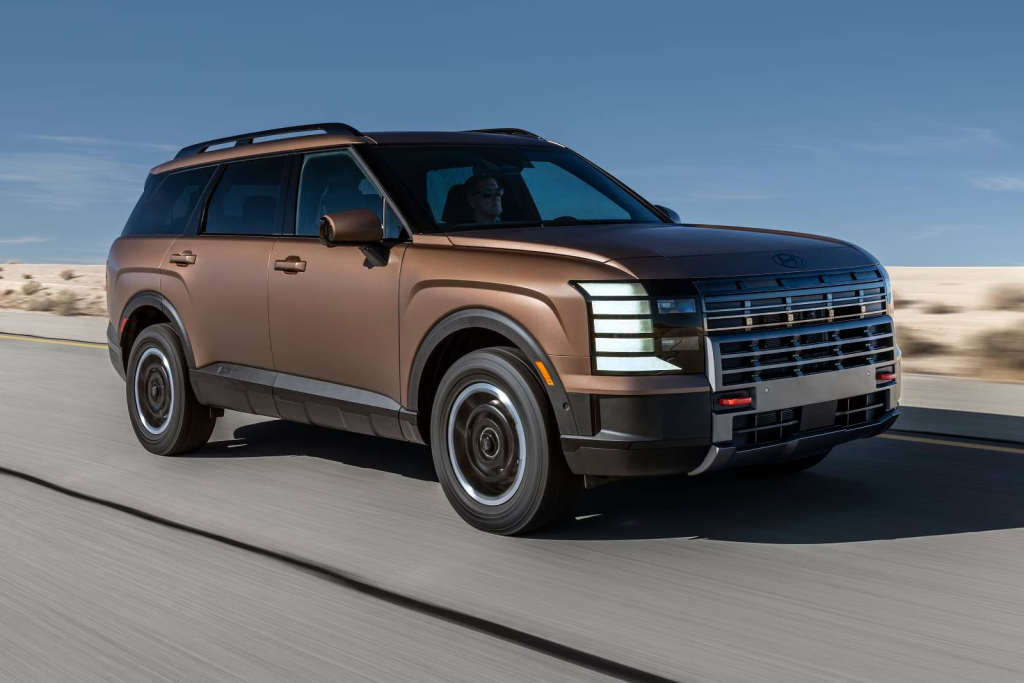
2026 Hyundai Palisade three-row SUV exterior at McCarthy Hyundai of Lawrence KS

The New Exterior: Commanding, Purposeful, Unmistakable

The 2026 Palisade moves decisively away from the rounded, approachable styling of the first generation and toward a boxier, more upright silhouette that projects confidence and authority on the road. The design shift is not purely aesthetic. The more vertical body structure directly contributes to the interior volume gains and the improved crumple zone geometry that Hyundai engineers built into the second generation.

Key Exterior Dimensions

Measurement2026 Palisadevs. Previous Generation
Overall Length199.2 inches (200.4 XRT PRO)+3.1 inches longer
Wheelbase116.9 inches+2.7 inches longer
Width (without mirrors)78.0 inchesWider stance
Height69.5 inchesTaller roofline
Ground Clearance7.4 inches standard / 8.4 inches XRT PROXRT PRO adds 1 extra inch

Those dimension gains translate directly into the interior space improvements covered below. The longer wheelbase is the most important number: nearly three extra inches between the axles means the second and third row passengers benefit from more legroom and a more comfortable ride over Kansas highway miles.

At the front, stacked rectangular LED lighting blocks form a distinctive vertical light signature that is immediately recognizable from a distance. Active airflow shutters integrate into the front fascia for aerodynamic efficiency. Wheel sizes range from 18-inch alloys on base trims through 20-inch on the Limited and 21-inch on the Calligraphy, with all-terrain tires reserved for the XRT PRO.

Two Powertrains, Both Completely New

The 2026 Palisade debuts with two entirely new powertrains, replacing the previous generation's turbocharged four-cylinder with options that better reflect what Hyundai's flagship SUV buyers actually need.

Standard 3.5L V6: Built Around Towing

The base 2026 Palisade is powered by a naturally aspirated 3.5-liter V6 producing 287 horsepower and 260 lb-ft of torque, paired with an eight-speed automatic transmission with paddle shifters. Front-wheel drive is standard and HTRAC all-wheel drive is available on most trims.

The V6's headline specification is its 5,000-pound towing capacity when properly equipped, the highest tow rating in the Palisade lineup. EPA fuel economy for the V6 with FWD comes in at an estimated 19 city / 25 highway / 21 combined mpg. With HTRAC AWD that adjusts to 18 / 24 / 20 mpg combined.

For Lawrence-area families who regularly tow a boat to Clinton Lake, a camper to a Kansas state park, or a utility trailer for weekend projects, the V6 Palisade with AWD is the clear choice. Nothing in the Palisade lineup matches its 5,000-pound tow rating.

The First-Ever Palisade Hybrid: More Power, Dramatically Better Efficiency

The 2026 Palisade Hybrid is the headline powertrain story of the entire redesign, and the numbers make a compelling case. The system pairs a 2.5-liter turbocharged four-cylinder with dual electric motors integrated into a six-speed automatic transmission, producing a combined 329 horsepower and 339 lb-ft of torque.

To put that in perspective: the Palisade Hybrid is 42 horsepower and 79 lb-ft of torque more powerful than the standard V6 Palisade, while using a smaller engine and delivering significantly better fuel economy. The 1.65 kWh lithium-ion battery pack operates at 300 volts, with dual permanent magnet synchronous motors providing instant electric torque that makes the hybrid's power delivery feel smooth and effortless.

Hyundai projects fuel economy for the Palisade Hybrid at up to 34 combined mpg, with a projected total range of over 500 miles on a full tank. HTRAC all-wheel drive comes standard on all Palisade Hybrid trims, and towing capacity is rated at 4,000 pounds. The trade-off versus the V6 is modest: 1,000 fewer pounds of tow capacity in exchange for 42 more horsepower, substantially better fuel economy, and AWD as standard equipment.

For the majority of Kansas families whose towing needs fall below 4,000 pounds, the Hybrid is the objectively more capable and more efficient choice. As Kelley Blue Book reviewers put it after testing both powertrains: the hybrid system is simply better than the V6 in almost every real-world scenario.

The XRT PRO: For Drivers Who Venture Off the Pavement

New for 2026, the XRT PRO trim brings genuine off-road capability to the Palisade lineup for the first time. Built on the V6 platform with HTRAC AWD as standard equipment, the XRT PRO adds the extra inch of ground clearance noted in the dimensions table, all-terrain tires, an electronic rear limited-slip differential for improved traction on loose surfaces, and distinctive exterior styling with XRT PRO-specific badging and trim. For Kansas drivers whose adventures take them beyond paved roads, the XRT PRO is a meaningful addition to the lineup that no previous Palisade generation could offer.

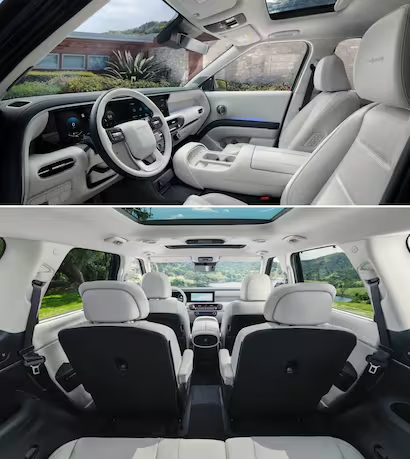
Interior: 181 Cubic Feet of Thoughtfully Designed Family Space

The 2026 Palisade's interior is where the redesign pays off most completely for the families who will live in this vehicle. Total interior volume reaches 181 cubic feet, a meaningful increase over the previous generation that reflects the longer wheelbase and taller roofline in real, usable space.

Three Rows That Actually Work for Real Families

The Palisade seats up to eight passengers in its standard bench-seat configuration, or seven passengers in the captain's chair configuration available on upper trims. The seating layout flexibility is a practical advantage for families whose needs shift between maximum passenger capacity and the improved comfort of individual second-row seats.

Third-row seating benefits directly from the longer wheelbase, with improved legroom that makes the back row genuinely usable for teenagers and smaller adults rather than just a space to put younger children. Available heated third-row seats on upper trims are a feature that passengers in the back row will notice and appreciate on Kansas winter mornings. Power-adjustable third-row seats are available on the Calligraphy trim, allowing easier reconfiguration without the manual folding required on lower trims.

The Dashboard: Technology Without Clutter

The 2026 Palisade's cockpit centers on a panoramic curved display housing dual 12.3-inch screens in a single seamless unit: one for the digital instrument cluster and one for infotainment. The horizontal dashboard layout that frames this display creates a wide, open feel that makes the cabin seem larger than its already-generous dimensions suggest.

Wireless Apple CarPlay and Android Auto come standard. The center console features a column-mounted shifter borrowed from Hyundai's EV lineup, freeing up console space for storage, a large wireless charging pad, and convenience items rather than a traditional gear selector bulge. Three-zone automatic temperature control is standard across the lineup, allowing driver, front passenger, and rear passengers to each set independent climate preferences.

Materials and Comfort: Genuine Luxury at a Family SUV Price

Upholstery options progress from premium cloth on entry trims through H-Tex leatherette, genuine leather, and Nappa leather on the Calligraphy. Heated and ventilated seats are available in the first and second rows, with heated third-row seats available on upper trims, a class-competitive feature that most three-row SUV competitors reserve for the front rows only.

The Relaxation Seats available on upper trims feature deployable leg rests and deep recline angles in both front row positions, not just the passenger side. For long Kansas interstate drives or tailgating before a game, the ability for both driver and front passenger to fully decompress is a meaningful comfort advantage over previous Palisade generations.

Calligraphy trim buyers get Ergo-Motion seats that actively adjust lumbar support during driving to reduce fatigue on longer trips, a feature more commonly found in European luxury vehicles than in family SUVs at this price point.

Technology: First-Ever Features and Class-Leading Integration

The 2026 Palisade introduces several technology features that are new to the model and in some cases new to the segment entirely.

Digital Key 2

Digital Key 2 is standard across the lineup and allows your smartphone to function as your vehicle key using NFC and Ultra-Wideband technology. Lock, unlock, start, and share access to your Palisade directly from your phone, without needing the physical key fob present. The UWB version of Digital Key 2 works passively as you approach the vehicle, similar to how the Proximity Key fob works, but entirely through your phone.

Integrated Dual-Camera Dash Cam

The 2026 Palisade is one of the first vehicles in the three-row SUV segment to offer a factory-integrated front and rear dash cam as a built-in feature rather than an aftermarket add-on. The system records continuously while driving and switches to parking surveillance mode when the vehicle is parked, providing protection and documentation that families increasingly value for both security and insurance purposes.

UV-C Sterilization Compartment

A front console UV-C sterilization compartment allows you to sanitize your phone, keys, and small items using ultraviolet-C light while you drive. For families with young children who are constantly handling shared objects, this is a genuinely practical feature rather than a novelty.

100-Watt USB-C Charging

USB-C ports across the Palisade deliver up to 100 watts of charging power, which actually fast-charges modern smartphones and tablets rather than the trickle-charge speeds that most vehicle USB ports have historically provided. On a family road trip with multiple devices running low simultaneously, that wattage matters considerably more than it sounds.

Stay Mode (Hybrid Only)

Exclusive to the Palisade Hybrid, Stay Mode allows climate control and infotainment to run on battery power with the engine off while parked. School pickup lines, campsite lounging, pre-game tailgating: any situation where you want a comfortable cabin without idling the engine is where Stay Mode earns its place. It is one of several ways the Palisade Hybrid delivers EV-adjacent benefits without requiring any charging infrastructure.

Safety: One of the Most Comprehensive Packages in the Class

Hyundai's SmartSense safety suite comes standard across the entire 2026 Palisade lineup with no upgrade required. The standard safety package includes Forward Collision-Avoidance Assist with pedestrian, cyclist, and junction-turning detection, Lane Keeping Assist, Lane Following Assist, Smart Cruise Control with stop-and-go capability, Blind-Spot Collision Warning, Rear Cross-Traffic Collision-Avoidance Assist, and Driver Attention Warning.

The airbag system is notably comprehensive: advanced dual front airbags, a front center airbag, a driver knee airbag, front and second-row side impact airbags, and side air curtains covering front through rear passengers with rollover sensors. Every seating position has meaningful airbag coverage, not just the front row occupants.

Upper trims add a Blind-Spot View Monitor projecting live camera feeds into the instrument cluster when signaling, a Surround-View Monitor for a 360-degree parking view, Highway Driving Assist, and a color Head-Up Display. All of this is backed by Hyundai's industry-leading 5-year/60,000-mile bumper-to-bumper warranty and 10-year/100,000-mile powertrain warranty.

2026 Palisade Trim Guide: Which One Is Right for Your Family?

Your PriorityRecommended TrimKey Reason
Best value entry pointSE V6Full SmartSense safety suite, dual 12.3-inch display standard
Best efficiency for daily drivingHybrid SEL or SEL Premium329 hp, 34 mpg combined, AWD standard
Maximum towing capacityV6 SEL Premium or Limited AWD5,000-pound tow rating available with V6 and AWD
Off-road and rugged capabilityXRT PRO V6Extra ground clearance, all-terrain tires, electronic rear LSD
Maximum luxury and featuresHybrid CalligraphyNappa leather, Ergo-Motion seats, power third row, full tech suite

Starting MSRP for the 2026 Palisade begins around $38,000 for the base V6 model, with Hybrid trims beginning around $45,000 and the Calligraphy topping out above $55,000 fully equipped. Check our current specials page for the latest pricing and available incentives on the Palisade lineup.

Key Takeaways: The 2026 Palisade by the Numbers

  • ✅ 287 hp V6 with 5,000-lb tow capacity or 329 hp Hybrid with 34 mpg combined and 500+ mile range.
  • ✅ 181 cubic feet of total interior volume across three rows seating up to eight passengers.
  • ✅ Wheelbase grows 2.7 inches and overall length grows 3.1 inches versus the previous generation.
  • ✅ New XRT PRO off-road trim with 8.4 inches of ground clearance, all-terrain tires, and electronic rear LSD.
  • ✅ Standard Digital Key 2, factory-integrated dual dash cam, UV-C sterilization compartment, and 100W USB-C charging.
  • ✅ Stay Mode on the Hybrid allows engine-off climate and infotainment while parked.
  • ✅ Comprehensive standard airbag system covering all three rows with side curtains and rollover sensors.
  • ✅ Backed by Hyundai's class-leading 10-year/100,000-mile powertrain warranty on every trim.

Why Choose McCarthy Hyundai of Lawrence for Your 2026 Palisade?

Kansas families searching for a 2026 Hyundai Palisade near Lawrence, KS will find the best combination of inventory, expertise, and buying experience at McCarthy Hyundai of Lawrence. Here is what sets us apart:

  • 4.5-Star Google Rating with Nearly 1,500 Reviews: Our reputation reflects years of honest, no-pressure service for the Lawrence community and drivers from across northeast Kansas and beyond.
  • Full 2026 Palisade Lineup In Stock: We carry both V6 and Hybrid Palisade models across multiple trims including the XRT PRO. Browse our current inventory online before you visit to see exactly what is available today.
  • Transparent Finance Team: Our specialists will walk you through the real numbers on every trim and help you find the right payment structure for your budget. Apply for financing online anytime. Current lease and purchase offers on the Palisade appear on our specials page.
  • Certified Palisade Service for Life: Our factory-trained technicians are certified on Hyundai's hybrid systems and the full Palisade lineup. Schedule service online in minutes whenever you need us.
  • Conveniently Located: Find us at 2829 Iowa St, Lawrence, KS 66047, easily accessible from Topeka, Overland Park, Kansas City, and across the region. Call us at (785) 838-2327 and our team will take great care of you.

Conclusion: The Palisade Has Never Had a Better Argument to Make

The first-generation Palisade earned its reputation by overdelivering on value in a competitive segment. The 2026 model takes that foundation and rebuilds it with more power, more space, better efficiency, more technology, and more capability than any Palisade before it. Whether you choose the V6 for maximum towing, the Hybrid for daily efficiency and performance, or the XRT PRO for weekend adventure, the 2026 Palisade is the most complete version of Hyundai's flagship family SUV that has ever existed.

Come experience it in person at McCarthy Hyundai of Lawrence. Sit in all three rows. Test the Hybrid's effortless power on a highway drive. Ask about Stay Mode. We are confident the 2026 Palisade will make the case for itself from the moment you open the door.

📍 Visit us: 2829 Iowa St, Lawrence, KS 66047
📞 Call us: (785) 838-2327
🔍 Browse Palisade inventory | See current specials | Explore financing

Frequently Asked Questions: 2026 Hyundai Palisade

What is the horsepower of the 2026 Hyundai Palisade?

The 2026 Palisade is available with two powertrains. The standard 3.5-liter V6 produces 287 horsepower and 260 lb-ft of torque. The Palisade Hybrid produces a combined 329 horsepower and 339 lb-ft of torque from its 2.5-liter turbocharged engine and dual electric motors, making it the more powerful option of the two.

What is the towing capacity of the 2026 Hyundai Palisade?

The V6 Palisade is rated to tow up to 5,000 pounds when properly equipped. The Palisade Hybrid is rated at 4,000 pounds. Both capacities handle most boats, campers, and utility trailers that Kansas families regularly tow.

What is the fuel economy of the 2026 Palisade Hybrid?

The 2026 Palisade Hybrid achieves up to 34 combined mpg with a projected total driving range of over 500 miles on a full tank. The standard V6 achieves approximately 21 combined mpg with FWD or 20 combined mpg with AWD.

What is the interior volume of the 2026 Hyundai Palisade?

The 2026 Palisade has a total interior volume of 181 cubic feet, a meaningful increase over the previous generation reflecting the longer wheelbase and taller roofline of the second-generation redesign. It seats up to eight passengers across three rows in the bench-seat configuration.

What is the XRT PRO trim on the 2026 Palisade?

The XRT PRO is a new off-road-focused trim available on the V6 Palisade with HTRAC AWD standard. It features 8.4 inches of ground clearance (one inch more than standard trims), all-terrain tires, and an electronic rear limited-slip differential for improved traction on loose or uneven terrain. It is not available with the Hybrid powertrain.

What is Stay Mode on the 2026 Palisade Hybrid?

Stay Mode is exclusive to the Palisade Hybrid. It allows you to run the climate control and infotainment system on battery power while the vehicle is parked with the engine off, keeping the cabin comfortable without burning fuel or idling the engine. It is ideal for school pickup lines, camping, or any extended parking situation.

Can I test drive the 2026 Hyundai Palisade at McCarthy Hyundai of Lawrence?

Yes. The 2026 Palisade is in stock at McCarthy Hyundai of Lawrence. Browse our current inventory online or call us at (785) 838-2327 to schedule your test drive at 2829 Iowa St, Lawrence, KS 66047.
Posted in:

Related Posts

2025 Hyundai Tucson Plug-in Hybrid driving near Topeka KS with fuel-saving PHEV technology

How Much Fuel Can You Save With a 2025 Hyundai Tucson Plug-in Hybrid?

Brief Summary: The 2025 Hyundai Tucson Plug-in Hybrid can help Topeka drivers cut fuel use by combining an EPA-estimated 32 miles of all-electric range with hybrid efficiency for longer trips. Compared with a gas-only Tucson AWD, the Tucson PHEV can save hundreds of dollars per year depending on how often you charge, how far you drive, and local fuel and electricity prices. Introduction Fuel prices are one of those everyday expenses that never seem to stay predictable for long. One month they feel manageable, and the next month your commute, school drop-offs, errands, and weekend drives across Kansas start costing noticeably more. That is why more SUV shoppers are taking a serious look at plug-in hybrids like the 2025 Hyundai Tucson Plug-in Hybrid. The Tucson PHEV is designed for drivers who want the flexibility of gasoline power but also want to complete many daily drives using electricity alone. According to Hyundai, the 2025 Tucson Plug-in Hybrid offers an EPA-estimated 32 miles of all-electric range and 77 combined MPGe when operating with electric power. Once the battery’s usable electric range is depleted, it continues operating like a traditional hybrid SUV. For many Topeka drivers, that combination makes a lot of sense. If your daily commute is under 32 miles, or if most of your driving is local, you may be able to use little to no gasoline during the week. For longer drives to Kansas City, Manhattan, Lawrence, or Wichita, the gas engine is there when you need it. If you are shopping for an efficient Hyundai SUV, you can browse current new Hyundai inventory, review available new vehicle specials, or schedule a test drive with McCarthy Hyundai of Topeka. 2025 Hyundai Tucson PHEV Fuel Savings at a Glance The exact amount you can save depends on your driving habits. A plug-in hybrid rewards drivers who charge regularly. If you plug in at home and use electric range for short trips, your fuel use can drop dramatically. If you rarely charge, the Tucson PHEV still functions as a hybrid, but you will not see the same savings. Model EPA Efficiency Estimate Best Use Case Fuel-Saving Advantage 2025 Hyundai Tucson Plug-in Hybrid 32-mile electric range, 77 combined MPGe, 35 MPG gas-only hybrid operation Drivers who can charge regularly and make frequent local trips Highest potential fuel savings 2025 Hyundai Tucson Hybrid Up to 38 MPG combined on select trims; other trims around 35 MPG combined Drivers who want efficiency without plugging in Strong fuel savings versus gas-only SUV 2025 Hyundai Tucson Gas AWD 24 city / 30 highway / 26 combined MPG Drivers who want lower upfront complexity and traditional fueling Simple ownership, but higher fuel use Hyundai lists the 2025 Tucson gas AWD at an EPA-estimated 24 city, 30 highway, and 26 combined MPG. Hyundai also lists the 2025 Tucson Plug-in Hybrid with 32 miles of all-electric range and 77 combined MPGe. You can compare official efficiency details through Hyundai USA and the federal FuelEconomy.gov database. What Is a Plug-in Hybrid SUV? A plug-in hybrid electric vehicle, often called a PHEV, sits between a traditional hybrid and a fully electric vehicle. It has a gasoline engine, an electric motor, and a larger battery than a conventional hybrid. That battery can be charged from an outside power source, such as a home Level 2 charger or compatible public charger. In normal driving, the Tucson PHEV can operate in electric mode for short trips. Once the battery’s electric range is used, the vehicle continues as a hybrid, blending gas and electric power to improve efficiency. This gives drivers two major advantages: electric driving for daily local use and gasoline flexibility for longer trips. Why That Matters in Topeka Topeka is the kind of place where a PHEV can be especially practical. Many daily routes are well within the Tucson PHEV’s electric range. A commute from residential areas into central Topeka, a grocery run, a school pickup, or a quick drive to restaurants and shopping may use little or no gas if the battery is charged. At the same time, Kansas drivers often need flexibility. Weekend plans can mean highway miles, rural roads, lake trips, college visits, family travel, or longer drives across the state. With the Tucson PHEV, you do not have to rely only on charging infrastructure. You can plug in when it is convenient and use gasoline when the trip calls for it. How Much Fuel Can You Actually Save? Let’s use a simple example based on 15,000 miles of annual driving, which is a common benchmark used for fuel-cost comparisons. These are not guaranteed savings, but they show how the Tucson PHEV can reduce fuel use when charged regularly. Scenario 1: You Rarely Charge the Tucson PHEV If you rarely plug in, the Tucson PHEV operates mostly like a hybrid. In that case, its advantage over the gas-only Tucson still exists, but it is smaller than it could be. Gas-only Tucson AWD at 26 MPG: about 577 gallons per 15,000 miles Tucson PHEV operating mostly in hybrid mode at about 35 MPG: about 429 gallons per 15,000 miles Estimated fuel saved: about 148 gallons per year If regular gas averages $3.24 per gallon, that is roughly $480 in annual fuel savings compared with a gas-only Tucson AWD. Again, actual pricing changes by station, season, and market. Scenario 2: You Charge Regularly and Drive 60% Electric This is where the Tucson PHEV starts to show its real value. If 60% of your annual miles are completed in electric mode and the remaining 40% use hybrid gasoline operation, you could reduce gasoline use significantly. Annual miles: 15,000 Electric miles: 9,000 Gas/hybrid miles: 6,000 Gas used at 35 MPG for hybrid miles: about 171 gallons Fuel saved versus gas-only Tucson AWD: about 406 gallons per year At $3.24 per gallon, saving about 406 gallons equals roughly $1,315 in avoided gasoline purchases before accounting for electricity cost. After adding home charging costs, many drivers could still save several hundred dollars per year compared with a gas-only compact SUV. Scenario 3: Most Daily Driving Fits Within the Electric Range If your regular driving is mostly local and you charge consistently, you may complete a large share of your annual miles on electricity. For example, if 12,000 of your 15,000 annual miles are electric and only 3,000 miles use gasoline, the Tucson PHEV may use only about 86 gallons of gas per year for the gasoline portion. Compared with the gas-only Tucson AWD’s estimated 577 gallons per year, that is a difference of roughly 491 gallons. At $3.24 per gallon, that is nearly $1,590 in avoided gasoline before electricity costs. Electricity is not free, of course, but home charging can still be much less expensive per mile than gasoline in many situations. Why Electric Range Changes Everything The Tucson PHEV’s 32-mile electric range may not sound huge at first, especially compared with a fully electric vehicle. But for daily driving, 32 miles can cover a lot. According to the U.S. Department of Transportation’s National Household Travel Survey, many daily vehicle trips in the U.S. are relatively short. That is exactly where a plug-in hybrid can shine. Think about your own driving patterns. How many of your daily drives are under 10 miles? How many are under 20? If you can charge at home overnight, you may start many mornings with a full electric range and use the gas engine only when your day runs longer than usual. Charging the 2025 Tucson Plug-in Hybrid The Tucson PHEV is most convenient when you can charge at home. A Level 2 home charging setup can refill the battery much faster than a standard household outlet, making overnight charging simple. For many owners, plugging in becomes as routine as charging a phone. Home Charging Benefits You can start many mornings with a full electric range You reduce trips to the gas station You may be able to charge during lower-cost electricity periods depending on your utility plan You get the best fuel-saving benefit from the PHEV system If you are considering a PHEV, it is worth reviewing your parking situation. A garage, driveway, or dedicated parking spot with charging access makes ownership much easier. Apartment and condo drivers may still make a PHEV work, but they should check local charging availability first. Performance: Efficient Does Not Mean Slow The 2025 Hyundai Tucson Plug-in Hybrid is not just about saving fuel. It is also one of the more powerful Tucson configurations. The turbocharged hybrid powertrain provides confident acceleration, and standard HTRAC all-wheel drive gives the SUV added traction in changing weather. That matters for Kansas drivers. Rain, winter slush, gravel roads, and windy highway conditions can all make stability and traction feel more important. The Tucson PHEV gives you efficiency without stripping away the utility people expect from an SUV. PHEV vs. Hybrid vs. Gas Tucson: Which One Fits You? Choose the Tucson Plug-in Hybrid If: You can charge at home or work Your daily driving is often under 32 miles You want to reduce gasoline use as much as possible You like the idea of electric driving without full EV range anxiety You want standard AWD and strong hybrid performance Choose the Tucson Hybrid If: You want better MPG but do not want to plug in You park somewhere charging is not convenient You want a simpler transition from a gas SUV You drive a mix of city and highway miles Choose the Gas Tucson If: You want a lower starting price You prefer traditional fueling You do not drive enough miles to justify a hybrid or PHEV upgrade You want a straightforward compact SUV with strong everyday practicality Other Ways the Tucson PHEV Can Save Money Fuel savings are the headline benefit, but they are not the only factor. A plug-in hybrid may also reduce engine wear during electric-only driving, because the gas engine is not running for every mile. Regenerative braking can help reduce some brake wear as well, though brake inspections remain important. Depending on current federal rules, local incentives, and your tax situation, some electrified vehicles may qualify for incentives or credits. These rules change often, so shoppers should review current information through the IRS Clean Vehicle Tax Credits page and speak with a qualified tax professional before making assumptions. If you want help comparing monthly payment options, trade-in value, and long-term cost, the team at our Hyundai finance center can walk you through available choices. Keeping Your Tucson PHEV Efficient To get the most from a plug-in hybrid, your habits matter. The Tucson PHEV rewards consistent charging and smooth driving. A few simple routines can help maximize savings: Charge overnight whenever possible Use preconditioning while plugged in to reduce battery drain before driving Keep tires properly inflated Stay current on scheduled maintenance Drive smoothly and avoid unnecessary hard acceleration Use regenerative braking effectively when conditions allow Routine maintenance still matters on a PHEV. Oil changes, tire rotations, brake inspections, coolant checks, and software-related inspections help keep the SUV performing properly. You can schedule Hyundai service through our service center and check current service and parts specials before your visit. Key Takeaways The 2025 Hyundai Tucson Plug-in Hybrid offers an EPA-estimated 32 miles of all-electric range. It is rated at 77 combined MPGe when using electric power. When operating without electric charge, the Tucson PHEV functions like a hybrid SUV. Drivers who charge regularly can save the most fuel. Compared with a gas-only Tucson AWD, annual gasoline savings could range from modest to substantial depending on how many miles are driven electrically. The Tucson Hybrid may be better for drivers who cannot plug in regularly. The gas Tucson may suit shoppers who prioritize a lower starting price and traditional fueling. Why Choose McCarthy Hyundai of Topeka? Choosing between a gas, hybrid, and plug-in hybrid SUV is easier when you have a team that can explain the differences clearly. At McCarthy Hyundai of Topeka, we help Kansas drivers compare real-world ownership costs, available inventory, financing options, and day-to-day practicality. Our dealership serves drivers throughout Topeka and the surrounding area with new Hyundai models, used vehicles, financing support, and factory-trained Hyundai service. Whether you are interested in the Tucson PHEV, Tucson Hybrid, gas-powered Tucson, or another Hyundai SUV, our team can help you find the right fit without making the process feel complicated. Visit McCarthy Hyundai of Topeka at 2920 S Kansas Ave, Topeka, KS 66611, call (785) 267-2800, or learn more about our dealership on our About Us page. Conclusion The 2025 Hyundai Tucson Plug-in Hybrid can save a meaningful amount of fuel, especially for Topeka drivers who charge regularly and complete many daily trips within the SUV’s 32-mile electric range. If you plug in consistently, the Tucson PHEV can dramatically reduce gasoline use while still giving you the confidence of a gas engine for longer drives. That said, the best Tucson for you depends on your lifestyle. The Tucson PHEV offers the highest fuel-saving potential. The Tucson Hybrid provides excellent efficiency without charging. The gas Tucson remains a practical choice for drivers who want a traditional compact SUV with a lower barrier to entry. Ready to compare your options? Browse our new Hyundai inventory, view new vehicle specials, or schedule a test drive at McCarthy Hyundai of Topeka. FAQs How far can the 2025 Hyundai Tucson Plug-in Hybrid drive on electricity? The 2025 Hyundai Tucson Plug-in Hybrid has an EPA-estimated 32 miles of all-electric range when the battery is fully charged. What is the 2025 Tucson PHEV MPGe rating? The 2025 Hyundai Tucson Plug-in Hybrid is rated at 77 combined MPGe when using electric power. MPGe is the EPA’s gasoline-equivalent efficiency measurement for electrified vehicles. Does the Tucson PHEV save money if I do not charge it? It can still operate like a hybrid, but you will miss the biggest fuel-saving benefit. The Tucson PHEV saves the most money when you charge regularly and use electric range for daily driving. Is the Tucson PHEV better than the Tucson Hybrid? The Tucson PHEV is better for drivers who can charge often and want electric-only driving for short trips. The Tucson Hybrid may be better for drivers who want strong MPG without plugging in. Does the 2025 Hyundai Tucson Plug-in Hybrid have AWD? Yes. The 2025 Hyundai Tucson Plug-in Hybrid comes with HTRAC all-wheel drive, giving drivers added traction and confidence in changing road conditions. How much gas can I save with the Tucson PHEV? Gas savings depend on how often you charge and how far you drive. Drivers who complete most daily trips on electricity can save hundreds of gallons of gasoline over several years compared with a gas-only Tucson AWD. Where can I test drive a Hyundai Tucson in Topeka? You can schedule a Hyundai Tucson test drive at McCarthy Hyundai of Topeka, located at 2920 S Kansas Ave, Topeka, KS 66611.

2022 Hyundai Kona Electric and gas Kona comparison for Topeka drivers

2022 Hyundai Kona: Should You Buy the EV or Gas Model in Topeka?

Brief Summary: Shopping for a used 2022 Hyundai Kona near Topeka? The Kona Electric delivers impressive efficiency, instant torque, and an EPA-estimated 258-mile range, while the gas-powered Kona offers lower upfront pricing, faster refueling, available all-wheel drive, and easier long-distance flexibility. Here is how to decide which version fits your driving habits, budget, and lifestyle. Introduction The 2022 Hyundai Kona remains one of the more appealing small SUVs on the used market because it gives shoppers two very different ways to drive. You can choose the familiar gas-powered Kona, which offers practical fuel economy, available all-wheel drive, and simple road-trip convenience. Or you can look for the 2022 Hyundai Kona Electric, an all-electric SUV with strong acceleration, low day-to-day energy costs, and zero tailpipe emissions. For drivers in Topeka, Lawrence, Manhattan, Emporia, and the surrounding Kansas communities, the right choice depends on how you use your vehicle. Do you mostly commute around town and have access to home charging? The Kona Electric could be a smart long-term choice. Do you regularly drive longer distances, park outside, or want available AWD for winter roads? The gas Kona may be the easier fit. If you are comparing options now, you can browse current used Hyundai inventory, check Hyundai Certified Pre-Owned options, or schedule time behind the wheel through our online test drive form. 2022 Hyundai Kona EV vs. Gas: Quick Comparison Category 2022 Hyundai Kona Electric 2022 Hyundai Kona Gas Powertrain Electric motor with 64-kWh battery 2.0L 4-cylinder or available 1.6L turbo Horsepower 201 hp 147 hp or 195 hp with turbo Torque 291 lb-ft 132 lb-ft or 195 lb-ft with turbo EPA Range / MPG 258 miles of electric range Up to about 30 MPG combined, depending on trim and drivetrain Drivetrain Front-wheel drive Front-wheel drive or available all-wheel drive Best For Commuters, home chargers, low operating costs Road trips, AWD shoppers, lower upfront cost According to Hyundai’s official 2022 Kona release, the Kona Electric uses a 150-kW electric motor rated at 201 horsepower and 291 lb-ft of torque, while the gas Kona offered a 147-horsepower 2.0-liter engine and an available 195-horsepower turbocharged 1.6-liter engine. Hyundai also listed the Kona Electric with an estimated 258-mile driving range. You can review Hyundai’s original model details on the Hyundai Newsroom. Why the 2022 Hyundai Kona Electric Makes Sense Lower Daily Driving Costs The biggest reason shoppers consider the 2022 Hyundai Kona Electric is simple: it can cost much less to drive day to day than a gas vehicle. Electricity pricing varies by utility, time of use, and charging location, but home charging is often significantly less expensive than paying for gasoline. If your daily routine includes commuting to work, school drop-offs, errands, and local appointments, the Kona Electric can turn those miles into meaningful savings over time. The EPA’s FuelEconomy.gov tool is a helpful resource for comparing estimated annual fuel costs between gas and electric vehicles based on your local energy prices and driving habits. Strong Acceleration and Instant Torque One of the most enjoyable things about the Kona Electric is how quick it feels in normal driving. EVs deliver torque instantly, so the Kona Electric responds quickly when you pull away from a stoplight, merge onto I-70, or pass slower traffic. With 291 lb-ft of torque, it feels stronger than its compact size suggests. That makes the Kona Electric especially appealing for drivers who want efficiency without giving up personality. It is quiet, smooth, and surprisingly energetic around town. No Oil Changes Electric vehicles still need maintenance, but they do not require engine oil changes, spark plugs, fuel filters, or many of the routine services associated with internal-combustion engines. You will still need tire rotations, brake inspections, cabin air filters, wiper blades, coolant checks, and general inspections, but EV maintenance can be simpler in several key areas. Because EVs use regenerative braking, brake wear may also be reduced for many drivers, though brake service is still important. If you already own a Hyundai EV or are considering one, our Hyundai service center in Topeka can help with maintenance questions. 258 Miles of EPA-Estimated Range The 2022 Kona Electric’s EPA-estimated 258-mile range is still competitive for a used EV. For many Topeka drivers, that is more than enough for several days of commuting before plugging in again. It can also handle many regional drives, though longer trips require more planning around charging stops. Cold weather, highway speeds, heavy HVAC use, tire condition, and driving style can affect EV range, so it is best to think of 258 miles as an official estimate rather than a guarantee. Kansas winters and high-speed highway driving may reduce real-world range. Why the 2022 Hyundai Kona Gas Model May Be the Better Fit Lower Upfront Price Used EVs can be excellent values, but the gas-powered Kona may still be easier to find at a lower purchase price, depending on mileage, trim, condition, and local availability. If your main goal is affordable transportation with SUV flexibility, a gas Kona deserves a close look. To compare what is currently available, check our used vehicle inventory or ask our team about budget-friendly Hyundai options. Available All-Wheel Drive This is one of the most important differences: the 2022 Kona Electric was front-wheel drive, while the gas-powered Kona offered available all-wheel drive. For drivers who want extra traction during rain, snow, ice, gravel roads, or winter commutes around Topeka, available AWD can be a major deciding factor. AWD does not replace good tires or careful driving, but it can improve confidence when road conditions change quickly. Faster Refueling on Road Trips If you often drive across Kansas, visit family out of state, or take spontaneous weekend trips, the gas Kona is more convenient. Refueling takes only a few minutes, and gas stations are easy to find almost anywhere. The Kona Electric can road-trip, but it requires more planning. You will need to consider charger locations, charging speed, weather, and whether a charging station is available when you arrive. For some drivers, that is no problem. For others, the gas Kona’s simplicity is worth it. Two Gas Engine Choices The standard 2.0-liter gas engine is a practical choice for daily driving, offering solid efficiency and predictable performance. The available 1.6-liter turbocharged engine brings more power, making the Kona feel more responsive and enjoyable. If you like the Kona’s size but want a livelier drive, the turbo gas model is worth considering. Cost of Ownership: EV vs. Gas Kona When comparing the 2022 Kona Electric and gas Kona, do not focus only on purchase price. Think about total cost of ownership, including fuel or electricity, maintenance, insurance, tires, financing, and resale value. Potential EV Savings Lower energy cost per mile when charging at home No gasoline purchases No engine oil changes Fewer traditional engine-related maintenance items Quiet, smooth daily driving Potential Gas Kona Advantages Often lower upfront purchase price Available all-wheel drive Faster refueling No need for home charging access More familiar ownership experience Financing can also influence the decision. If you are comparing payments on a used Kona Electric, gas Kona, or another Hyundai SUV, our Hyundai finance center can help you explore options. What About EV Tax Credits? EV incentives have changed significantly since the 2022 Kona was new. Some older articles mention federal or provincial incentives that may no longer apply, especially because many earlier posts were written for Canadian shoppers. For U.S. buyers in 2026, eligibility can depend on the vehicle, purchase date, dealer reporting, buyer income, sale price, and current federal rules. Before assuming a used EV qualifies for any credit, check the latest guidance from the IRS Clean Vehicle Tax Credits page and confirm details with a tax professional. Incentive rules change, and your personal tax situation matters. Charging a 2022 Hyundai Kona Electric at Home Home charging is where the Kona Electric becomes most convenient. Most EV owners prefer Level 2 charging, which uses a 240-volt setup and can recharge the Kona Electric overnight. Hyundai originally estimated Level 2 charging from 10% to 100% at around nine hours and 15 minutes. If you only drive 30 to 50 miles per day, you may not need to charge from empty very often. Many EV owners simply plug in a few nights a week and start each morning with plenty of range. Public Charging Considerations The Kona Electric also supports DC fast charging. Hyundai noted that the 2022 Kona Electric could charge from 10% to 80% in approximately 47 minutes under suitable Level 3 fast-charging conditions. Actual charging speed depends on charger output, battery temperature, state of charge, and weather. Before buying a used EV, it is smart to check charging availability near your home, workplace, and regular travel routes. If you do not have reliable home charging, the gas Kona may be a better fit. Which 2022 Hyundai Kona Is Best for Topeka Drivers? Choose the 2022 Kona Electric If: You can charge at home or have reliable charging access Your driving is mostly local or regional You want lower day-to-day energy costs You prefer quiet acceleration and instant torque You do not need all-wheel drive You want to reduce gasoline use and tailpipe emissions Choose the 2022 Kona Gas If: You want available all-wheel drive You frequently take long road trips You do not have easy access to charging You want a potentially lower upfront price You prefer quick refueling You want a familiar maintenance and ownership routine Key Takeaways The 2022 Hyundai Kona Electric offers an EPA-estimated 258-mile range and strong 201-horsepower performance. The gas-powered 2022 Kona offers available AWD, quick refueling, and two engine options. The Kona Electric is ideal for commuters with home charging access. The gas Kona is better for drivers who road-trip often or want extra traction in winter. Used EV incentive rules have changed, so always verify current eligibility before buying. The best choice depends on your driving habits, budget, charging access, and comfort with EV ownership. Why Choose McCarthy Hyundai of Topeka? Choosing between a used Hyundai Kona Electric and a gas-powered Kona is easier when you have a knowledgeable local team helping you compare real vehicles, real prices, and real ownership needs. At McCarthy Hyundai of Topeka, we work with drivers across Topeka and Northeast Kansas to find Hyundai models that fit their lifestyle, budget, and long-term goals. Our team can help you compare used Kona availability, explain EV charging considerations, review gas and electric ownership costs, and walk you through financing options. We also offer a professional Hyundai service department for ongoing maintenance, from tire rotations and brake inspections to EV-related service questions. Visit us at 2920 S Kansas Ave, Topeka, KS 66611, call (785) 267-2800, or learn more about our dealership on our About Us page. You can also explore new Hyundai inventory, browse used vehicles, or view current new vehicle specials. Conclusion So, should you buy the 2022 Hyundai Kona Electric or the gas model? If you want lower daily operating costs, smooth acceleration, and have dependable charging access, the Kona Electric is a compelling used SUV. Its 258-mile EPA-estimated range, strong torque, and reduced routine maintenance needs make it a smart choice for many commuters. If you want available all-wheel drive, quick refueling, lower upfront cost, and easier long-distance travel, the gas-powered Kona may be the better match. It still delivers the compact size, useful hatchback cargo area, and modern Hyundai features that make the Kona so popular. The best next step is to compare actual vehicles side by side. Browse our used Hyundai inventory or schedule a test drive with McCarthy Hyundai of Topeka today. FAQs How far can a 2022 Hyundai Kona Electric drive on a full charge? The 2022 Hyundai Kona Electric has an EPA-estimated driving range of 258 miles. Real-world range can vary based on temperature, speed, terrain, battery condition, and driving habits. Does the 2022 Hyundai Kona Electric have all-wheel drive? No. The 2022 Hyundai Kona Electric is front-wheel drive. If you want available all-wheel drive, consider a gas-powered 2022 Hyundai Kona. Is the 2022 Hyundai Kona Electric cheaper to maintain than the gas model? It can be. The Kona Electric does not need oil changes and has fewer traditional engine components. However, it still needs tires, brakes, filters, coolant checks, inspections, and other routine maintenance. How long does it take to charge a 2022 Hyundai Kona Electric? Hyundai estimated that Level 2 charging from 10% to 100% takes about nine hours and 15 minutes. DC fast charging from 10% to 80% can take about 47 minutes under suitable conditions. Is the gas-powered 2022 Hyundai Kona good on fuel? Yes. The 2022 Hyundai Kona gas model offers strong fuel economy for a small SUV, with EPA estimates varying by engine, trim, and drivetrain. Some configurations reach about 30 MPG combined. Which 2022 Hyundai Kona is better for road trips? The gas-powered Kona is generally easier for road trips because refueling is faster and gas stations are widely available. The Kona Electric can road-trip too, but it requires more charging planning. Can I buy a used Hyundai Kona at McCarthy Hyundai of Topeka? Inventory changes often, but McCarthy Hyundai of Topeka carries a rotating selection of used Hyundai models. Browse the used inventory online or contact the dealership for current Kona availability.

2026 Hyundai Tucson towing a small utility trailer near Topeka KS

2026 Hyundai Tucson Towing Guide: What Topeka Drivers Can Tow

Brief Summary / Excerpt: The 2026 Hyundai Tucson offers improved light-duty towing capability for gas models, plus efficient hybrid and plug-in hybrid options for drivers who want SUV versatility. According to Hyundai USA, gas-powered 2026 Tucson models can tow up to 2,750 pounds with trailer brakes, while Tucson Hybrid and Plug-in Hybrid models can tow up to 2,000 pounds with trailer brakes. Introduction The 2026 Hyundai Tucson is one of the most versatile compact SUVs in the Hyundai lineup. It is comfortable enough for daily commuting, spacious enough for family errands, efficient enough for regular driving around Topeka, and capable enough for light towing when properly equipped. If you are planning to tow a small utility trailer, cargo trailer, kayak trailer, compact camping trailer, or weekend gear, it is important to understand what the Tucson can safely handle. Towing capacity depends on the powertrain, drivetrain, trailer brakes, hitch equipment, passenger load, cargo weight, and how the trailer is loaded. For 2026, Hyundai USA lists the gas-powered Tucson with a higher braked towing rating than the 2025 model. According to Hyundai’s official 2026 Tucson specifications, gas models can tow up to 2,750 pounds with trailer brakes and up to 1,650 pounds without trailer brakes. Hyundai’s official hybrid and plug-in hybrid specifications list those models at up to 2,000 pounds with trailer brakes and up to 1,650 pounds without trailer brakes. If you are comparing Tucson trims or want help choosing the right Hyundai SUV for your towing needs, browse new Hyundai vehicles in Topeka or schedule a Hyundai test drive at McCarthy Hyundai of Topeka. How Much Can the 2026 Hyundai Tucson Tow? The 2026 Tucson towing rating depends on which powertrain you choose. Gas-powered models offer the highest towing capacity, while hybrid and plug-in hybrid models trade some towing capacity for stronger fuel efficiency and standard electrified performance. 2026 Hyundai Tucson Powertrain Drivetrain Availability Towing With Trailer Brakes Towing Without Trailer Brakes 2.5L Gasoline FWD or available HTRAC AWD Up to 2,750 lbs Up to 1,650 lbs 1.6L Turbo Hybrid Standard HTRAC AWD Up to 2,000 lbs Up to 1,650 lbs 1.6L Turbo Plug-in Hybrid Standard HTRAC AWD Up to 2,000 lbs Up to 1,650 lbs These ratings apply when the vehicle is properly equipped. Always confirm the towing rating for the exact Tucson trim, hitch, trailer, and equipment you plan to use before towing. What Changed for the 2026 Tucson? The biggest towing-related update for 2026 is that gas-powered Tucson models now offer a higher towing rating than the previous U.S.-market 2025 Tucson. The 2025 U.S. Tucson was listed at up to 2,000 pounds with trailer brakes, while Hyundai USA now lists the 2026 gas Tucson at up to 2,750 pounds with trailer brakes. Hybrid and plug-in hybrid models remain rated at up to 2,000 pounds with trailer brakes. That means the gas-powered Tucson is the better choice if maximum towing is your top priority, while the Tucson Hybrid and Plug-in Hybrid are better choices if you want standard HTRAC all-wheel drive, strong fuel economy, and light towing capability. What Can a 2026 Hyundai Tucson Tow? A 2,750-pound braked towing rating on gas Tucson models gives drivers more flexibility for light-duty towing. It is still not a replacement for a midsize or full-size truck, but it can handle many small trailers when properly equipped. Possible Towing Uses for the Gas Tucson Small utility trailer Light cargo trailer Small landscaping trailer Kayak or canoe trailer Small motorcycle trailer Light camping trailer within weight limits Small moving trailer, carefully loaded Possible Towing Uses for Tucson Hybrid and Plug-in Hybrid Small utility trailer Light cargo trailer Small watercraft trailer Bike or outdoor gear trailer Light-duty weekend hauling Remember that trailer weight means the loaded trailer weight, not just the empty trailer weight. Cargo, water, fuel, tools, coolers, camping supplies, and accessories all count. Braked vs. Unbraked Towing The difference between braked and unbraked towing is important. A braked trailer has its own braking system that helps slow the trailer. An unbraked trailer depends on the vehicle’s brakes alone. For the 2026 Tucson, the higher towing ratings require trailer brakes. Without trailer brakes, Hyundai USA lists the towing limit at 1,650 pounds. This matters because towing is not just about pulling weight. It is also about stopping, turning, stability, and control. Which 2026 Tucson Is Best for Towing? Choose the Gas Tucson If You Want Maximum Towing If towing capacity is your main priority, the gas-powered 2026 Tucson is the strongest option in the lineup. Its 2.5L 4-cylinder engine produces 187 horsepower and 178 lb-ft of torque, and Hyundai lists gas models at up to 2,750 pounds with trailer brakes. Choose the Tucson Hybrid If You Want Efficiency and Light Towing The Tucson Hybrid is a great fit for drivers who want better fuel efficiency, standard HTRAC all-wheel drive, and enough towing capacity for lighter trailers. Hyundai lists the 2026 Tucson Hybrid at up to 2,000 pounds with trailer brakes. Choose the Tucson Plug-in Hybrid If You Want Electric Driving Flexibility The Tucson Plug-in Hybrid offers the ability to drive short distances on electric power when charged, while still keeping gas-engine flexibility for longer trips. Hyundai lists the 2026 Tucson Plug-in Hybrid at up to 2,000 pounds with trailer brakes. Safe Towing Tips for Tucson Drivers Even light towing requires preparation. Before towing with your Tucson, confirm that your vehicle, hitch, wiring, trailer brakes, tires, and load are ready. Use towing equipment rated for your trailer weight. Confirm trailer brakes are working if towing above the unbraked limit. Check vehicle and trailer tire pressure before departure. Keep heavier cargo low and centered over the trailer axle. Secure all cargo so it cannot shift. Leave extra following distance. Brake earlier and accelerate gradually. Use extra caution in wind, rain, snow, or heavy traffic. The National Highway Traffic Safety Administration offers helpful general towing guidance through its trailer safety resources. Pre-Towing Checklist Check What to Confirm Why It Matters Loaded Trailer Weight Trailer and cargo stay within Tucson limits Prevents overloading Trailer Brakes Required for higher towing rating Improves stopping control Hitch Rating Hitch matches vehicle and trailer needs Protects the connection point Wiring Brake lights and turn signals work Improves visibility to other drivers Tire Pressure Vehicle and trailer tires are properly inflated Supports handling and tire safety Load Balance Cargo is centered and secured Helps reduce sway Schedule Tucson Service or Shop Hyundai SUVs in Topeka If you already own a Tucson and plan to tow, a pre-trip inspection can help confirm your tires, brakes, fluids, lights, and towing equipment are ready. If you are shopping for a Tucson, McCarthy Hyundai of Topeka can help you compare gas, hybrid, and plug-in hybrid models. Schedule service through the McCarthy Hyundai of Topeka service center Review current Hyundai service and parts specials Browse new Hyundai vehicles in Topeka Explore used cars for sale in Topeka Shop certified pre-owned Hyundai vehicles Learn about Hyundai financing options Schedule a Hyundai test drive in Topeka Key Takeaways The 2026 Hyundai Tucson gas model can tow up to 2,750 pounds with trailer brakes. The 2026 Tucson Hybrid and Plug-in Hybrid can tow up to 2,000 pounds with trailer brakes. Without trailer brakes, Hyundai USA lists Tucson towing capacity at up to 1,650 pounds. The gas Tucson is the best choice if maximum towing is your top priority. The Tucson Hybrid and Plug-in Hybrid are better choices for efficiency plus light towing. Always confirm loaded trailer weight, hitch rating, wiring, trailer brakes, tongue weight, and vehicle payload before towing. Why Choose McCarthy Hyundai of Topeka? When towing capability matters, accurate information matters too. McCarthy Hyundai of Topeka helps local drivers compare Hyundai SUVs, understand trim differences, review towing-related equipment, and choose the right vehicle for daily driving, family use, and weekend plans. Located at 2920 S Kansas Ave, Topeka, KS 66611, McCarthy Hyundai of Topeka serves drivers throughout Topeka and northeast Kansas with new Hyundai vehicles, used vehicles, certified pre-owned options, financing resources, and service after the sale. Drivers choose McCarthy Hyundai of Topeka for: Helpful Hyundai product knowledge New, used, and certified pre-owned Hyundai options Convenient test-drive scheduling Service support for towing preparation and maintenance Financing resources for different budgets A local team focused on customer care Learn more about McCarthy Hyundai of Topeka, browse new Hyundai inventory, or schedule a Hyundai test drive. Conclusion The 2026 Hyundai Tucson is a practical compact SUV for drivers who want everyday comfort and useful light-duty towing capability. Gas-powered Tucson models offer the strongest towing rating in the lineup at up to 2,750 pounds with trailer brakes, while Tucson Hybrid and Plug-in Hybrid models provide up to 2,000 pounds with trailer brakes plus added efficiency benefits. For small trailers, weekend gear, light utility hauling, and carefully matched recreational loads, the Tucson can be a smart choice. If you need to tow heavier trailers, a larger Hyundai SUV or a more towing-focused vehicle may be a better fit. To compare 2026 Tucson models or prepare your Hyundai for towing, contact McCarthy Hyundai of Topeka at (785) 267-2800, browse current new Hyundai vehicles in Topeka, or schedule service through the McCarthy Hyundai of Topeka service center. Frequently Asked Questions How much can the 2026 Hyundai Tucson tow? The 2026 Hyundai Tucson gas model can tow up to 2,750 pounds with trailer brakes. Tucson Hybrid and Plug-in Hybrid models can tow up to 2,000 pounds with trailer brakes. How much can the 2026 Hyundai Tucson tow without trailer brakes? Hyundai USA lists the 2026 Tucson towing capacity without trailer brakes at up to 1,650 pounds. Which 2026 Tucson is best for towing? The gas-powered 2026 Tucson is best for maximum towing because it is rated up to 2,750 pounds with trailer brakes. Can the 2026 Tucson Hybrid tow? Yes. Hyundai USA lists the 2026 Tucson Hybrid at up to 2,000 pounds with trailer brakes and up to 1,650 pounds without trailer brakes. Can the 2026 Tucson Plug-in Hybrid tow? Yes. Hyundai USA lists the 2026 Tucson Plug-in Hybrid at up to 2,000 pounds with trailer brakes and up to 1,650 pounds without trailer brakes. Where can I test drive a 2026 Hyundai Tucson in Topeka? You can schedule a 2026 Hyundai Tucson test drive through McCarthy Hyundai of Topeka.