
• McCarthy Hyundai of Lawrence

Blog / Lawrence Hyundai Dealer

Tire Maintenance: The Complete Guide to Safer Driving in Kansas

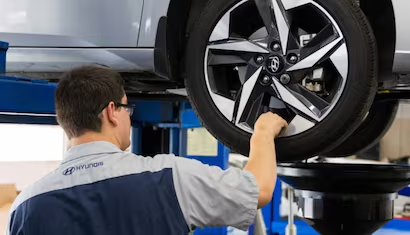
Hyundai technician inspecting tire tread depth at McCarthy Hyundai of Lawrence KS

Summary: Your tires are the only part of your Hyundai that actually contacts the road. Four contact patches, each roughly the size of your palm, carry every ounce of your vehicle's weight and transmit every braking force, acceleration input, and steering command to the pavement. When those contact patches are compromised by worn tread, incorrect pressure, or uneven wear, your safety margin shrinks in ways that are not visible until the moment you need maximum performance and it is not there. At McCarthy Hyundai of Lawrence, this is the complete, accurate guide to tire maintenance that every Kansas driver needs.

The Stakes: Why Tire Maintenance Is a Safety Issue, Not Just a Cost Issue

The National Highway Traffic Safety Administration reported that in 2024, 511 people died in tire-related crashes across the United States. That number represents preventable fatalities, the majority of which were connected to tire conditions that regular maintenance would have addressed.

At the same time, NHTSA found that only 19 percent of consumers properly inflate their tires. That means four out of five drivers are operating on tires that are working below their designed capability every single day, costing them fuel efficiency, shortening their tire life, and compromising their safety without any obvious indication that anything is wrong.

This is the nature of tire maintenance challenges: the consequences are largely invisible until conditions expose them. A worn tire on a dry road feels fine right up until the moment you brake hard on a rain-slicked Kansas highway and discover the stopping distance is dramatically longer than expected. Understanding what proper tire maintenance actually involves, and why each element matters, is the most practical safety investment a driver can make.

Tread Depth: The Number That Matters Most for Wet-Weather Safety

Tire tread is not decorative. The grooves, channels, and sipes in a tire's tread pattern perform a specific engineering function: they evacuate water from the contact patch as you drive over wet surfaces, maintaining as much rubber-to-road contact as possible while displacing the water film that would otherwise lift the tire off the pavement.

As tread wears down, those channels become shallower and less capable of moving water efficiently. The result is increasing hydroplaning risk, longer wet-weather stopping distances, and reduced traction during rain, slush, and snow. The deterioration is gradual and not immediately obvious, but the numbers tell the story clearly:

  • At 2/32 inches of tread, which is the legal minimum in most U.S. states, tires take almost twice as long to stop on wet roads compared to new tires with 10/32 inches of tread. This is not a marginal difference. It is the difference between stopping before and stopping after an obstacle in the road.
  • At 4/32 inches, wet-weather performance begins declining noticeably. Water evacuation becomes measurably less efficient, stopping distances begin to increase, and hydroplaning risk starts rising. This is the threshold at which tire safety experts recommend planning replacement, not waiting for the legal minimum.

The Legal Minimum Is Not the Safe Minimum

This distinction is important for Kansas drivers to understand clearly. The 2/32-inch legal minimum is the threshold below which a tire is considered legally unsafe. Operating at that threshold means your tires are at high risk of hydroplaning in rain and have severely compromised stopping distances on wet pavement.

The practical safety recommendation from tire engineers is to replace tires when they reach 4/32 inches, which is double the legal minimum. At that depth, you still have time to shop thoughtfully for the right replacement rather than making a rushed decision, and you maintain meaningful wet-weather performance while you do so.

How to Check Tread Depth

Two methods work well for checking tread depth without specialized tools:

The Penny Test: Insert a penny into the tread groove with Lincoln's head pointing down toward the tire. If you can see the top of Lincoln's head, your tread is at or below 2/32 inches, which is the legal minimum. Replace immediately.

The Quarter Test: Insert a quarter with Washington's head pointing down. If the top of Washington's head is visible, you are at approximately 4/32 inches or below, which is the practical replacement threshold for wet-weather performance. Start shopping for replacements.

Always check multiple locations across the tread width and around the circumference of each tire. Uneven wear patterns, where the tire is more worn in the center or on the edges than across the full width, indicate a pressure or alignment problem that tread replacement alone will not fix.

What Uneven Wear Tells You

Tire wear patterns are diagnostic information worth paying attention to:

  • Wear concentrated in the center of the tread: The tire has been chronically overinflated, causing the center to carry more load than the shoulders. The contact patch is smaller than designed, which reduces grip.
  • Wear concentrated on both outer edges: The tire has been chronically underinflated. The center is not bearing its share of the load, causing the edges to wear faster. This is the most common wear pattern and the most frequently ignored.
  • Wear on one edge only: The vehicle's alignment is off. One side of the tire is contacting the road at an angle, causing accelerated wear on that edge. New tires without an alignment correction will develop the same pattern quickly.
  • Cupping or scalloping: Uneven dips around the circumference of the tread, often accompanied by vibration or noise, typically indicate worn shocks or struts that are allowing the tire to bounce rather than maintain consistent road contact.

Any of these patterns detected during a tire check at McCarthy Hyundai of Lawrence gets flagged and explained, so you understand what is happening and what the right corrective action is.

Tire Pressure: The Most Overlooked Safety and Efficiency Factor

Given that four out of five drivers operate on improperly inflated tires, tire pressure is arguably the single highest-impact maintenance habit most Kansas drivers are not doing correctly. The consequences of wrong pressure affect safety, fuel economy, and tire longevity simultaneously.

Where to Find Your Correct PSI

The correct tire pressure for your Hyundai is listed on the sticker inside the driver's door jamb, not on the tire sidewall. The number on the tire sidewall is the maximum pressure the tire can safely contain, which is typically significantly higher than the vehicle manufacturer's recommended operating pressure. Using the sidewall number as your target overinflates the tires and creates the center wear pattern described above, while also reducing ride comfort and impact absorption.

Different trims or wheel size options on the same Hyundai model may have different recommended pressures, which is another reason to use the door jamb sticker rather than a general reference.

The Real Effects of Underinflation

Underinflation is the more common and more dangerous pressure condition. According to NHTSA, properly inflated tires can save drivers up to 11 cents per gallon on fuel compared to chronically underinflated tires. But the safety consequences are more serious than the fuel cost:

  • Increased heat buildup: An underinflated tire flexes more than designed with each rotation. That flexing generates heat inside the tire structure. Sustained heat buildup degrades the tire's internal cords and adhesion between tire layers, which can ultimately cause tread separation or blowout, particularly on Kansas summer highway driving when ambient temperatures compound the heat the tire is already generating.
  • Reduced handling response: A soft tire does not transmit steering inputs with the precision of a properly inflated one. The vehicle feels vague and less responsive, a characteristic that is easy to habituate to but represents a genuine reduction in your ability to control the vehicle in an emergency maneuver.
  • Accelerated and uneven wear: The edge wear pattern from underinflation shortens tire life and creates a progressive traction reduction as the tread wears faster than it should.

How Temperature Affects Tire Pressure

For Lawrence-area drivers, the temperature relationship with tire pressure is a practical daily concern. Tire pressure changes by approximately one PSI for every 10 degrees Fahrenheit of temperature change. Kansas's temperature swings between seasons and even within a single day mean your tire pressure can change meaningfully without any air loss.

A tire correctly inflated at 35 PSI on a 75-degree October afternoon may be at 29 PSI on a 15-degree January morning, which is a 17 percent pressure drop. That difference is enough to affect handling, fuel economy, and wear rate. Checking pressure monthly and before long highway drives, always on cold tires before the vehicle has been driven more than a mile, is the most practical way to stay ahead of temperature-driven pressure changes.

Your Hyundai's Tire Pressure Monitoring System (TPMS) alerts you when pressure drops significantly below the recommended level, but the alert threshold is typically set well below optimal operating pressure. Do not rely on the TPMS light as your primary pressure monitoring tool. Monthly manual checks with a quality gauge give you more precise, actionable information.

Tire Rotation: The Key to Even Wear and Maximum Tire Life

Front and rear tires wear at different rates because they perform different jobs. On a front-wheel drive Hyundai like the Elantra or base Tucson, the front tires handle both steering and propulsion, causing them to wear significantly faster than the rears. On an AWD model, the distribution of wear varies with driving conditions and load. Either way, without regular rotation, tires wear unevenly across the set and need replacement sooner than they would with consistent rotation.

Hyundai recommends tire rotation every 7,500 miles, which conveniently aligns with the standard oil change interval. Rotating tires at every oil change is the easiest way to ensure this service never gets delayed. Our service team at McCarthy Hyundai of Lawrence includes tire rotation as a standard part of every oil change appointment.

Why AWD Models Need Rotation Most Consistently

All-wheel drive systems like Hyundai's HTRAC are sensitive to tire diameter differences between the axles. When front and rear tires wear at different rates, the slightly different diameters can create speed differences between the axles that place stress on the transfer case and differential components over time. Regular rotation keeps all four tires wearing at similar rates and protects your AWD system's long-term health. For AWD Hyundai owners, consistent rotation is not just about tire longevity. It is also about drivetrain protection.

Wheel Alignment: The Silent Tire Killer

Wheel alignment is the adjustment of your vehicle's suspension geometry to ensure the tires make contact with the road at the correct angles. When alignment drifts out of specification, which can happen gradually from normal road use or suddenly from a significant pothole or curb impact, the tires are no longer rolling at their designed angles. The result is accelerated wear that reduces tire life, often by tens of thousands of miles, and handling characteristics that gradually degrade.

Alignment should be checked whenever you notice uneven tire wear, after any significant impact such as a pothole strike or curb contact, and as a general best practice once a year or every 15,000 miles. Installing new tires without checking alignment first is one of the most common ways drivers prematurely wear out a set of tires that would otherwise last significantly longer.

Our certified technicians check alignment geometry at scheduled service visits and can correct it using Hyundai's factory specifications for your specific model. Proper alignment combined with regular rotation is the combination that gets maximum life from your tire investment.

Tire Age: The Factor Most Drivers Never Think About

Even a tire that appears to have adequate tread can become unsafe due to age-related rubber degradation. The rubber compounds in tires oxidize and harden over time, reducing their flexibility and grip. This process happens regardless of how many miles the tire has been driven and is accelerated by UV exposure, ozone, and temperature extremes.

Most tire manufacturers and the NHTSA recommend replacing tires that are 6 to 10 years old regardless of remaining tread depth, with inspection recommended at 5 years. Every tire has a DOT code molded into the sidewall that includes the week and year of manufacture. The last four digits of the DOT code indicate the week and year: a tire marked 2423 was manufactured in the 24th week of 2023.

Kansas temperature extremes, particularly the intense summer heat that bakes rubber under UV exposure, accelerate this aging process. Vehicles that sit outdoors regularly or are driven infrequently may reach the age threshold before the tread depth threshold. Our service team checks tire age as part of every comprehensive tire inspection.

A Practical Tire Maintenance Checklist for Kansas Drivers

TaskFrequencyWhy It Matters
Check tire pressureMonthly and before long tripsTemperature changes affect PSI; underinflation causes heat buildup, accelerated wear, and reduced fuel economy
Visual tread inspectionMonthlyCatches uneven wear patterns that signal pressure or alignment issues before they become expensive
Penny or quarter tread testEvery 3 monthsConfirms tread depth is above the 4/32-inch practical safety threshold for wet-weather performance
Tire rotationEvery 7,500 milesEqualizes wear across all four tires, extending service life and protecting AWD drivetrain components
Wheel alignment checkAnnually or after any significant impactMisalignment can reduce tire life by tens of thousands of miles and degrade handling
Tire age checkAt 5 years, then annuallyRubber degrades over time regardless of tread depth; replace tires 6 to 10 years old per manufacturer guidance

Key Takeaways: Tire Maintenance for Kansas Drivers

  • 511 people died in tire-related crashes in 2024 according to NHTSA. Most were preventable with proper maintenance.
  • ✅ The legal minimum tread depth of 2/32 inches is not the safe minimum. Replace tires at 4/32 inches to maintain wet-weather stopping performance.
  • ✅ At 2/32 inches, wet-weather stopping distances are nearly twice as long as with new tires.
  • ✅ Only 19 percent of drivers properly inflate their tires. Check monthly with a gauge, using the door jamb sticker PSI, not the sidewall maximum.
  • ✅ Kansas temperature swings can reduce tire pressure by 6 to 8 PSI overnight without any air loss. Monthly pressure checks are essential.
  • ✅ Rotate every 7,500 miles, aligned with every oil change at McCarthy Hyundai of Lawrence for maximum convenience.
  • ✅ Check alignment annually and after any significant impact. New tires on misaligned wheels wear prematurely and do not deliver their full safety benefit.
  • ✅ Tires 6 years or older should be professionally inspected regardless of tread depth.

Why Choose McCarthy Hyundai of Lawrence for Tire Service?

Lawrence and northeast Kansas Hyundai drivers trust McCarthy Hyundai of Lawrence for tire inspection, rotation, and replacement for several straightforward reasons:

  • Tire Rotation Included at Every Oil Change: We rotate your tires automatically as part of every scheduled oil change visit so this critical service never slips through the cracks.
  • Comprehensive Tire Inspection: Every service visit includes a tread depth measurement at all four corners, pressure check, visual inspection for sidewall damage or uneven wear patterns, and age verification. You get a complete picture of your tire health at every visit.
  • Factory-Certified Technicians: Our team knows the specific tire specifications for every Hyundai model, including the correct PSI, load rating, and speed rating for your exact trim and wheel configuration.
  • 4.5-Star Google Rating with Nearly 1,500 Reviews: We tell you what your tires actually need, explain why, and give you honest recommendations without pressure to replace what does not yet need replacing.
  • Easy Online Scheduling: Book your tire inspection or rotation online any time, 24 hours a day.
  • Right Here in Lawrence: Find us at 2829 Iowa St, Lawrence, KS 66047, convenient for drivers from Topeka, Overland Park, Kansas City, and across northeast Kansas. Call us at (785) 838-2327.

Conclusion: Four Small Patches of Rubber Stand Between You and the Road

There is no other vehicle maintenance category where the consequences of neglect are as immediate and as directly physical as tires. Your brakes, your steering, your acceleration, your stability in an emergency maneuver: all of it is mediated by four contact patches the size of your hands. Keeping those patches in optimal condition through consistent pressure checks, regular rotation, timely tread replacement, and proper alignment is one of the most direct safety investments you can make as a driver.

Our team at McCarthy Hyundai of Lawrence is here to make that maintenance simple, accurate, and convenient. Come see us, and let us make sure the most important four points of contact between your Hyundai and Kansas roads are exactly where they need to be.

📍 Visit us: 2829 Iowa St, Lawrence, KS 66047
📞 Call us: (785) 838-2327
🔧 Schedule a tire inspection or rotation | Explore our service center

Frequently Asked Questions: Tire Maintenance in Lawrence, KS

When should I replace my tires?

Replace tires when tread depth reaches 4/32 inches to maintain adequate wet-weather performance. At 2/32 inches, the legal minimum in most states, wet stopping distances are nearly twice as long as with new tires. Also replace any tire that is 6 to 10 years old regardless of tread depth, as rubber compounds degrade over time regardless of mileage. The manufacture date is stamped in the last four digits of the DOT code on the sidewall.

What PSI should my Hyundai tires be?

The correct PSI for your specific Hyundai is found on the sticker inside the driver's door jamb. This is the manufacturer's recommended operating pressure for your vehicle's weight and handling characteristics. Do not use the maximum pressure number printed on the tire sidewall, which is significantly higher than the recommended operating pressure and will cause overinflation if used as a target.

How often should I rotate my tires on a Hyundai?

Hyundai recommends tire rotation every 7,500 miles, which aligns with the standard oil change interval. Having both services done together at every oil change appointment is the most practical approach to ensure rotation is never missed. For AWD Hyundai models, consistent rotation is especially important to prevent uneven tire diameters from placing stress on drivetrain components.

What causes uneven tire wear?

Uneven wear typically indicates one of three issues: chronic underinflation, which causes edge wear; chronic overinflation, which causes center wear; or wheel misalignment, which causes wear concentrated on one edge of the tire. Cupping or scalloped wear around the circumference usually indicates worn shocks or struts. Our service team inspects for these patterns at every tire check and can identify the underlying cause.

Does temperature affect tire pressure?

Yes, significantly. Tire pressure changes by approximately one PSI for every 10 degrees Fahrenheit of temperature change. Kansas's large seasonal temperature swings can reduce tire pressure by 6 to 8 PSI or more between a warm autumn afternoon and a cold January morning, without any air loss from the tire. Check pressure monthly on cold tires before the vehicle has been driven more than a mile for the most accurate reading.

How do I schedule a tire rotation or inspection at McCarthy Hyundai of Lawrence?

Use our online service scheduler available 24 hours a day, call us at (785) 838-2327, or visit us at 2829 Iowa St, Lawrence, KS 66047. Tire rotation is included with every oil change appointment at no additional scheduling required.
Posted in:

Related Posts

2025 Hyundai Tucson Plug-in Hybrid driving near Topeka KS with fuel-saving PHEV technology

How Much Fuel Can You Save With a 2025 Hyundai Tucson Plug-in Hybrid?

Brief Summary: The 2025 Hyundai Tucson Plug-in Hybrid can help Topeka drivers cut fuel use by combining an EPA-estimated 32 miles of all-electric range with hybrid efficiency for longer trips. Compared with a gas-only Tucson AWD, the Tucson PHEV can save hundreds of dollars per year depending on how often you charge, how far you drive, and local fuel and electricity prices. Introduction Fuel prices are one of those everyday expenses that never seem to stay predictable for long. One month they feel manageable, and the next month your commute, school drop-offs, errands, and weekend drives across Kansas start costing noticeably more. That is why more SUV shoppers are taking a serious look at plug-in hybrids like the 2025 Hyundai Tucson Plug-in Hybrid. The Tucson PHEV is designed for drivers who want the flexibility of gasoline power but also want to complete many daily drives using electricity alone. According to Hyundai, the 2025 Tucson Plug-in Hybrid offers an EPA-estimated 32 miles of all-electric range and 77 combined MPGe when operating with electric power. Once the battery’s usable electric range is depleted, it continues operating like a traditional hybrid SUV. For many Topeka drivers, that combination makes a lot of sense. If your daily commute is under 32 miles, or if most of your driving is local, you may be able to use little to no gasoline during the week. For longer drives to Kansas City, Manhattan, Lawrence, or Wichita, the gas engine is there when you need it. If you are shopping for an efficient Hyundai SUV, you can browse current new Hyundai inventory, review available new vehicle specials, or schedule a test drive with McCarthy Hyundai of Topeka. 2025 Hyundai Tucson PHEV Fuel Savings at a Glance The exact amount you can save depends on your driving habits. A plug-in hybrid rewards drivers who charge regularly. If you plug in at home and use electric range for short trips, your fuel use can drop dramatically. If you rarely charge, the Tucson PHEV still functions as a hybrid, but you will not see the same savings. Model EPA Efficiency Estimate Best Use Case Fuel-Saving Advantage 2025 Hyundai Tucson Plug-in Hybrid 32-mile electric range, 77 combined MPGe, 35 MPG gas-only hybrid operation Drivers who can charge regularly and make frequent local trips Highest potential fuel savings 2025 Hyundai Tucson Hybrid Up to 38 MPG combined on select trims; other trims around 35 MPG combined Drivers who want efficiency without plugging in Strong fuel savings versus gas-only SUV 2025 Hyundai Tucson Gas AWD 24 city / 30 highway / 26 combined MPG Drivers who want lower upfront complexity and traditional fueling Simple ownership, but higher fuel use Hyundai lists the 2025 Tucson gas AWD at an EPA-estimated 24 city, 30 highway, and 26 combined MPG. Hyundai also lists the 2025 Tucson Plug-in Hybrid with 32 miles of all-electric range and 77 combined MPGe. You can compare official efficiency details through Hyundai USA and the federal FuelEconomy.gov database. What Is a Plug-in Hybrid SUV? A plug-in hybrid electric vehicle, often called a PHEV, sits between a traditional hybrid and a fully electric vehicle. It has a gasoline engine, an electric motor, and a larger battery than a conventional hybrid. That battery can be charged from an outside power source, such as a home Level 2 charger or compatible public charger. In normal driving, the Tucson PHEV can operate in electric mode for short trips. Once the battery’s electric range is used, the vehicle continues as a hybrid, blending gas and electric power to improve efficiency. This gives drivers two major advantages: electric driving for daily local use and gasoline flexibility for longer trips. Why That Matters in Topeka Topeka is the kind of place where a PHEV can be especially practical. Many daily routes are well within the Tucson PHEV’s electric range. A commute from residential areas into central Topeka, a grocery run, a school pickup, or a quick drive to restaurants and shopping may use little or no gas if the battery is charged. At the same time, Kansas drivers often need flexibility. Weekend plans can mean highway miles, rural roads, lake trips, college visits, family travel, or longer drives across the state. With the Tucson PHEV, you do not have to rely only on charging infrastructure. You can plug in when it is convenient and use gasoline when the trip calls for it. How Much Fuel Can You Actually Save? Let’s use a simple example based on 15,000 miles of annual driving, which is a common benchmark used for fuel-cost comparisons. These are not guaranteed savings, but they show how the Tucson PHEV can reduce fuel use when charged regularly. Scenario 1: You Rarely Charge the Tucson PHEV If you rarely plug in, the Tucson PHEV operates mostly like a hybrid. In that case, its advantage over the gas-only Tucson still exists, but it is smaller than it could be. Gas-only Tucson AWD at 26 MPG: about 577 gallons per 15,000 miles Tucson PHEV operating mostly in hybrid mode at about 35 MPG: about 429 gallons per 15,000 miles Estimated fuel saved: about 148 gallons per year If regular gas averages $3.24 per gallon, that is roughly $480 in annual fuel savings compared with a gas-only Tucson AWD. Again, actual pricing changes by station, season, and market. Scenario 2: You Charge Regularly and Drive 60% Electric This is where the Tucson PHEV starts to show its real value. If 60% of your annual miles are completed in electric mode and the remaining 40% use hybrid gasoline operation, you could reduce gasoline use significantly. Annual miles: 15,000 Electric miles: 9,000 Gas/hybrid miles: 6,000 Gas used at 35 MPG for hybrid miles: about 171 gallons Fuel saved versus gas-only Tucson AWD: about 406 gallons per year At $3.24 per gallon, saving about 406 gallons equals roughly $1,315 in avoided gasoline purchases before accounting for electricity cost. After adding home charging costs, many drivers could still save several hundred dollars per year compared with a gas-only compact SUV. Scenario 3: Most Daily Driving Fits Within the Electric Range If your regular driving is mostly local and you charge consistently, you may complete a large share of your annual miles on electricity. For example, if 12,000 of your 15,000 annual miles are electric and only 3,000 miles use gasoline, the Tucson PHEV may use only about 86 gallons of gas per year for the gasoline portion. Compared with the gas-only Tucson AWD’s estimated 577 gallons per year, that is a difference of roughly 491 gallons. At $3.24 per gallon, that is nearly $1,590 in avoided gasoline before electricity costs. Electricity is not free, of course, but home charging can still be much less expensive per mile than gasoline in many situations. Why Electric Range Changes Everything The Tucson PHEV’s 32-mile electric range may not sound huge at first, especially compared with a fully electric vehicle. But for daily driving, 32 miles can cover a lot. According to the U.S. Department of Transportation’s National Household Travel Survey, many daily vehicle trips in the U.S. are relatively short. That is exactly where a plug-in hybrid can shine. Think about your own driving patterns. How many of your daily drives are under 10 miles? How many are under 20? If you can charge at home overnight, you may start many mornings with a full electric range and use the gas engine only when your day runs longer than usual. Charging the 2025 Tucson Plug-in Hybrid The Tucson PHEV is most convenient when you can charge at home. A Level 2 home charging setup can refill the battery much faster than a standard household outlet, making overnight charging simple. For many owners, plugging in becomes as routine as charging a phone. Home Charging Benefits You can start many mornings with a full electric range You reduce trips to the gas station You may be able to charge during lower-cost electricity periods depending on your utility plan You get the best fuel-saving benefit from the PHEV system If you are considering a PHEV, it is worth reviewing your parking situation. A garage, driveway, or dedicated parking spot with charging access makes ownership much easier. Apartment and condo drivers may still make a PHEV work, but they should check local charging availability first. Performance: Efficient Does Not Mean Slow The 2025 Hyundai Tucson Plug-in Hybrid is not just about saving fuel. It is also one of the more powerful Tucson configurations. The turbocharged hybrid powertrain provides confident acceleration, and standard HTRAC all-wheel drive gives the SUV added traction in changing weather. That matters for Kansas drivers. Rain, winter slush, gravel roads, and windy highway conditions can all make stability and traction feel more important. The Tucson PHEV gives you efficiency without stripping away the utility people expect from an SUV. PHEV vs. Hybrid vs. Gas Tucson: Which One Fits You? Choose the Tucson Plug-in Hybrid If: You can charge at home or work Your daily driving is often under 32 miles You want to reduce gasoline use as much as possible You like the idea of electric driving without full EV range anxiety You want standard AWD and strong hybrid performance Choose the Tucson Hybrid If: You want better MPG but do not want to plug in You park somewhere charging is not convenient You want a simpler transition from a gas SUV You drive a mix of city and highway miles Choose the Gas Tucson If: You want a lower starting price You prefer traditional fueling You do not drive enough miles to justify a hybrid or PHEV upgrade You want a straightforward compact SUV with strong everyday practicality Other Ways the Tucson PHEV Can Save Money Fuel savings are the headline benefit, but they are not the only factor. A plug-in hybrid may also reduce engine wear during electric-only driving, because the gas engine is not running for every mile. Regenerative braking can help reduce some brake wear as well, though brake inspections remain important. Depending on current federal rules, local incentives, and your tax situation, some electrified vehicles may qualify for incentives or credits. These rules change often, so shoppers should review current information through the IRS Clean Vehicle Tax Credits page and speak with a qualified tax professional before making assumptions. If you want help comparing monthly payment options, trade-in value, and long-term cost, the team at our Hyundai finance center can walk you through available choices. Keeping Your Tucson PHEV Efficient To get the most from a plug-in hybrid, your habits matter. The Tucson PHEV rewards consistent charging and smooth driving. A few simple routines can help maximize savings: Charge overnight whenever possible Use preconditioning while plugged in to reduce battery drain before driving Keep tires properly inflated Stay current on scheduled maintenance Drive smoothly and avoid unnecessary hard acceleration Use regenerative braking effectively when conditions allow Routine maintenance still matters on a PHEV. Oil changes, tire rotations, brake inspections, coolant checks, and software-related inspections help keep the SUV performing properly. You can schedule Hyundai service through our service center and check current service and parts specials before your visit. Key Takeaways The 2025 Hyundai Tucson Plug-in Hybrid offers an EPA-estimated 32 miles of all-electric range. It is rated at 77 combined MPGe when using electric power. When operating without electric charge, the Tucson PHEV functions like a hybrid SUV. Drivers who charge regularly can save the most fuel. Compared with a gas-only Tucson AWD, annual gasoline savings could range from modest to substantial depending on how many miles are driven electrically. The Tucson Hybrid may be better for drivers who cannot plug in regularly. The gas Tucson may suit shoppers who prioritize a lower starting price and traditional fueling. Why Choose McCarthy Hyundai of Topeka? Choosing between a gas, hybrid, and plug-in hybrid SUV is easier when you have a team that can explain the differences clearly. At McCarthy Hyundai of Topeka, we help Kansas drivers compare real-world ownership costs, available inventory, financing options, and day-to-day practicality. Our dealership serves drivers throughout Topeka and the surrounding area with new Hyundai models, used vehicles, financing support, and factory-trained Hyundai service. Whether you are interested in the Tucson PHEV, Tucson Hybrid, gas-powered Tucson, or another Hyundai SUV, our team can help you find the right fit without making the process feel complicated. Visit McCarthy Hyundai of Topeka at 2920 S Kansas Ave, Topeka, KS 66611, call (785) 267-2800, or learn more about our dealership on our About Us page. Conclusion The 2025 Hyundai Tucson Plug-in Hybrid can save a meaningful amount of fuel, especially for Topeka drivers who charge regularly and complete many daily trips within the SUV’s 32-mile electric range. If you plug in consistently, the Tucson PHEV can dramatically reduce gasoline use while still giving you the confidence of a gas engine for longer drives. That said, the best Tucson for you depends on your lifestyle. The Tucson PHEV offers the highest fuel-saving potential. The Tucson Hybrid provides excellent efficiency without charging. The gas Tucson remains a practical choice for drivers who want a traditional compact SUV with a lower barrier to entry. Ready to compare your options? Browse our new Hyundai inventory, view new vehicle specials, or schedule a test drive at McCarthy Hyundai of Topeka. FAQs How far can the 2025 Hyundai Tucson Plug-in Hybrid drive on electricity? The 2025 Hyundai Tucson Plug-in Hybrid has an EPA-estimated 32 miles of all-electric range when the battery is fully charged. What is the 2025 Tucson PHEV MPGe rating? The 2025 Hyundai Tucson Plug-in Hybrid is rated at 77 combined MPGe when using electric power. MPGe is the EPA’s gasoline-equivalent efficiency measurement for electrified vehicles. Does the Tucson PHEV save money if I do not charge it? It can still operate like a hybrid, but you will miss the biggest fuel-saving benefit. The Tucson PHEV saves the most money when you charge regularly and use electric range for daily driving. Is the Tucson PHEV better than the Tucson Hybrid? The Tucson PHEV is better for drivers who can charge often and want electric-only driving for short trips. The Tucson Hybrid may be better for drivers who want strong MPG without plugging in. Does the 2025 Hyundai Tucson Plug-in Hybrid have AWD? Yes. The 2025 Hyundai Tucson Plug-in Hybrid comes with HTRAC all-wheel drive, giving drivers added traction and confidence in changing road conditions. How much gas can I save with the Tucson PHEV? Gas savings depend on how often you charge and how far you drive. Drivers who complete most daily trips on electricity can save hundreds of gallons of gasoline over several years compared with a gas-only Tucson AWD. Where can I test drive a Hyundai Tucson in Topeka? You can schedule a Hyundai Tucson test drive at McCarthy Hyundai of Topeka, located at 2920 S Kansas Ave, Topeka, KS 66611.

2022 Hyundai Kona Electric and gas Kona comparison for Topeka drivers

2022 Hyundai Kona: Should You Buy the EV or Gas Model in Topeka?

Brief Summary: Shopping for a used 2022 Hyundai Kona near Topeka? The Kona Electric delivers impressive efficiency, instant torque, and an EPA-estimated 258-mile range, while the gas-powered Kona offers lower upfront pricing, faster refueling, available all-wheel drive, and easier long-distance flexibility. Here is how to decide which version fits your driving habits, budget, and lifestyle. Introduction The 2022 Hyundai Kona remains one of the more appealing small SUVs on the used market because it gives shoppers two very different ways to drive. You can choose the familiar gas-powered Kona, which offers practical fuel economy, available all-wheel drive, and simple road-trip convenience. Or you can look for the 2022 Hyundai Kona Electric, an all-electric SUV with strong acceleration, low day-to-day energy costs, and zero tailpipe emissions. For drivers in Topeka, Lawrence, Manhattan, Emporia, and the surrounding Kansas communities, the right choice depends on how you use your vehicle. Do you mostly commute around town and have access to home charging? The Kona Electric could be a smart long-term choice. Do you regularly drive longer distances, park outside, or want available AWD for winter roads? The gas Kona may be the easier fit. If you are comparing options now, you can browse current used Hyundai inventory, check Hyundai Certified Pre-Owned options, or schedule time behind the wheel through our online test drive form. 2022 Hyundai Kona EV vs. Gas: Quick Comparison Category 2022 Hyundai Kona Electric 2022 Hyundai Kona Gas Powertrain Electric motor with 64-kWh battery 2.0L 4-cylinder or available 1.6L turbo Horsepower 201 hp 147 hp or 195 hp with turbo Torque 291 lb-ft 132 lb-ft or 195 lb-ft with turbo EPA Range / MPG 258 miles of electric range Up to about 30 MPG combined, depending on trim and drivetrain Drivetrain Front-wheel drive Front-wheel drive or available all-wheel drive Best For Commuters, home chargers, low operating costs Road trips, AWD shoppers, lower upfront cost According to Hyundai’s official 2022 Kona release, the Kona Electric uses a 150-kW electric motor rated at 201 horsepower and 291 lb-ft of torque, while the gas Kona offered a 147-horsepower 2.0-liter engine and an available 195-horsepower turbocharged 1.6-liter engine. Hyundai also listed the Kona Electric with an estimated 258-mile driving range. You can review Hyundai’s original model details on the Hyundai Newsroom. Why the 2022 Hyundai Kona Electric Makes Sense Lower Daily Driving Costs The biggest reason shoppers consider the 2022 Hyundai Kona Electric is simple: it can cost much less to drive day to day than a gas vehicle. Electricity pricing varies by utility, time of use, and charging location, but home charging is often significantly less expensive than paying for gasoline. If your daily routine includes commuting to work, school drop-offs, errands, and local appointments, the Kona Electric can turn those miles into meaningful savings over time. The EPA’s FuelEconomy.gov tool is a helpful resource for comparing estimated annual fuel costs between gas and electric vehicles based on your local energy prices and driving habits. Strong Acceleration and Instant Torque One of the most enjoyable things about the Kona Electric is how quick it feels in normal driving. EVs deliver torque instantly, so the Kona Electric responds quickly when you pull away from a stoplight, merge onto I-70, or pass slower traffic. With 291 lb-ft of torque, it feels stronger than its compact size suggests. That makes the Kona Electric especially appealing for drivers who want efficiency without giving up personality. It is quiet, smooth, and surprisingly energetic around town. No Oil Changes Electric vehicles still need maintenance, but they do not require engine oil changes, spark plugs, fuel filters, or many of the routine services associated with internal-combustion engines. You will still need tire rotations, brake inspections, cabin air filters, wiper blades, coolant checks, and general inspections, but EV maintenance can be simpler in several key areas. Because EVs use regenerative braking, brake wear may also be reduced for many drivers, though brake service is still important. If you already own a Hyundai EV or are considering one, our Hyundai service center in Topeka can help with maintenance questions. 258 Miles of EPA-Estimated Range The 2022 Kona Electric’s EPA-estimated 258-mile range is still competitive for a used EV. For many Topeka drivers, that is more than enough for several days of commuting before plugging in again. It can also handle many regional drives, though longer trips require more planning around charging stops. Cold weather, highway speeds, heavy HVAC use, tire condition, and driving style can affect EV range, so it is best to think of 258 miles as an official estimate rather than a guarantee. Kansas winters and high-speed highway driving may reduce real-world range. Why the 2022 Hyundai Kona Gas Model May Be the Better Fit Lower Upfront Price Used EVs can be excellent values, but the gas-powered Kona may still be easier to find at a lower purchase price, depending on mileage, trim, condition, and local availability. If your main goal is affordable transportation with SUV flexibility, a gas Kona deserves a close look. To compare what is currently available, check our used vehicle inventory or ask our team about budget-friendly Hyundai options. Available All-Wheel Drive This is one of the most important differences: the 2022 Kona Electric was front-wheel drive, while the gas-powered Kona offered available all-wheel drive. For drivers who want extra traction during rain, snow, ice, gravel roads, or winter commutes around Topeka, available AWD can be a major deciding factor. AWD does not replace good tires or careful driving, but it can improve confidence when road conditions change quickly. Faster Refueling on Road Trips If you often drive across Kansas, visit family out of state, or take spontaneous weekend trips, the gas Kona is more convenient. Refueling takes only a few minutes, and gas stations are easy to find almost anywhere. The Kona Electric can road-trip, but it requires more planning. You will need to consider charger locations, charging speed, weather, and whether a charging station is available when you arrive. For some drivers, that is no problem. For others, the gas Kona’s simplicity is worth it. Two Gas Engine Choices The standard 2.0-liter gas engine is a practical choice for daily driving, offering solid efficiency and predictable performance. The available 1.6-liter turbocharged engine brings more power, making the Kona feel more responsive and enjoyable. If you like the Kona’s size but want a livelier drive, the turbo gas model is worth considering. Cost of Ownership: EV vs. Gas Kona When comparing the 2022 Kona Electric and gas Kona, do not focus only on purchase price. Think about total cost of ownership, including fuel or electricity, maintenance, insurance, tires, financing, and resale value. Potential EV Savings Lower energy cost per mile when charging at home No gasoline purchases No engine oil changes Fewer traditional engine-related maintenance items Quiet, smooth daily driving Potential Gas Kona Advantages Often lower upfront purchase price Available all-wheel drive Faster refueling No need for home charging access More familiar ownership experience Financing can also influence the decision. If you are comparing payments on a used Kona Electric, gas Kona, or another Hyundai SUV, our Hyundai finance center can help you explore options. What About EV Tax Credits? EV incentives have changed significantly since the 2022 Kona was new. Some older articles mention federal or provincial incentives that may no longer apply, especially because many earlier posts were written for Canadian shoppers. For U.S. buyers in 2026, eligibility can depend on the vehicle, purchase date, dealer reporting, buyer income, sale price, and current federal rules. Before assuming a used EV qualifies for any credit, check the latest guidance from the IRS Clean Vehicle Tax Credits page and confirm details with a tax professional. Incentive rules change, and your personal tax situation matters. Charging a 2022 Hyundai Kona Electric at Home Home charging is where the Kona Electric becomes most convenient. Most EV owners prefer Level 2 charging, which uses a 240-volt setup and can recharge the Kona Electric overnight. Hyundai originally estimated Level 2 charging from 10% to 100% at around nine hours and 15 minutes. If you only drive 30 to 50 miles per day, you may not need to charge from empty very often. Many EV owners simply plug in a few nights a week and start each morning with plenty of range. Public Charging Considerations The Kona Electric also supports DC fast charging. Hyundai noted that the 2022 Kona Electric could charge from 10% to 80% in approximately 47 minutes under suitable Level 3 fast-charging conditions. Actual charging speed depends on charger output, battery temperature, state of charge, and weather. Before buying a used EV, it is smart to check charging availability near your home, workplace, and regular travel routes. If you do not have reliable home charging, the gas Kona may be a better fit. Which 2022 Hyundai Kona Is Best for Topeka Drivers? Choose the 2022 Kona Electric If: You can charge at home or have reliable charging access Your driving is mostly local or regional You want lower day-to-day energy costs You prefer quiet acceleration and instant torque You do not need all-wheel drive You want to reduce gasoline use and tailpipe emissions Choose the 2022 Kona Gas If: You want available all-wheel drive You frequently take long road trips You do not have easy access to charging You want a potentially lower upfront price You prefer quick refueling You want a familiar maintenance and ownership routine Key Takeaways The 2022 Hyundai Kona Electric offers an EPA-estimated 258-mile range and strong 201-horsepower performance. The gas-powered 2022 Kona offers available AWD, quick refueling, and two engine options. The Kona Electric is ideal for commuters with home charging access. The gas Kona is better for drivers who road-trip often or want extra traction in winter. Used EV incentive rules have changed, so always verify current eligibility before buying. The best choice depends on your driving habits, budget, charging access, and comfort with EV ownership. Why Choose McCarthy Hyundai of Topeka? Choosing between a used Hyundai Kona Electric and a gas-powered Kona is easier when you have a knowledgeable local team helping you compare real vehicles, real prices, and real ownership needs. At McCarthy Hyundai of Topeka, we work with drivers across Topeka and Northeast Kansas to find Hyundai models that fit their lifestyle, budget, and long-term goals. Our team can help you compare used Kona availability, explain EV charging considerations, review gas and electric ownership costs, and walk you through financing options. We also offer a professional Hyundai service department for ongoing maintenance, from tire rotations and brake inspections to EV-related service questions. Visit us at 2920 S Kansas Ave, Topeka, KS 66611, call (785) 267-2800, or learn more about our dealership on our About Us page. You can also explore new Hyundai inventory, browse used vehicles, or view current new vehicle specials. Conclusion So, should you buy the 2022 Hyundai Kona Electric or the gas model? If you want lower daily operating costs, smooth acceleration, and have dependable charging access, the Kona Electric is a compelling used SUV. Its 258-mile EPA-estimated range, strong torque, and reduced routine maintenance needs make it a smart choice for many commuters. If you want available all-wheel drive, quick refueling, lower upfront cost, and easier long-distance travel, the gas-powered Kona may be the better match. It still delivers the compact size, useful hatchback cargo area, and modern Hyundai features that make the Kona so popular. The best next step is to compare actual vehicles side by side. Browse our used Hyundai inventory or schedule a test drive with McCarthy Hyundai of Topeka today. FAQs How far can a 2022 Hyundai Kona Electric drive on a full charge? The 2022 Hyundai Kona Electric has an EPA-estimated driving range of 258 miles. Real-world range can vary based on temperature, speed, terrain, battery condition, and driving habits. Does the 2022 Hyundai Kona Electric have all-wheel drive? No. The 2022 Hyundai Kona Electric is front-wheel drive. If you want available all-wheel drive, consider a gas-powered 2022 Hyundai Kona. Is the 2022 Hyundai Kona Electric cheaper to maintain than the gas model? It can be. The Kona Electric does not need oil changes and has fewer traditional engine components. However, it still needs tires, brakes, filters, coolant checks, inspections, and other routine maintenance. How long does it take to charge a 2022 Hyundai Kona Electric? Hyundai estimated that Level 2 charging from 10% to 100% takes about nine hours and 15 minutes. DC fast charging from 10% to 80% can take about 47 minutes under suitable conditions. Is the gas-powered 2022 Hyundai Kona good on fuel? Yes. The 2022 Hyundai Kona gas model offers strong fuel economy for a small SUV, with EPA estimates varying by engine, trim, and drivetrain. Some configurations reach about 30 MPG combined. Which 2022 Hyundai Kona is better for road trips? The gas-powered Kona is generally easier for road trips because refueling is faster and gas stations are widely available. The Kona Electric can road-trip too, but it requires more charging planning. Can I buy a used Hyundai Kona at McCarthy Hyundai of Topeka? Inventory changes often, but McCarthy Hyundai of Topeka carries a rotating selection of used Hyundai models. Browse the used inventory online or contact the dealership for current Kona availability.

2026 Hyundai Tucson towing a small utility trailer near Topeka KS

2026 Hyundai Tucson Towing Guide: What Topeka Drivers Can Tow

Brief Summary / Excerpt: The 2026 Hyundai Tucson offers improved light-duty towing capability for gas models, plus efficient hybrid and plug-in hybrid options for drivers who want SUV versatility. According to Hyundai USA, gas-powered 2026 Tucson models can tow up to 2,750 pounds with trailer brakes, while Tucson Hybrid and Plug-in Hybrid models can tow up to 2,000 pounds with trailer brakes. Introduction The 2026 Hyundai Tucson is one of the most versatile compact SUVs in the Hyundai lineup. It is comfortable enough for daily commuting, spacious enough for family errands, efficient enough for regular driving around Topeka, and capable enough for light towing when properly equipped. If you are planning to tow a small utility trailer, cargo trailer, kayak trailer, compact camping trailer, or weekend gear, it is important to understand what the Tucson can safely handle. Towing capacity depends on the powertrain, drivetrain, trailer brakes, hitch equipment, passenger load, cargo weight, and how the trailer is loaded. For 2026, Hyundai USA lists the gas-powered Tucson with a higher braked towing rating than the 2025 model. According to Hyundai’s official 2026 Tucson specifications, gas models can tow up to 2,750 pounds with trailer brakes and up to 1,650 pounds without trailer brakes. Hyundai’s official hybrid and plug-in hybrid specifications list those models at up to 2,000 pounds with trailer brakes and up to 1,650 pounds without trailer brakes. If you are comparing Tucson trims or want help choosing the right Hyundai SUV for your towing needs, browse new Hyundai vehicles in Topeka or schedule a Hyundai test drive at McCarthy Hyundai of Topeka. How Much Can the 2026 Hyundai Tucson Tow? The 2026 Tucson towing rating depends on which powertrain you choose. Gas-powered models offer the highest towing capacity, while hybrid and plug-in hybrid models trade some towing capacity for stronger fuel efficiency and standard electrified performance. 2026 Hyundai Tucson Powertrain Drivetrain Availability Towing With Trailer Brakes Towing Without Trailer Brakes 2.5L Gasoline FWD or available HTRAC AWD Up to 2,750 lbs Up to 1,650 lbs 1.6L Turbo Hybrid Standard HTRAC AWD Up to 2,000 lbs Up to 1,650 lbs 1.6L Turbo Plug-in Hybrid Standard HTRAC AWD Up to 2,000 lbs Up to 1,650 lbs These ratings apply when the vehicle is properly equipped. Always confirm the towing rating for the exact Tucson trim, hitch, trailer, and equipment you plan to use before towing. What Changed for the 2026 Tucson? The biggest towing-related update for 2026 is that gas-powered Tucson models now offer a higher towing rating than the previous U.S.-market 2025 Tucson. The 2025 U.S. Tucson was listed at up to 2,000 pounds with trailer brakes, while Hyundai USA now lists the 2026 gas Tucson at up to 2,750 pounds with trailer brakes. Hybrid and plug-in hybrid models remain rated at up to 2,000 pounds with trailer brakes. That means the gas-powered Tucson is the better choice if maximum towing is your top priority, while the Tucson Hybrid and Plug-in Hybrid are better choices if you want standard HTRAC all-wheel drive, strong fuel economy, and light towing capability. What Can a 2026 Hyundai Tucson Tow? A 2,750-pound braked towing rating on gas Tucson models gives drivers more flexibility for light-duty towing. It is still not a replacement for a midsize or full-size truck, but it can handle many small trailers when properly equipped. Possible Towing Uses for the Gas Tucson Small utility trailer Light cargo trailer Small landscaping trailer Kayak or canoe trailer Small motorcycle trailer Light camping trailer within weight limits Small moving trailer, carefully loaded Possible Towing Uses for Tucson Hybrid and Plug-in Hybrid Small utility trailer Light cargo trailer Small watercraft trailer Bike or outdoor gear trailer Light-duty weekend hauling Remember that trailer weight means the loaded trailer weight, not just the empty trailer weight. Cargo, water, fuel, tools, coolers, camping supplies, and accessories all count. Braked vs. Unbraked Towing The difference between braked and unbraked towing is important. A braked trailer has its own braking system that helps slow the trailer. An unbraked trailer depends on the vehicle’s brakes alone. For the 2026 Tucson, the higher towing ratings require trailer brakes. Without trailer brakes, Hyundai USA lists the towing limit at 1,650 pounds. This matters because towing is not just about pulling weight. It is also about stopping, turning, stability, and control. Which 2026 Tucson Is Best for Towing? Choose the Gas Tucson If You Want Maximum Towing If towing capacity is your main priority, the gas-powered 2026 Tucson is the strongest option in the lineup. Its 2.5L 4-cylinder engine produces 187 horsepower and 178 lb-ft of torque, and Hyundai lists gas models at up to 2,750 pounds with trailer brakes. Choose the Tucson Hybrid If You Want Efficiency and Light Towing The Tucson Hybrid is a great fit for drivers who want better fuel efficiency, standard HTRAC all-wheel drive, and enough towing capacity for lighter trailers. Hyundai lists the 2026 Tucson Hybrid at up to 2,000 pounds with trailer brakes. Choose the Tucson Plug-in Hybrid If You Want Electric Driving Flexibility The Tucson Plug-in Hybrid offers the ability to drive short distances on electric power when charged, while still keeping gas-engine flexibility for longer trips. Hyundai lists the 2026 Tucson Plug-in Hybrid at up to 2,000 pounds with trailer brakes. Safe Towing Tips for Tucson Drivers Even light towing requires preparation. Before towing with your Tucson, confirm that your vehicle, hitch, wiring, trailer brakes, tires, and load are ready. Use towing equipment rated for your trailer weight. Confirm trailer brakes are working if towing above the unbraked limit. Check vehicle and trailer tire pressure before departure. Keep heavier cargo low and centered over the trailer axle. Secure all cargo so it cannot shift. Leave extra following distance. Brake earlier and accelerate gradually. Use extra caution in wind, rain, snow, or heavy traffic. The National Highway Traffic Safety Administration offers helpful general towing guidance through its trailer safety resources. Pre-Towing Checklist Check What to Confirm Why It Matters Loaded Trailer Weight Trailer and cargo stay within Tucson limits Prevents overloading Trailer Brakes Required for higher towing rating Improves stopping control Hitch Rating Hitch matches vehicle and trailer needs Protects the connection point Wiring Brake lights and turn signals work Improves visibility to other drivers Tire Pressure Vehicle and trailer tires are properly inflated Supports handling and tire safety Load Balance Cargo is centered and secured Helps reduce sway Schedule Tucson Service or Shop Hyundai SUVs in Topeka If you already own a Tucson and plan to tow, a pre-trip inspection can help confirm your tires, brakes, fluids, lights, and towing equipment are ready. If you are shopping for a Tucson, McCarthy Hyundai of Topeka can help you compare gas, hybrid, and plug-in hybrid models. Schedule service through the McCarthy Hyundai of Topeka service center Review current Hyundai service and parts specials Browse new Hyundai vehicles in Topeka Explore used cars for sale in Topeka Shop certified pre-owned Hyundai vehicles Learn about Hyundai financing options Schedule a Hyundai test drive in Topeka Key Takeaways The 2026 Hyundai Tucson gas model can tow up to 2,750 pounds with trailer brakes. The 2026 Tucson Hybrid and Plug-in Hybrid can tow up to 2,000 pounds with trailer brakes. Without trailer brakes, Hyundai USA lists Tucson towing capacity at up to 1,650 pounds. The gas Tucson is the best choice if maximum towing is your top priority. The Tucson Hybrid and Plug-in Hybrid are better choices for efficiency plus light towing. Always confirm loaded trailer weight, hitch rating, wiring, trailer brakes, tongue weight, and vehicle payload before towing. Why Choose McCarthy Hyundai of Topeka? When towing capability matters, accurate information matters too. McCarthy Hyundai of Topeka helps local drivers compare Hyundai SUVs, understand trim differences, review towing-related equipment, and choose the right vehicle for daily driving, family use, and weekend plans. Located at 2920 S Kansas Ave, Topeka, KS 66611, McCarthy Hyundai of Topeka serves drivers throughout Topeka and northeast Kansas with new Hyundai vehicles, used vehicles, certified pre-owned options, financing resources, and service after the sale. Drivers choose McCarthy Hyundai of Topeka for: Helpful Hyundai product knowledge New, used, and certified pre-owned Hyundai options Convenient test-drive scheduling Service support for towing preparation and maintenance Financing resources for different budgets A local team focused on customer care Learn more about McCarthy Hyundai of Topeka, browse new Hyundai inventory, or schedule a Hyundai test drive. Conclusion The 2026 Hyundai Tucson is a practical compact SUV for drivers who want everyday comfort and useful light-duty towing capability. Gas-powered Tucson models offer the strongest towing rating in the lineup at up to 2,750 pounds with trailer brakes, while Tucson Hybrid and Plug-in Hybrid models provide up to 2,000 pounds with trailer brakes plus added efficiency benefits. For small trailers, weekend gear, light utility hauling, and carefully matched recreational loads, the Tucson can be a smart choice. If you need to tow heavier trailers, a larger Hyundai SUV or a more towing-focused vehicle may be a better fit. To compare 2026 Tucson models or prepare your Hyundai for towing, contact McCarthy Hyundai of Topeka at (785) 267-2800, browse current new Hyundai vehicles in Topeka, or schedule service through the McCarthy Hyundai of Topeka service center. Frequently Asked Questions How much can the 2026 Hyundai Tucson tow? The 2026 Hyundai Tucson gas model can tow up to 2,750 pounds with trailer brakes. Tucson Hybrid and Plug-in Hybrid models can tow up to 2,000 pounds with trailer brakes. How much can the 2026 Hyundai Tucson tow without trailer brakes? Hyundai USA lists the 2026 Tucson towing capacity without trailer brakes at up to 1,650 pounds. Which 2026 Tucson is best for towing? The gas-powered 2026 Tucson is best for maximum towing because it is rated up to 2,750 pounds with trailer brakes. Can the 2026 Tucson Hybrid tow? Yes. Hyundai USA lists the 2026 Tucson Hybrid at up to 2,000 pounds with trailer brakes and up to 1,650 pounds without trailer brakes. Can the 2026 Tucson Plug-in Hybrid tow? Yes. Hyundai USA lists the 2026 Tucson Plug-in Hybrid at up to 2,000 pounds with trailer brakes and up to 1,650 pounds without trailer brakes. Where can I test drive a 2026 Hyundai Tucson in Topeka? You can schedule a 2026 Hyundai Tucson test drive through McCarthy Hyundai of Topeka.