



Summary: Your tires are the only part of your Hyundai that actually contacts the road. Four contact patches, each roughly the size of your palm, carry every ounce of your vehicle’s weight and transmit every braking force, acceleration input, and steering command to the pavement. When those contact patches are compromised by worn tread, incorrect pressure, or uneven wear, your safety margin shrinks in ways that are not visible until the moment you need maximum performance and it is not there. At McCarthy Hyundai of Lawrence, this is the complete, accurate guide to tire maintenance that every Kansas driver needs.
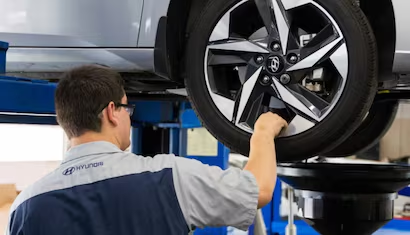
The Stakes: Why Tire Maintenance Is a Safety Issue, Not Just a Cost Issue
The National Highway Traffic Safety Administration reported that in 2024, 511 people died in tire-related crashes across the United States. That number represents preventable fatalities, the majority of which were connected to tire conditions that regular maintenance would have addressed.
At the same time, NHTSA found that only 19 percent of consumers properly inflate their tires. That means four out of five drivers are operating on tires that are working below their designed capability every single day, costing them fuel efficiency, shortening their tire life, and compromising their safety without any obvious indication that anything is wrong.
This is the nature of tire maintenance challenges: the consequences are largely invisible until conditions expose them. A worn tire on a dry road feels fine right up until the moment you brake hard on a rain-slicked Kansas highway and discover the stopping distance is dramatically longer than expected. Understanding what proper tire maintenance actually involves, and why each element matters, is the most practical safety investment a driver can make.
Tread Depth: The Number That Matters Most for Wet-Weather Safety
Tire tread is not decorative. The grooves, channels, and sipes in a tire’s tread pattern perform a specific engineering function: they evacuate water from the contact patch as you drive over wet surfaces, maintaining as much rubber-to-road contact as possible while displacing the water film that would otherwise lift the tire off the pavement.
As tread wears down, those channels become shallower and less capable of moving water efficiently. The result is increasing hydroplaning risk, longer wet-weather stopping distances, and reduced traction during rain, slush, and snow. The deterioration is gradual and not immediately obvious, but the numbers tell the story clearly:
- At 2/32 inches of tread, which is the legal minimum in most U.S. states, tires take almost twice as long to stop on wet roads compared to new tires with 10/32 inches of tread. This is not a marginal difference. It is the difference between stopping before and stopping after an obstacle in the road.
- At 4/32 inches, wet-weather performance begins declining noticeably. Water evacuation becomes measurably less efficient, stopping distances begin to increase, and hydroplaning risk starts rising. This is the threshold at which tire safety experts recommend planning replacement, not waiting for the legal minimum.
The Legal Minimum Is Not the Safe Minimum
This distinction is important for Kansas drivers to understand clearly. The 2/32-inch legal minimum is the threshold below which a tire is considered legally unsafe. Operating at that threshold means your tires are at high risk of hydroplaning in rain and have severely compromised stopping distances on wet pavement.
The practical safety recommendation from tire engineers is to replace tires when they reach 4/32 inches, which is double the legal minimum. At that depth, you still have time to shop thoughtfully for the right replacement rather than making a rushed decision, and you maintain meaningful wet-weather performance while you do so.
How to Check Tread Depth
Two methods work well for checking tread depth without specialized tools:
The Penny Test: Insert a penny into the tread groove with Lincoln’s head pointing down toward the tire. If you can see the top of Lincoln’s head, your tread is at or below 2/32 inches, which is the legal minimum. Replace immediately.
The Quarter Test: Insert a quarter with Washington’s head pointing down. If the top of Washington’s head is visible, you are at approximately 4/32 inches or below, which is the practical replacement threshold for wet-weather performance. Start shopping for replacements.
Always check multiple locations across the tread width and around the circumference of each tire. Uneven wear patterns, where the tire is more worn in the center or on the edges than across the full width, indicate a pressure or alignment problem that tread replacement alone will not fix.
What Uneven Wear Tells You
Tire wear patterns are diagnostic information worth paying attention to:
- Wear concentrated in the center of the tread: The tire has been chronically overinflated, causing the center to carry more load than the shoulders. The contact patch is smaller than designed, which reduces grip.
- Wear concentrated on both outer edges: The tire has been chronically underinflated. The center is not bearing its share of the load, causing the edges to wear faster. This is the most common wear pattern and the most frequently ignored.
- Wear on one edge only: The vehicle’s alignment is off. One side of the tire is contacting the road at an angle, causing accelerated wear on that edge. New tires without an alignment correction will develop the same pattern quickly.
- Cupping or scalloping: Uneven dips around the circumference of the tread, often accompanied by vibration or noise, typically indicate worn shocks or struts that are allowing the tire to bounce rather than maintain consistent road contact.
Any of these patterns detected during a tire check at McCarthy Hyundai of Lawrence gets flagged and explained, so you understand what is happening and what the right corrective action is.
Tire Pressure: The Most Overlooked Safety and Efficiency Factor
Given that four out of five drivers operate on improperly inflated tires, tire pressure is arguably the single highest-impact maintenance habit most Kansas drivers are not doing correctly. The consequences of wrong pressure affect safety, fuel economy, and tire longevity simultaneously.
Where to Find Your Correct PSI
The correct tire pressure for your Hyundai is listed on the sticker inside the driver’s door jamb, not on the tire sidewall. The number on the tire sidewall is the maximum pressure the tire can safely contain, which is typically significantly higher than the vehicle manufacturer’s recommended operating pressure. Using the sidewall number as your target overinflates the tires and creates the center wear pattern described above, while also reducing ride comfort and impact absorption.
Different trims or wheel size options on the same Hyundai model may have different recommended pressures, which is another reason to use the door jamb sticker rather than a general reference.
The Real Effects of Underinflation
Underinflation is the more common and more dangerous pressure condition. According to NHTSA, properly inflated tires can save drivers up to 11 cents per gallon on fuel compared to chronically underinflated tires. But the safety consequences are more serious than the fuel cost:
- Increased heat buildup: An underinflated tire flexes more than designed with each rotation. That flexing generates heat inside the tire structure. Sustained heat buildup degrades the tire’s internal cords and adhesion between tire layers, which can ultimately cause tread separation or blowout, particularly on Kansas summer highway driving when ambient temperatures compound the heat the tire is already generating.
- Reduced handling response: A soft tire does not transmit steering inputs with the precision of a properly inflated one. The vehicle feels vague and less responsive, a characteristic that is easy to habituate to but represents a genuine reduction in your ability to control the vehicle in an emergency maneuver.
- Accelerated and uneven wear: The edge wear pattern from underinflation shortens tire life and creates a progressive traction reduction as the tread wears faster than it should.
How Temperature Affects Tire Pressure
For Lawrence-area drivers, the temperature relationship with tire pressure is a practical daily concern. Tire pressure changes by approximately one PSI for every 10 degrees Fahrenheit of temperature change. Kansas’s temperature swings between seasons and even within a single day mean your tire pressure can change meaningfully without any air loss.
A tire correctly inflated at 35 PSI on a 75-degree October afternoon may be at 29 PSI on a 15-degree January morning, which is a 17 percent pressure drop. That difference is enough to affect handling, fuel economy, and wear rate. Checking pressure monthly and before long highway drives, always on cold tires before the vehicle has been driven more than a mile, is the most practical way to stay ahead of temperature-driven pressure changes.
Your Hyundai’s Tire Pressure Monitoring System (TPMS) alerts you when pressure drops significantly below the recommended level, but the alert threshold is typically set well below optimal operating pressure. Do not rely on the TPMS light as your primary pressure monitoring tool. Monthly manual checks with a quality gauge give you more precise, actionable information.
Tire Rotation: The Key to Even Wear and Maximum Tire Life
Front and rear tires wear at different rates because they perform different jobs. On a front-wheel drive Hyundai like the Elantra or base Tucson, the front tires handle both steering and propulsion, causing them to wear significantly faster than the rears. On an AWD model, the distribution of wear varies with driving conditions and load. Either way, without regular rotation, tires wear unevenly across the set and need replacement sooner than they would with consistent rotation.
Hyundai recommends tire rotation every 7,500 miles, which conveniently aligns with the standard oil change interval. Rotating tires at every oil change is the easiest way to ensure this service never gets delayed. Our service team at McCarthy Hyundai of Lawrence includes tire rotation as a standard part of every oil change appointment.
Why AWD Models Need Rotation Most Consistently
All-wheel drive systems like Hyundai’s HTRAC are sensitive to tire diameter differences between the axles. When front and rear tires wear at different rates, the slightly different diameters can create speed differences between the axles that place stress on the transfer case and differential components over time. Regular rotation keeps all four tires wearing at similar rates and protects your AWD system’s long-term health. For AWD Hyundai owners, consistent rotation is not just about tire longevity. It is also about drivetrain protection.
Wheel Alignment: The Silent Tire Killer
Wheel alignment is the adjustment of your vehicle’s suspension geometry to ensure the tires make contact with the road at the correct angles. When alignment drifts out of specification, which can happen gradually from normal road use or suddenly from a significant pothole or curb impact, the tires are no longer rolling at their designed angles. The result is accelerated wear that reduces tire life, often by tens of thousands of miles, and handling characteristics that gradually degrade.
Alignment should be checked whenever you notice uneven tire wear, after any significant impact such as a pothole strike or curb contact, and as a general best practice once a year or every 15,000 miles. Installing new tires without checking alignment first is one of the most common ways drivers prematurely wear out a set of tires that would otherwise last significantly longer.
Our certified technicians check alignment geometry at scheduled service visits and can correct it using Hyundai’s factory specifications for your specific model. Proper alignment combined with regular rotation is the combination that gets maximum life from your tire investment.
Tire Age: The Factor Most Drivers Never Think About
Even a tire that appears to have adequate tread can become unsafe due to age-related rubber degradation. The rubber compounds in tires oxidize and harden over time, reducing their flexibility and grip. This process happens regardless of how many miles the tire has been driven and is accelerated by UV exposure, ozone, and temperature extremes.
Most tire manufacturers and the NHTSA recommend replacing tires that are 6 to 10 years old regardless of remaining tread depth, with inspection recommended at 5 years. Every tire has a DOT code molded into the sidewall that includes the week and year of manufacture. The last four digits of the DOT code indicate the week and year: a tire marked 2423 was manufactured in the 24th week of 2023.
Kansas temperature extremes, particularly the intense summer heat that bakes rubber under UV exposure, accelerate this aging process. Vehicles that sit outdoors regularly or are driven infrequently may reach the age threshold before the tread depth threshold. Our service team checks tire age as part of every comprehensive tire inspection.
A Practical Tire Maintenance Checklist for Kansas Drivers
| Task | Frequency | Why It Matters |
|---|---|---|
| Check tire pressure | Monthly and before long trips | Temperature changes affect PSI; underinflation causes heat buildup, accelerated wear, and reduced fuel economy |
| Visual tread inspection | Monthly | Catches uneven wear patterns that signal pressure or alignment issues before they become expensive |
| Penny or quarter tread test | Every 3 months | Confirms tread depth is above the 4/32-inch practical safety threshold for wet-weather performance |
| Tire rotation | Every 7,500 miles | Equalizes wear across all four tires, extending service life and protecting AWD drivetrain components |
| Wheel alignment check | Annually or after any significant impact | Misalignment can reduce tire life by tens of thousands of miles and degrade handling |
| Tire age check | At 5 years, then annually | Rubber degrades over time regardless of tread depth; replace tires 6 to 10 years old per manufacturer guidance |
Key Takeaways: Tire Maintenance for Kansas Drivers
- ✅ 511 people died in tire-related crashes in 2024 according to NHTSA. Most were preventable with proper maintenance.
- ✅ The legal minimum tread depth of 2/32 inches is not the safe minimum. Replace tires at 4/32 inches to maintain wet-weather stopping performance.
- ✅ At 2/32 inches, wet-weather stopping distances are nearly twice as long as with new tires.
- ✅ Only 19 percent of drivers properly inflate their tires. Check monthly with a gauge, using the door jamb sticker PSI, not the sidewall maximum.
- ✅ Kansas temperature swings can reduce tire pressure by 6 to 8 PSI overnight without any air loss. Monthly pressure checks are essential.
- ✅ Rotate every 7,500 miles, aligned with every oil change at McCarthy Hyundai of Lawrence for maximum convenience.
- ✅ Check alignment annually and after any significant impact. New tires on misaligned wheels wear prematurely and do not deliver their full safety benefit.
- ✅ Tires 6 years or older should be professionally inspected regardless of tread depth.
Why Choose McCarthy Hyundai of Lawrence for Tire Service?
Lawrence and northeast Kansas Hyundai drivers trust McCarthy Hyundai of Lawrence for tire inspection, rotation, and replacement for several straightforward reasons:
- Tire Rotation Included at Every Oil Change: We rotate your tires automatically as part of every scheduled oil change visit so this critical service never slips through the cracks.
- Comprehensive Tire Inspection: Every service visit includes a tread depth measurement at all four corners, pressure check, visual inspection for sidewall damage or uneven wear patterns, and age verification. You get a complete picture of your tire health at every visit.
- Factory-Certified Technicians: Our team knows the specific tire specifications for every Hyundai model, including the correct PSI, load rating, and speed rating for your exact trim and wheel configuration.
- 4.5-Star Google Rating with Nearly 1,500 Reviews: We tell you what your tires actually need, explain why, and give you honest recommendations without pressure to replace what does not yet need replacing.
- Easy Online Scheduling: Book your tire inspection or rotation online any time, 24 hours a day.
- Right Here in Lawrence: Find us at 2829 Iowa St, Lawrence, KS 66047, convenient for drivers from Topeka, Overland Park, Kansas City, and across northeast Kansas. Call us at (785) 838-2327.
Conclusion: Four Small Patches of Rubber Stand Between You and the Road
There is no other vehicle maintenance category where the consequences of neglect are as immediate and as directly physical as tires. Your brakes, your steering, your acceleration, your stability in an emergency maneuver: all of it is mediated by four contact patches the size of your hands. Keeping those patches in optimal condition through consistent pressure checks, regular rotation, timely tread replacement, and proper alignment is one of the most direct safety investments you can make as a driver.
Our team at McCarthy Hyundai of Lawrence is here to make that maintenance simple, accurate, and convenient. Come see us, and let us make sure the most important four points of contact between your Hyundai and Kansas roads are exactly where they need to be.
📍 Visit us: 2829 Iowa St, Lawrence, KS 66047
📞 Call us: (785) 838-2327
🔧 Schedule a tire inspection or rotation | Explore our service center
Frequently Asked Questions: Tire Maintenance in Lawrence, KS
When should I replace my tires?
Replace tires when tread depth reaches 4/32 inches to maintain adequate wet-weather performance. At 2/32 inches, the legal minimum in most states, wet stopping distances are nearly twice as long as with new tires. Also replace any tire that is 6 to 10 years old regardless of tread depth, as rubber compounds degrade over time regardless of mileage. The manufacture date is stamped in the last four digits of the DOT code on the sidewall.
What PSI should my Hyundai tires be?
The correct PSI for your specific Hyundai is found on the sticker inside the driver’s door jamb. This is the manufacturer’s recommended operating pressure for your vehicle’s weight and handling characteristics. Do not use the maximum pressure number printed on the tire sidewall, which is significantly higher than the recommended operating pressure and will cause overinflation if used as a target.
How often should I rotate my tires on a Hyundai?
Hyundai recommends tire rotation every 7,500 miles, which aligns with the standard oil change interval. Having both services done together at every oil change appointment is the most practical approach to ensure rotation is never missed. For AWD Hyundai models, consistent rotation is especially important to prevent uneven tire diameters from placing stress on drivetrain components.
What causes uneven tire wear?
Uneven wear typically indicates one of three issues: chronic underinflation, which causes edge wear; chronic overinflation, which causes center wear; or wheel misalignment, which causes wear concentrated on one edge of the tire. Cupping or scalloped wear around the circumference usually indicates worn shocks or struts. Our service team inspects for these patterns at every tire check and can identify the underlying cause.
Does temperature affect tire pressure?
Yes, significantly. Tire pressure changes by approximately one PSI for every 10 degrees Fahrenheit of temperature change. Kansas’s large seasonal temperature swings can reduce tire pressure by 6 to 8 PSI or more between a warm autumn afternoon and a cold January morning, without any air loss from the tire. Check pressure monthly on cold tires before the vehicle has been driven more than a mile for the most accurate reading.
How do I schedule a tire rotation or inspection at McCarthy Hyundai of Lawrence?
Use our online service scheduler available 24 hours a day, call us at (785) 838-2327, or visit us at 2829 Iowa St, Lawrence, KS 66047. Tire rotation is included with every oil change appointment at no additional scheduling required.

